
# Silk Pillow and Its Effect on Skin and Hair Without Myths
Silk has a reputation as a luxury material that people have associated with beauty, wealth, and self-care for centuries. In recent years, however, silk has moved from the runway directly into bedrooms and bathrooms – in the form of pillowcases, face masks, headbands, and hair accessories. Social media is full of influencers who swear by a silk pillowcase as their secret weapon against wrinkles and brittle hair. But where does the genuine benefit of this natural material end and a cleverly crafted marketing campaign begin?
The answer isn't black and white. Silk does possess a number of properties that set it apart from cotton or synthetic fabrics – and some of these properties have a demonstrable effect on the condition of skin and hair. Other claimed benefits, however, are at least exaggerated or scientifically unsubstantiated. To form a truly informed opinion, it's worth taking a closer look at the whole picture.
Try our natural products
What makes silk an exceptional material?
Silk is a natural protein produced by the silkworm. The fibre consists primarily of fibroin, a protein with a very smooth structure, and sericin, which coats the fibres and gives them their sheen. This smoothness is key – unlike cotton, whose fibres are rough and looped under a microscope, silk glides across surfaces without significant friction. Research in the field of dermatology also shows that silk proteins may have anti-inflammatory properties and are well tolerated even by sensitive skin.
This seemingly technical detail has very practical consequences. We spend an average of six to eight hours each night in direct contact with a pillowcase. If this surface is rough, skin becomes deformed by friction, hair breaks, and moisture is lost. Anyone who has ever woken up with a pronounced crease across their face or with dishevelled, static-prone hair knows exactly what this means.
A silk pillowcase genuinely reduces friction – and that is a fact built on solid ground. The question, however, is whether this effect is significant enough to justify the price of a premium silk product, or whether cheaper alternatives such as satin covers made from synthetic fibres can achieve a similar result.
The effect on skin: what do dermatologists say?
The dermatological community takes a cautious but not dismissive stance on silk pillowcases. Experts see the greatest benefit for people with sensitive or acne-prone skin. Cotton fabrics absorb moisture very effectively – not only sweat, but also the moisturisers and serums applied before bed. On silk, skincare stays on your skin, not in the fabric. This is an argument that makes sense and is logically verifiable.
The American Academy of Dermatology and numerous clinical experts have repeatedly noted that sleep lines – the fine wrinkles caused by the pressure of the face against a pillow – are less pronounced on silk than on cotton. The point is not that silk "treats" wrinkles or even prevents those caused by ageing. The point is that mechanical friction and skin deformation are lower when in contact with a smooth material. The difference is subtle, but with long-term use it can be noticeable.
Another matter entirely are the claims that sometimes appear on labels or in product descriptions – for example, that silk "hydrates the skin", "delivers nutrients to the skin", or "stimulates collagen production". These claims are, at best, misleading. Silk is not a cosmetic product and does not deliver nutrients to the skin on its own. It can only help retain those that you have applied yourself.
A practical example: a middle-aged woman who had long struggled with dehydrated skin and regularly found traces of her night cream on her cotton pillowcase each morning switched to a silk pillowcase. After a few weeks, she noticed that her skin felt less tight in the morning – not because silk has miraculous properties, but because her moisturising treatment stayed where it was supposed to: on her skin.
Silk face masks and other products: a fashion trend or a genuine benefit?
Alongside pillowcases, silk face masks, headbands, eye masks, and hair accessories have also become widespread on the market. Each of these products carries its own claims and must be assessed individually.
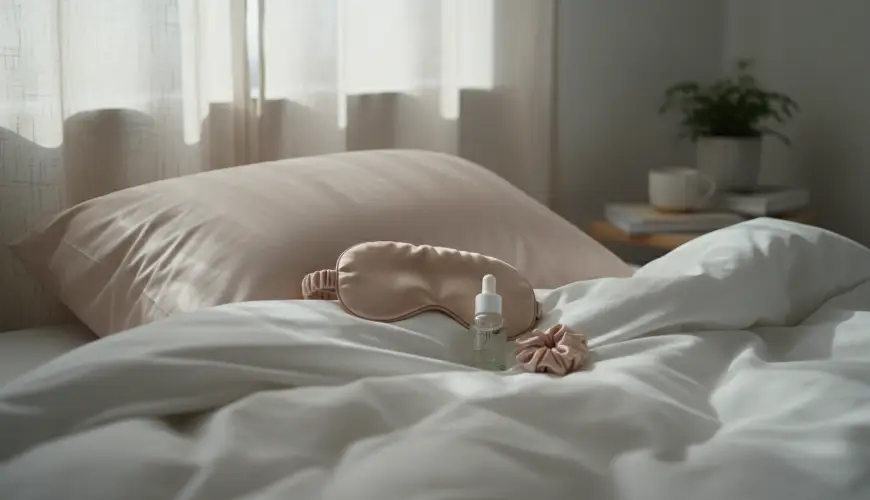
Silk sleep eye masks are a popular choice not only because of the material, but also because they are lightweight, non-irritating, and do not exert pressure on the delicate area around the eyes. For people with sensitive eyelid skin or who wear eye makeup, a silk mask can genuinely be a more comfortable alternative to synthetic or cotton versions.
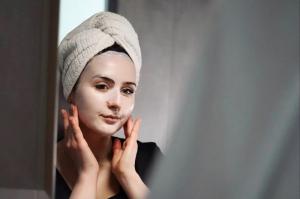
Silk face masks – those used as part of a skincare routine rather than as sleep aids – work on a different principle. These masks are typically saturated with a serum or active ingredients, and silk here serves as a carrier that adheres to the skin and prevents the evaporation of active compounds. The key value therefore lies not in the silk itself, but in the active ingredients the mask contains. Silk as a carrier material is in this case more of a premium detail than a fundamentally functional element.
When it comes to hair products – silk headbands, hair ties, or sleep caps – the situation is somewhat more straightforward. Hair is sensitive to friction and mechanical damage, especially in its most vulnerable state: when wet or after chemical treatment. A silk surface genuinely reduces the risk of hair breakage and split ends, an effect you will particularly appreciate if you have long, colour-treated, or naturally dry hair.
As British trichologist Anabel Kingsley once remarked: "Anything that reduces friction on the hair shaft contributes to its overall health – and silk is one of the most gentle materials available to us in this regard."
The satin alternative: when is a cheaper option enough?
One of the most common advertising tricks is conflating silk and satin. Satin is not a material – it is a weaving technique. Satin pillowcases can be made from silk, but also from polyester or other synthetic fibres. Inexpensive satin pillowcases, sold at a fraction of the price of silk, have a similarly smooth surface but lack the natural properties of silk – such as natural temperature regulation, moisture-wicking ability, or hypoallergenicity.
For someone simply looking to reduce friction who has neither sensitive skin nor allergies, a synthetic satin pillowcase may be sufficient. For people with atopic eczema, sensitive skin, or allergies to synthetic materials, however, genuine silk – certified and with an appropriate weight (ideally 19 momme and above) – is a worthwhile investment. The OEKO-TEX Standard 100 certification is one reliable indicator that a product has been tested for harmful substances and is safe for direct contact with skin.
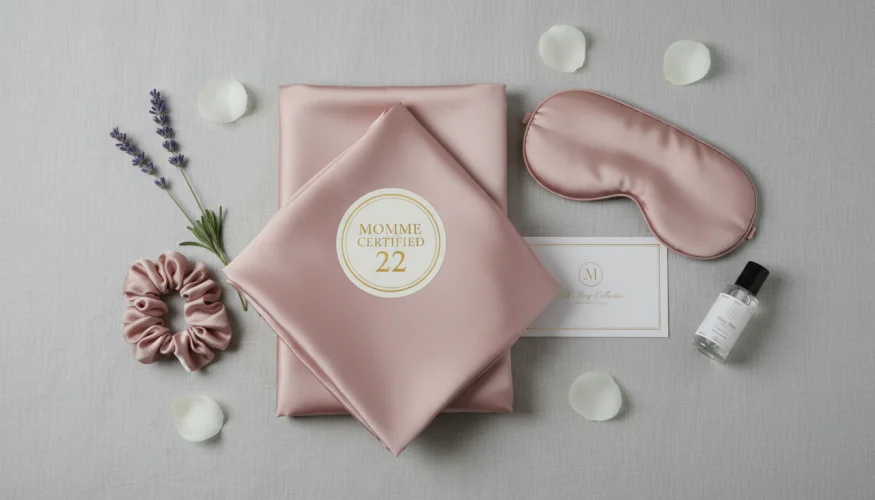
The weight of silk, referred to as "momme", plays an important role. The higher the number, the denser and more durable the fabric. Pillowcases below 16 momme tend to be sheer and less resilient; for everyday use, a range of 19–25 momme is recommended.
When is it just a marketing trick?
It is no secret that the word "silk" sells. The term therefore appears even on products that have little in common with genuine natural silk – or where the silk content is so small that its effect is practically negligible. Cosmetic products featuring "silk proteins" or "silk extract" in their name may contain these ingredients only in trace amounts, and their actual function within the formulation is questionable.
Equally, caution is warranted regarding claims about the "anti-ageing" effects of silk pillowcases. Silk can help reduce mechanical sleep lines, but it cannot halt the biological ageing of skin, restore collagen, or erase existing wrinkles. If anyone promises these results, it is marketing hyperbole, not a scientifically substantiated fact.
A sensible approach to the whole matter lies in viewing silk products as a complement to quality skincare and hair care – not as a replacement for it. A silk pillowcase has not saved anyone who doesn't sleep enough, drink enough water, or use appropriate skincare. But for someone who takes a holistic approach to self-care and is looking for ways to minimise unnecessary mechanical damage to their skin and hair during sleep, silk can genuinely be a worthwhile choice.
At the end of the day, it comes down to distinguishing between what silk can truly do – provide a smooth surface, be gentle on skin, preserve moisture and skincare products, regulate temperature – and what is attributed to it by marketing narratives. And with this awareness, you can then decide whether investing in a silk pillowcase, mask, or hair headband is the right choice for you.