

Why Less Cosmetics Can Be Better for Your Skin
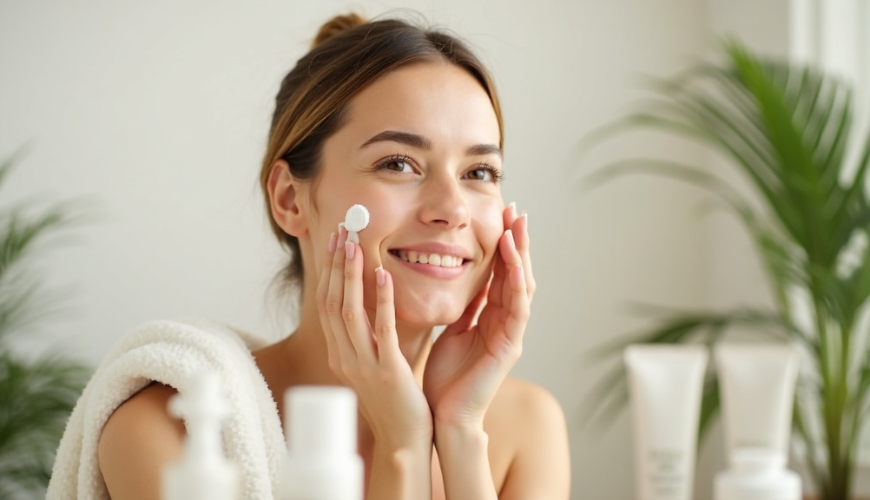
Having a bathroom full of bottles has long been considered a small symbol of self-care. A serum for every mood, a cream for every season, a mask for every type of fatigue. However, the more we talk about skin, the more often the opposite question arises: why can less cosmetics be better for the skin? It's not about a fashionable defiance against the "beauty" world or an attempt to save at all costs. Rather, it's a sober realization that the skin is a living organ with its own balance, and too many interventions can disrupt it, much like excessive "enhancement" of the diet with supplements.
From a dermatological perspective, the skin is a barrier. It protects against water loss, microbes, and irritants from the environment. This barrier functions thanks to a mixture of skin lipids, a natural microbiome, and a slightly acidic pH. If it is interfered with too frequently – through exfoliation, degreasing, layering active ingredients, fragrances, preservatives – it can happen that the skin begins to behave like an overloaded system. Paradoxically, it appears outwardly: one adds care, but instead of calmness, sensitivity, tightness, flakiness, blemishes, or redness appear. And that's when it makes sense to consider whether the path to less cosmetics and healthier skin isn't actually quite straightforward.
This is also supported by common experience: as routines become more complicated, the risk of errors increases. Sometimes it's overdone with acids, other times SPF is forgotten, then a new "miracle" product is tried simultaneously with another. Meanwhile, the skin has no chance to recognize what benefits it and what harms it. A more minimalist approach, on the other hand, allows space to observe the signals the skin sends. And it's not about asceticism – rather a return to what truly works.
Try our natural products
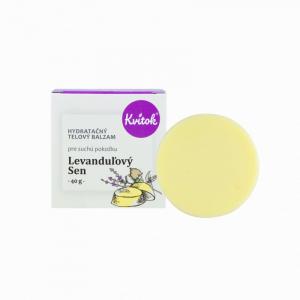
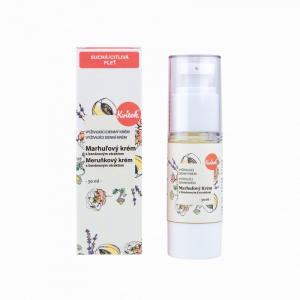
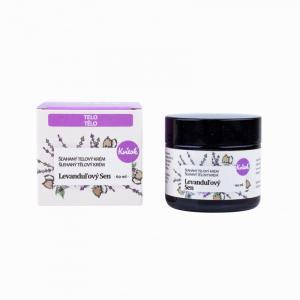
Why Less Cosmetics Can Be Better for the Skin
At its core, it's simple: the fewer products are applied to the skin, the fewer potential irritants it comes into contact with. Even quality cosmetics can contain ingredients that trigger a reaction in someone – and it's often not an "allergy" in the classic sense, but cumulative irritation. The skin can also react when too many active ingredients are combined. Retinoids, acids, vitamin C, strong cleansing surfactants... each component can be useful, but collectively, it can easily happen that the barrier can't keep up.
Another major topic is sensitivity from excessive cleansing. Aggressive gels, frequent use of peels, or degreasing toners can remove not only impurities but also natural lipids. The skin might then paradoxically start to become oilier, trying to compensate for the loss. This is accompanied by a feeling of tightness, prompting the desire to "save it" with more products. This creates a cycle familiar to many with acne as well as dry skin.
The microbiome also comes into play, a community of microorganisms that naturally live on the skin. It's not something to be "eradicated", quite the opposite. A balanced microbiome is related to skin resilience. Excessive disinfection, frequent switching of products, and high doses of fragrance can disrupt this balance. Authoritative sources, such as the American Academy of Dermatology, also speak to the importance of the skin barrier and gentle care, repeatedly emphasizing that a basic routine should be simple and consistent.
And then there's another practical reason that might be the most "human": minimalism reduces stress from care. When a routine is complex, it easily becomes a chore. And stress can manifest on the skin. Simpler care tends to be more sustainable – and with skin, long-term consistency often wins over short-term experiments.
"Fewer products don't mean less care, but more room for the skin to do its job," dermatologists have been saying in various forms for years – and in practice, it often holds true.
Less Cosmetics and Healthier Skin: What Most Often Goes Wrong in Practice
The biggest trap of modern care is layering. The internet is full of routine videos where five to ten steps are gradually applied to the skin. Sometimes it can work, but often it increases the likelihood of something "colliding" poorly. A typical scenario: vitamin C in the morning, retinol at night, an acid toner every other day, a peel once a week, plus a mask "just in case". If the skin is resilient, it might work. If it's more sensitive, it starts to protest.
Another common problem is the chase for immediate results. But the skin isn't a display that can be reset in two days. When products change every week, the barrier has no chance to stabilize. One often doesn't know what actually bothers them. A minimalist approach, on the other hand, is based on giving the skin time. Sometimes the greatest service is "doing nothing extra" and just protecting, hydrating, and gently cleansing.
A real-life example might sound unassuming: a young woman starts working in an office, the air conditioning is on full blast, and her skin begins to dry out more. Instead of adding one simple moisturizing cream and more consistent SPF, she buys three serums, an exfoliating toner, and a stronger cleansing gel "for pores". After two weeks, her skin is irritated, makeup clings to dry spots, and small blemishes appear. Only when she simplifies her routine – gentle cleansing at night, moisturizing cream, SPF in the morning – does her skin calm down over a few weeks. Not because "serums are bad", but because too many steps added extra work for the skin.
A separate chapter is fragrance and essential oils. Some tolerate them well, others react to them. The more products, the higher the cumulative load. It's similar with alcohol in some formulations, strong menthol components, or too frequent use of mechanical peels. When the routine is simplified, it's often revealed that the skin mainly needs calm.
It's also good to remember the basics, which sometimes get lost in the flood of trends: sun protection. If the skin is to have a long-term healthy appearance, SPF is one of the most reliable steps. There is broad consensus on this, summarized by public health institutions like the World Health Organization (WHO) in recommendations for UV protection. A minimalist routine that relies on SPF, gentle cleansing, and hydration often yields better results than a complex "cocktail" without protection.
How to Care for Skin Without Loads of Products (and Not Lose Results)
Minimalism in skin care isn't about giving up everything, but about arranging a routine that makes sense. Ideally, it relies on three pillars: gentle cleansing, hydration, and protection. The rest is optional, depending on the skin's needs and how it reacts.
First, it's worth looking at cleansing. In the morning, lukewarm water or a very gentle cleanser is often enough, especially if the skin is dry or sensitive. Evening cleansing makes more sense because SPF, makeup, and day's impurities need to be removed. It's important that after washing, the skin doesn't burn and isn't "squeaky" degreased. That feeling of cleanliness often means more was removed than desired.
Hydration is the second step that can be done simply. One well-chosen cream or emulsion can replace several serums. Ideally, look for a formulation that supports the barrier – for example, with glycerin, ceramides, panthenol, or squalane. Hydration isn't the same as oiliness; even oilier skin can be dehydrated and then respond with excessive oil production. When the barrier calms, often the shine and minor imperfections do too.
And then there's SPF. If less cosmetics and healthier skin is to be more than just a short-term experiment, UV protection is key. There's no need for five anti-aging products if the biggest external factor in skin aging is ignored every day. Moreover, SPF also helps people prone to pigment spots and post-acne inflammatory marks.
A minimalist approach doesn't mean giving up all active ingredients. Rather, it's worth choosing one thing that addresses a specific problem and giving it time. If the goal is to calm acne, it might be one proven product with niacinamide or salicylic acid, used sparingly. If the aim is to support skin renewal, it might be a retinoid, but introduced slowly and respecting sensitivity. The important thing is not to mix too many "strong" steps at once.
To navigate easily, it helps to stick to simple logic and not jump from routine to routine. If something changes, only change one thing and give it time. Then the skin has a chance to show what suits it.
The Only List Worth Keeping on Hand
- Morning: gentle rinse (or gentle cleansing) + moisturizing cream as needed + SPF
- Evening: gentle cleansing (double cleansing if wearing makeup, but gently) + one cream or simple serum + cream
- Additional only when needed: one active ingredient for a specific issue, not everything at once
It might sound too ordinary. But it's in this "ordinariness" that the strength lies. The skin often doesn't need constant surprises but rhythm. And when the routine is simplified, it's easier to recognize what's truly important: quality sleep, hydration, less stress, sensible diet. Cosmetics can't replace all this, they can only support it.
Moreover, minimalism fits well into a more sustainable household. Fewer products mean fewer packages, less transport, fewer "half-empty" bottles that didn't suit. In an environment where the impact of consumption on the planet is increasingly addressed, a simple routine also makes ecological sense – and that's precisely the type of small change that can be maintained in the long term.
In the end, the question of "how to care for skin without loads of products" turns into something more practical: how to give the skin trust that it can handle it. When given gentle cleansing, sufficient hydration, and daily protection, it often rewards with calmness that no trend can replace. And who knows – maybe then the morning look in the mirror becomes less about finding flaws and more about the skin simply looking... normally good.