

Minimalist skincare routine will simplify your skin care
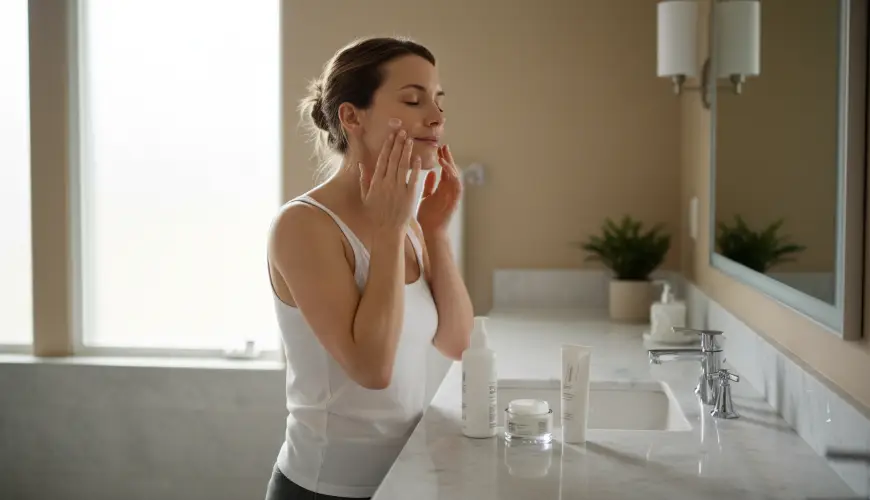
We live in an era when the average bathroom looks more like a dermocosmetics warehouse than a place for everyday care. Shelves buckle under the weight of eye serums, three different toners, five varieties of moisturiser, and dozens of other products whose correct application order nobody is quite sure about. Yet research repeatedly shows that less can truly be more when it comes to skincare. The concept of a minimalist skincare routine has gained millions of followers around the world in recent years – and it is not merely a passing trend. It is a return to common sense.
It is worth pausing to ask: does our skin really need twenty products a day, or have we been swept up by the marketing of a cosmetics industry that has every interest in getting us to buy more and more?
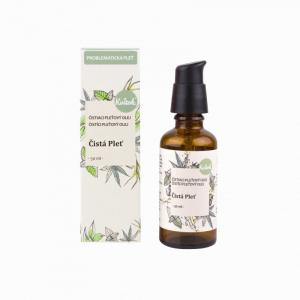
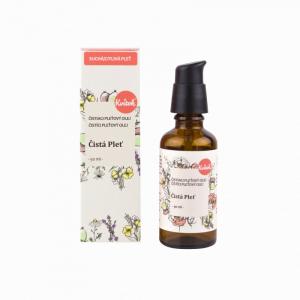
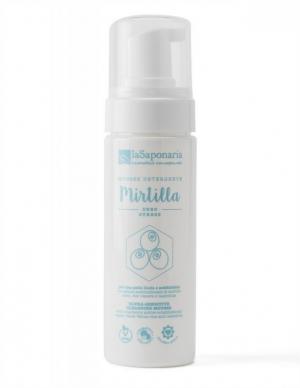
Try our natural products
What a minimalist routine actually means
Minimalist skincare does not mean neglect. On the contrary – it is about making a conscious choice of a few key products that genuinely work, and having the courage to let go of everything else. At the heart of this approach is an understanding of what skin truly needs, and filtering out what has been sold to us as a necessity when it is no necessity at all.
Dermatologists are surprisingly unanimous on this point. Healthy skin essentially needs three things: cleansing, moisturisation, and protection from UV radiation. Everything else is either a pleasant addition or a marketing construct. According to the American Academy of Dermatology, maintaining healthy skin requires nothing more than a simple routine consisting of a gentle cleanser, a moisturiser, and a sun protection factor. Nothing more, nothing less.
This does not, of course, mean that active ingredients such as vitamin C, retinol, or hyaluronic acid are useless. They have their place and their justification – but the key point is that we do not need all of them at once, every day, in three layers. Overloading the skin with too many active substances can instead cause irritation, damage to the skin barrier, and paradoxically worsen the very condition we were trying to address.
A real-life example is the experience of Markéta, a thirty-year-old marketing manager from Prague who had struggled for years with sensitive and reactive skin. She tried dozens of products, invested thousands of crowns in serums and specialist treatments, and yet her skin showed no improvement. On her dermatologist's recommendation, she switched to a three-step routine – a gentle micellar gel, a light moisturiser, and SPF 30 – and within six weeks noticed a marked improvement. "I didn't believe it, but my skin finally calmed down once I stopped bombarding it," she says.
This story is not an exception. It is a pattern that dermatologists see in their practices with increasing frequency.
What a minimalist routine looks like in practice
The morning begins simply. A gentle wash of the face – for normal to dry skin, plain water or a very mild gel free of aggressive detergents will do. Then comes moisturisation suited to the skin type: for dry skin, a richer cream with ceramides or shea butter; for oily and combination skin, a light gel with hyaluronic acid. And finally – a step that people in the Czech Republic still tend to underestimate – protection with a sun protection factor. SPF is not just for the beach. Ultraviolet radiation is present year-round, even on overcast days, and is one of the primary causes of premature skin ageing and the development of skin cancer.
The evening routine is equally straightforward. Thorough but gentle make-up removal and cleansing – ideally a two-phase process for those who wear make-up or a high-SPF sunscreen – followed by night-time moisturisation. Anyone who wishes to incorporate an active ingredient such as retinol or niacinamide will find the evening to be the right time for it. But here too the rule applies: one active ingredient at a time, at least in the beginning.
The key to a minimalist routine is consistency, not complexity. Skin responds to regular care far better than to weekly experimentation with new products. The results of simple routines also appear gradually, which is why it is important to persevere for at least four to six weeks before evaluating whether a product is working or not.
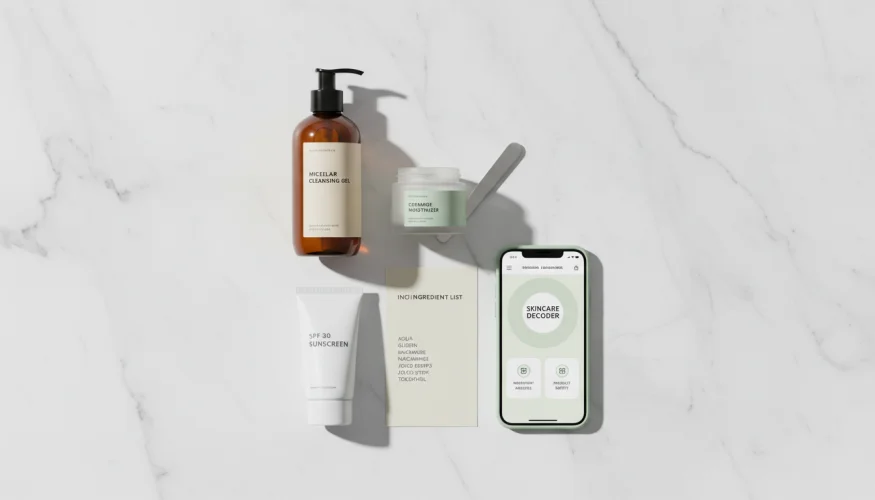
A natural question that arises is: how do you choose the right products when there are so many on the market? The answer lies in the ingredients, not in packaging and brand stories. A product's formulation – the INCI list – is the only objective source of information about what we are actually buying. Websites such as INCI Decoder allow any lay consumer to decode the composition of a cosmetic product and find out whether it contains what it promises, or merely expensive water with a fragrance.
Fewer products, greater care for the planet
A minimalist skincare routine is not solely a matter of skin health or saving money – though those benefits are by no means negligible. It is also a conscious decision with an ecological impact. The cosmetics industry generates vast quantities of plastic waste every year: bottles, pumps, caps, transparent films, cardboard boxes. The fewer products we use, the less of this waste we produce.
When selecting products within a minimalist routine, it is therefore worth taking sustainability of packaging and formulation into account as well. Products certified as natural or organic cosmetics, such as COSMOS, Ecocert, or NATRUE, offer a guarantee that the formulation has undergone independent auditing and meets strict criteria regarding the origin of ingredients and the manufacturing process. These certifications also exclude a range of controversial substances, such as synthetic fragrances, parabens, and silicones, which are often an unnecessary burden for sensitive skin.
An interesting alternative is offered by solid products – solid shampoos, solid soaps, or solid cleansing balms – which require no plastic packaging and have a significantly lower carbon footprint owing to their lighter weight during transport. Their popularity has grown considerably in recent years, not only among environmentally conscious consumers, but also among those who appreciate simplicity and practicality.
It is similarly worthwhile to think about multi-purpose products. A facial oil that can be used on the face, body, or hair saves space in the bathroom as well as money. A tinted moisturiser with SPF replaces three products at once. It is precisely this philosophy of one product, multiple functions that lies at the heart of minimalist self-care.
As writer and minimalism pioneer Joshua Becker aptly observed: "Minimalism isn't about having less. It's about making room for more of what matters." In the context of cosmetics, this means stopping the waste of time, money, and energy on products we do not need, and devoting care to those that truly work.
An interesting perspective is also offered by a comparison with South Korean cosmetics, which are often regarded as synonymous with complex skincare. Even in Korea, a movement known as skip-care has been gaining ground in recent years – the deliberate omission of steps and products that are not strictly necessary. This trend emerged as a reaction to market saturation and skin overload, and confirms that the desire for simplicity is a global one.
For those who want to begin a minimalist routine but are unsure where to start, it can be useful to first conduct an audit of what they are currently using. Write down all the products, consider which ones genuinely deliver results, and which are being used out of habit or out of a feeling that one ought to use them. Then reduce gradually – not all at once, but step by step, so that it is possible to observe how the skin responds.
The key steps that a minimalist routine includes can be summarised as follows:
- Cleansing – a gentle, pH-balanced cleanser free of aggressive ingredients
- Moisturisation – a cream or gel suited to the skin type and the time of year
- Protection – SPF 30 or higher every morning, without exception
- Optional active care – one active ingredient chosen according to the specific needs of the skin, introduced gradually
This framework is intentionally simple. Because simplicity works.
A further practical step is to pay attention to how the skin actually looks and feels – not how it is supposed to look according to Instagram filters or advertising campaigns. Healthy skin does not have to be perfect. It can have pores, fine lines, and varied texture. The goal of minimalist care is not to achieve an unrealistic ideal, but to keep the skin hydrated, protected, and in balance.
For many people, the transition to a minimalist approach to cosmetics proves liberating not only physically but also mentally. The morning and evening routine shrinks from thirty minutes to five. The bathroom becomes uncluttered. Cosmetics shopping ceases to be impulsive and becomes intentional. And the skin – paradoxically – begins to look better than it ever has before.
It is not about deprivation. It is about choosing what truly makes sense.