

# Removing a Dried Stain from Carpet Step by Step
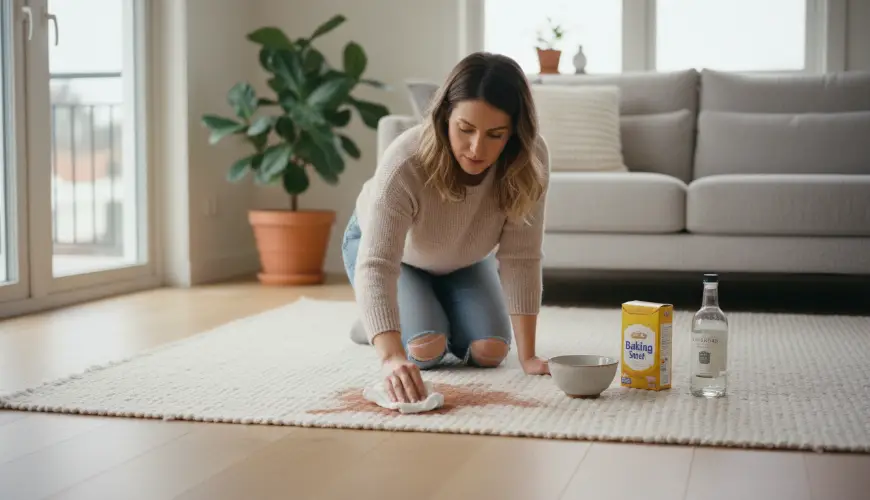
Everyone knows it. A weekend celebration, morning coffee overflowing from a cup, or an unfortunate spill of a glass of red wine – and the result is a stain that didn't get treated in time. A carpet is one of the most expensive textile accessories in a home, so it's understandable that a dried stain on a carpet can seriously affect your mood. The good news is that even seemingly hopeless situations have a solution. The bad news? The longer you wait, the harder the work becomes.
Dried stains are more problematic than fresh ones because the dyes or organic substances from drinks, food, or other sources chemically bond to carpet fibres during the drying process. This is a physico-chemical process in which pigment molecules literally anchor themselves into the structure of the textile. That's why every attempt at removing a dried stain from a carpet is more challenging than with a fresh accident – but certainly not impossible.
Try our natural products
Why it matters what caused the stain
Before diving in with a bucket of water and the first available cleaning product, it's crucial to take a moment to think. Different types of stains require different approaches, and what works on coffee may actually set a blood stain or fatty food residue even deeper into the fibres.
Dried stains can be roughly divided into several categories. Organic stains, such as coffee, tea, red wine, juice, or blood, contain dyes or proteins that react to heat and enzymatic cleaning products. Greasy stains from butter, sauces, or cosmetics behave differently – they repel water and therefore require degreasing. Ink or marker stains have a chemical composition that requires specific solvents. And then there are mud or dirt stains, where the best strategy is to wait for them to dry and then mechanically remove the residue – paradoxically, time works in favour of the cleaning process in their case.
The carpet itself is not just a carpet. The material matters – wool, synthetic fibres such as polyester or nylon, natural jute fibre or bamboo – each reacts differently to moisture, the acidity of cleaning products, and mechanical action. Before using any product, it's always wise to test it in an inconspicuous spot, such as a corner behind furniture.
The natural first impulse is to grab a cloth, soak it in water, and start scrubbing vigorously. However, this is precisely what textile cleaning professionals fear most. Rubbing doesn't remove a stain – it spreads it over a larger area and simultaneously damages the carpet fibres. The correct technique is always to blot – pressing the cloth down and lifting it, not dragging it back and forth.
Tried-and-tested methods that work at home
There are a number of home remedies that, when used correctly, work surprisingly well. The key is patience and a methodical approach – no dried stain will disappear after the first attempt.
The first step is always mechanical loosening of the dried material. Using the blunt edge of a knife, a spoon, or a special plastic scraper, carefully remove all dried matter from the surface of the carpet. Work from the edges of the stain towards the centre to prevent it from spreading. Then vacuum the stain to remove any small residue.
The next step is moistening the stain. This is where one of the most versatile helpers comes in – a solution of warm water with a little washing-up liquid or other mild detergent. This solution should be applied sparingly, as excess water can damage the backing of the carpet or cause mould to develop. Blot, wait a few minutes, and repeat. Then rinse the stain with clean water (again by blotting) and place dry paper towels or a clean white cloth over it to absorb the moisture. A heavy object can be placed on the cloth to help it absorb better.
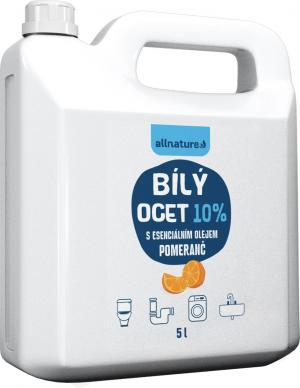
For organic stains such as coffee or red wine, an excellent helper is a mixture of water and white vinegar in a 1:1 ratio with a small amount of washing-up liquid added. Vinegar helps break down the dyes and also deodorises. A scientifically proven helper is also baking soda – after treating with a damp solution, sprinkle it on the stain and leave it to work overnight. Baking soda absorbs residual moisture and odours and can simply be vacuumed up in the morning.
A different approach works for greasy stains. First, apply a dry absorbent to the stain – this can be baking soda, cornstarch, or a special cleaning powder – and leave it to work for at least an hour to absorb the grease. Then vacuum it up, and only then proceed to treat with a damp cleaning product with degreasing properties.
Removing a blood stain from a carpet is a special case. Blood contains proteins that hot water will set – so only cold water is used here. A solution of cold water with a little salt works excellently, as does an enzymatic cleaning product that literally "digests" the proteins. A similar principle applies to stains from eggs or dairy products.
Sometimes home methods are not enough, especially for old stains or delicate materials such as wool or silk. In such cases, the best solution is to turn to a professional dry cleaner or use professional carpet cleaning services. Modern cleaning technologies, such as steam cleaning or deep extraction cleaning, can remove dirt from deep within the fibres without the risk of damaging the carpet.
As a real-life example: Jana from Prague had a light-coloured wool carpet in her living room, onto which red wine spilled during the Christmas holidays in December. She didn't manage to treat it immediately, and the next morning she was greeted by a dark purple dried stain. She proceeded methodically – first carefully scraping off the dried surface, then applying a solution of water, vinegar, and washing-up liquid. After three applications and leaving baking soda on overnight, the stain faded enough that it stopped bothering her. She admits, however, that next time she will react more quickly.
Eco-friendly approaches and prevention for the future
At a time when more and more households are switching to a more eco-friendly way of life, it's worth mentioning that natural cleaning products work surprisingly well even for such a demanding task as removing dried stains. Baking soda, white vinegar, lemon juice, or enzymatic products based on natural ingredients are not only kinder to the environment, but also to carpet fibres and the health of the household's inhabitants – which is especially important in families with young children or pets.
As the British organisation Women's Institute, which has long been dedicated to practical household advice, notes: "The best cleaning products are often the simplest – soda, vinegar, and patience." This philosophy applies to carpet care as well.
Eco-friendly approaches to household cleaning are part of a broader trend that also encompasses the choice of carpets themselves. Carpets made from natural materials, such as wool, jute, cotton, or bamboo, are not only a more sustainable choice, but also respond better to natural cleaning methods. Synthetic carpets tend to be more resistant to stains thanks to surface treatments, but may require more aggressive chemical products when cleaning.
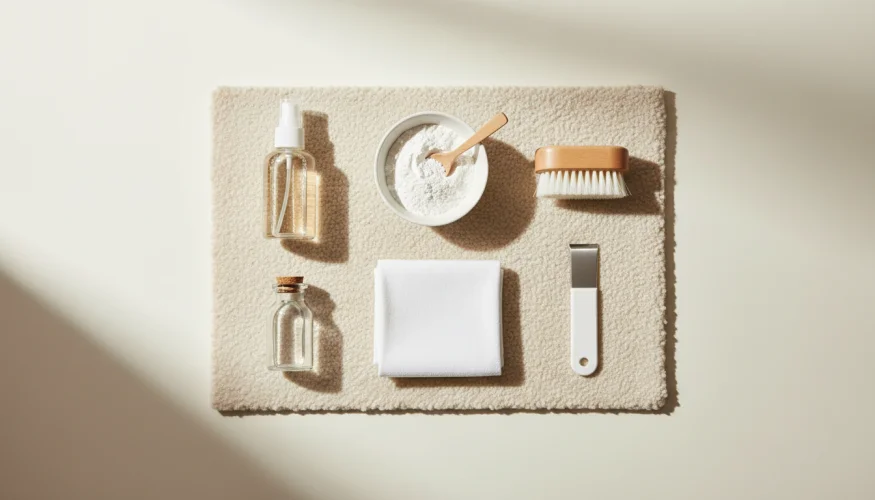
Prevention is naturally always better than cure. There are several practical measures that significantly reduce the risk of permanent stains. Carpets can be treated with an impregnating spray that creates a protective layer repelling liquids – such products are now available in eco-friendly variants without fluorinated compounds, which are problematic from an environmental perspective. Another tried-and-tested step is introducing a no-shoes policy indoors: a large proportion of dirt and stains get into carpets via shoes. And finally – having a small set of basic cleaning supplies on hand (baking soda, white vinegar, washing-up liquid, clean white cloths) means that in the event of an accident, you can react immediately, before the stain has a chance to set.
Regular cleaning is also important. According to the American Cleaning Institute, carpets should be vacuumed at least twice a week in high-traffic areas and once a week in less-used rooms. Regular vacuuming not only removes surface dirt but also prevents it from penetrating deep into the fibres, where it becomes much more difficult to remove.
Caring for a carpet is essentially caring for an investment. A quality carpet can last for decades if properly maintained – and this includes not only an immediate response to accidents, but also regular deep care. Professional carpet cleaning once a year or every two years significantly extends its lifespan and keeps it fresh and hygienically clean, which is especially appreciated by allergy sufferers.
A dried stain on a carpet therefore doesn't have to mean the end. With a little patience, the right products, and a methodical approach, even seemingly lost cases can be saved. And if home methods still prove insufficient, professional help is always a better option than throwing the carpet away – after all, in the spirit of a sustainable lifestyle, repair and care are always preferred over unnecessary disposal.