
When does perfectionism in housekeeping and motherhood become a trap
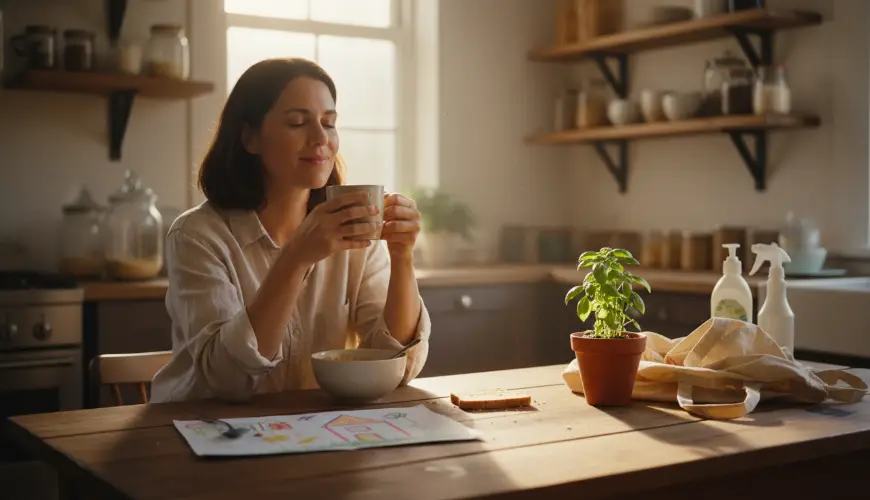
Six o'clock in the morning. The children are still asleep, but one mother is already standing at the sink, polishing the dishes to a mirror shine. She's preparing breakfast from organic ingredients, sorting laundry by colour, and wondering whether to plan an afternoon activity for the children or clean out the basement instead. This isn't an exceptional day – this is every day. And yet she still feels like she's not doing enough.
Perfectionism in the home and motherhood is a topic that is being talked about more and more – and rightly so. Modern society places demands on mothers (but also on fathers and entire families) that are often unrealistic. Social media shows perfectly arranged children's rooms, healthy snacks packed in compostable bags, and smiling mothers in clean clothes. The reality, however, is different, and it is precisely in this gap that an uncomfortable feeling is born – the sense that one simply isn't keeping up.
Psychologists are well acquainted with this phenomenon. Perfectionism in itself is not necessarily bad – in healthy doses it motivates, helps achieve goals, and builds a sense of responsibility. The problem arises when it becomes a tool for self-torment. According to research published in the journal Psychological Bulletin, perfectionism has increased significantly in recent decades, with younger generations being more affected than ever before. And a household with children is fertile ground for this type of thinking.
Try our natural products


When caring for the home becomes a race without a finish line
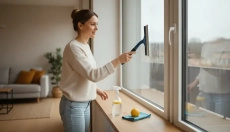
A household is never "done". That is a fundamental truth that a perfectionist cannot stand. There is always dust somewhere, there is always something to wash, there is always something that could be done better or differently. A person who allows themselves to be consumed by this logic finds themselves in an endless cycle of tasks from which there is no escape – because the goal is constantly shifting.
Take the example of Kateřina, a thirty-four-year-old mother of two children from Brno. She used to spend every weekend cleaning the flat from morning to evening. Even so, she felt like she wasn't keeping up. She began buying more and more cleaning products, organisers, and storage boxes, believing that the "right system" would finally bring the order she craved. Instead, things multiplied, responsibilities grew, and her energy diminished. It was only when her husband persuaded her to limit weekend cleaning to two hours and devote the rest to the family that she began to realise how much joy perfectionism was actually stealing from her.
This story is not unique. Many people only realise in hindsight that the pursuit of perfection is actually a form of anxiety – not a virtue. A home exists to serve the people in it, not the other way around. A clean and functional home is a wonderful goal, but a sterile, museum-like space in which no one feels at ease is more of a prison than a refuge.
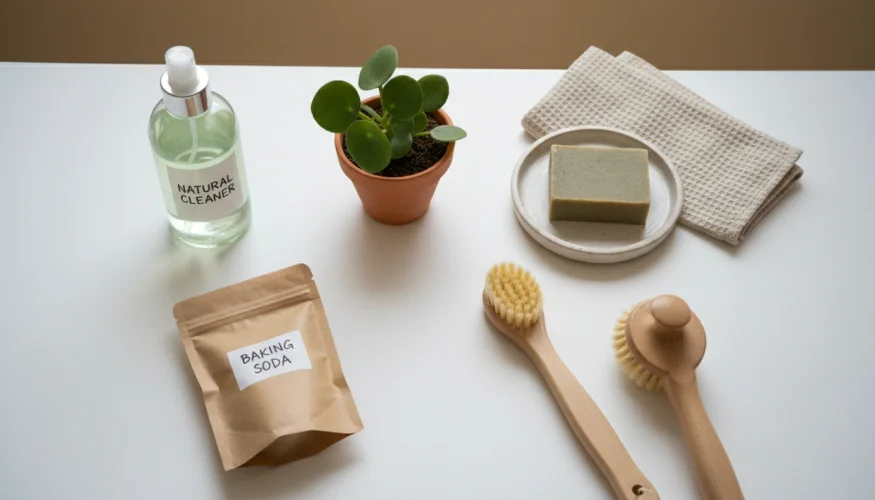
With this awareness, the approach to choosing household products also changes. More and more people are reaching for eco-friendly cleaning products, natural materials, and sustainable solutions – not to make their home look perfect, but to make it truly healthy and welcoming. It is no coincidence that interest in eco-friendly household products is growing hand in hand with a greater emphasis on mindful consumption and mental wellbeing. Fewer things, better quality things, less chemicals – this is an approach that reduces the burden rather than adding to it.
As American psychologist Brené Brown put it: "Perfectionism is not the same thing as excellence. Perfectionism is the belief that if I look perfect and do everything perfectly, I can avoid the pain of judgment and shame." And it is precisely this fear – of judgment, of what others might think – that lies at the heart of domestic perfectionism.
Motherhood under the microscope: the greatest trap of modern times
If the home is challenging terrain for perfectionism, then motherhood is its true battlefield. Nowhere else does the pressure to "perform correctly" manifest as strongly as in the role of a mother. From the manner of birth through breastfeeding, the choice of nursery school, the composition of the diet, and the selection of toys – every decision is potentially subject to evaluation, comparison, and criticism.
Social media amplifies this pressure in a way that was not possible twenty years ago. Instagram and Pinterest are full of images of motherhood that look like they come from a catalogue. Handmade birthday cakes, Montessori toys made from natural wood, zero-waste snack boxes, and children dressed in organic cotton – all of this creates an imaginary standard against which many mothers unconsciously measure themselves. Yet behind each such photograph lie hours of preparation, the right lighting, and the selection of that one shot out of fifty.
Research repeatedly shows that excessive exposure to idealised images of motherhood on social media correlates with higher levels of anxiety, feelings of inadequacy, and burnout among mothers. A study published in the journal JAMA Pediatrics confirmed that mothers who spend more time on social media are more susceptible to negative self-evaluation in relation to parenting. Algorithms deliberately amplify content that provokes strong emotions – and comparison is one of the strongest.
So where does the boundary of a healthy approach to motherhood lie? It is not where the house is always tidy and the children are always content. The boundary of healthy motherhood lies where a mother (or father) is able to be present – not perfect. Psychologists speak of the concept of "good enough parenting", first described by British paediatrician and psychoanalyst Donald Winnicott. According to him, a child does not need a perfect parent – they need a parent who is sufficiently sensitive, sufficiently present, and capable of correcting mistakes when they occur. Perfection is not a prerequisite for love or for a child's healthy development.
This perspective is liberating. It means that a burnt dinner, a forgotten school event, or a day spent on the sofa with the children watching cartoons are not failures. They are part of normal, human parenting. And paradoxically, it is precisely these "imperfect" moments that children tend to remember most fondly.
Mindful parenting is increasingly intertwined with mindful consumption. Parents who free themselves from the pressure to perform perfectly often find that they also want to simplify the material side of family life. Fewer toys, but better ones. Clothing made from sustainable materials that lasts and does not need constant replacing. Food without unnecessary additives. This is not another form of perfectionism – it is a conscious decision about what truly matters.
The boundary between healthy care and self-destructive perfectionism is not always obvious. A few questions worth asking can help:
- Am I doing this thing because it brings me joy or has genuine value for my family?
- Or am I doing it to meet the expectations of others – real or imagined?
- Do I feel better after completing this task, or merely less guilty?
- How much energy and time does this pursuit of perfection take from me – and what am I missing out on as a result?
These questions are not a call to laziness or irresponsibility. They are a call to honesty. Because perfectionism is very fond of disguising itself as responsibility, care, or ambition – when in reality it may simply be a sophisticated form of fear.
An interesting perspective on the whole matter is also the gender dimension. Research consistently shows that women face significantly greater social pressure in the areas of home and parenting than men. The concept of "mental load" – the invisible mental burden associated with planning, organising, and coordinating family life – remains unevenly distributed. Women carry a greater share of this burden on average, even in households where both partners work full time. French sociologist Emma Clit popularised this topic through her viral comic "You Should've Asked", which sparked a global discussion about the unequal distribution of domestic responsibilities.
Becoming aware of this mechanism is the first step towards change. Sharing responsibility – whether with a partner, or through the smart use of products and systems that genuinely make life easier – is not a failure. It is wisdom.
An eco-friendly household and a sustainable lifestyle can, moreover, be natural allies in the fight against excessive perfectionism. The goal is not to have everything perfect and "Instagram-worthy" – it is to have things that are functional, meaningful, and aligned with one's own values. Natural cleaning products, multi-purpose products, and quality wardrobe essentials simplify life rather than complicating it. Fewer options, fewer decisions, less room for the feeling that one has chosen wrongly.
True freedom from domestic and parental perfectionism does not come from achieving perfection – it comes from the conscious decision that "good enough" is genuinely enough. That a house does not need to look like it belongs in a magazine to be a home. That children do not need to eat a five-course organic menu every day to be loved. And that a mother (or father) who allows themselves an afternoon to themselves is not selfish – they are human.
Perhaps the highest form of caring for one's family is precisely this: caring for oneself. Because a tired, exhausted, and permanently dissatisfied version of oneself is not the best that a person can offer their family. And that is a boundary worth setting – firmly and without guilt.