

Tofu scramble as an egg substitute that will surprise you
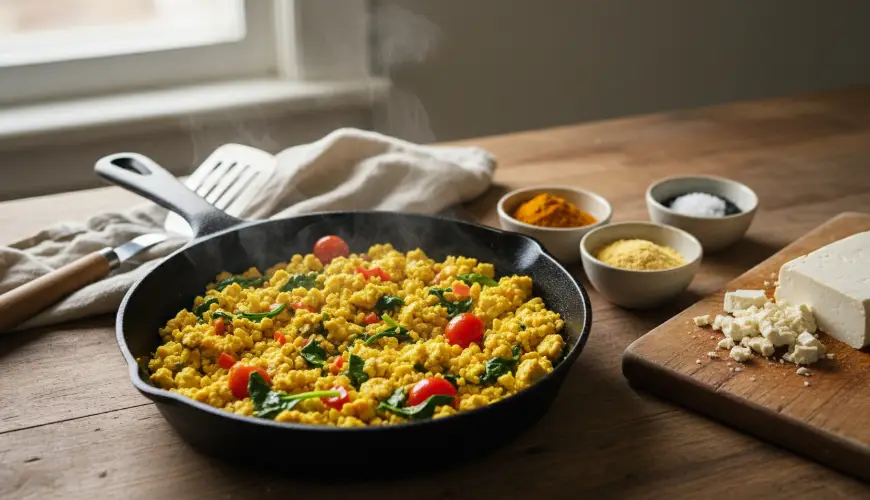
Breakfast is for many people the most important meal of the day, yet the same ritual keeps repeating itself – a pan, butter, eggs. But what if we rewrote this ritual a little? Tofu scramble, i.e. scrambled "eggs" prepared without a single egg, has in recent years become a popular alternative not only among vegans, but also among those who simply want to eat more diversely, more lightly, or more sustainably. And the result? A surprisingly faithful substitute that tastes better than one might expect.
The idea that bean curd could replace classic scrambled eggs sounds to many like a culinary experiment with a predetermined outcome. But tofu is not just a white, shapeless mass without flavour – it is a raw ingredient with enormous potential, which adapts to almost anything a cook wants from it. It is precisely this plasticity that makes it an ideal candidate for the breakfast plate.
Try our natural products


Why tofu works where we wouldn't expect it to
The basis of the whole trick is consistency. Firm or medium-firm tofu has a texture after crumbling that closely resembles beaten eggs during cooking. The key to success is then the seasoning – and this is where one of the most important players in the whole recipe comes into play: turmeric. It is turmeric that gives the dish its characteristic yellow colour, which is so typical of scrambled eggs. Without it, tofu scramble would look like a pile of white matter. With it, it transforms into something that the eye immediately recognises as "eggs".
Alongside turmeric, black salt, known by its Indian name kala namak, plays an irreplaceable role. This salt contains sulphur compounds that give it a characteristic aroma and flavour reminiscent of cooked eggs. This is not merely an aesthetic matter – it is a taste experience that can convince even sceptics. Kala namak can now be found in many organic shops, Asian grocery stores or online, and its use in tofu scramble is literally a game changer.
The preparation process itself is surprisingly simple. The tofu is pressed to remove excess water – the drier, the better the result – and then crumbled directly into a heated pan with a little oil or plant-based butter. Turmeric is added, along with black salt and optionally a little nutritional yeast for a cheesy flavour, and it is ready in a few minutes. The entire preparation takes about ten minutes, which is comparable to classic scrambled eggs.
The nutritional value of tofu scramble is very solid. Tofu is a rich source of plant-based protein – 100 grams of firm tofu contains approximately 8 to 12 grams of protein – and is at the same time naturally cholesterol-free. According to data available from the Harvard T.H. Chan School of Public Health, regular consumption of soy products is associated with a number of health benefits, including a reduction in the risk of cardiovascular disease. This is good news for anyone looking for a nutritious yet light breakfast.
Some might argue that tofu is, after all, a soy product and soy is a controversial topic. It is true that many myths circulate about soy, particularly regarding its effect on hormones. However, the scientific consensus has repeatedly confirmed that moderate consumption of soy is safe for healthy adults and in most cases beneficial. Concerns about the phytoestrogens contained in soy are exaggerated in the context of normal consumption.
How to elevate tofu scramble into a truly memorable experience
The basic recipe is an excellent starting point, but the real magic happens when additional ingredients are added to the tofu. Tofu scramble works as a great platform for vegetables, herbs and various seasonings. Added peppers, spinach, cherry tomatoes or mushrooms turn it into a nutritious and colourful breakfast that will keep you satisfied throughout the entire morning.
One popular variation that has won the hearts of many home cooks combines tofu scramble with sautéed celeriac, pieces of smoked paprika and fresh parsley. The result tastes surprisingly "meaty" and rich, even though there is not a single animal product in the dish. Similarly, adding a dash of soy sauce or worcestershire sauce (in a plant-based version) works well – the umami flavour deepens and the dish gains in complexity.
As British chef and plant-based food advocate Yotam Ottolenghi once remarked: "Vegetables are the most interesting ingredient in the world – you just have to give them a chance." And that is precisely what tofu scramble does. It gives vegetables the space to shine alongside a neutral protein base that absorbs all the flavours around it.
For those who enjoy experimenting, there is a whole range of other possibilities. Tofu scramble can be served in a taco tortilla with avocado and salsa for a Mexican version, wrapped in a wholegrain wrap as a breakfast burrito, or simply served on toasted rye bread with tomatoes. Each variation is different, and none of them is wrong.
A practical example from everyday life: a family from Prague who decided to try a vegan breakfast every day for one month admitted that tofu scramble was the biggest surprise of the entire experiment. The husband, a devoted consumer of bacon and eggs, initially turned his nose up at it. After the third taste, however, he admitted that if someone had served him tofu scramble without prior warning, he probably would not have been able to tell it apart from the classic version. The key was the right seasoning and a sufficiently hot pan – details that make all the difference.
An important part of the success is also the choice of tofu itself. Not all tofu is the same, and choosing the right consistency is essential. For tofu scramble, firm or extra firm tofu works best, as it holds its shape and when crumbled creates larger pieces similar to scrambled eggs. Soft or silken tofu would break down into a mushy mass in the pan – it is better suited for smoothies or desserts. When buying tofu, it is also worth paying attention to the origin of the soy and preferring organic varieties, ideally from European agriculture that does not come from deforested areas.
As far as the ecological dimension of the whole matter is concerned, tofu scramble clearly comes out better than classic scrambled eggs in terms of carbon footprint. The production of soy intended directly for human consumption is significantly less resource-intensive than keeping hens and producing eggs. According to Our World in Data, the greenhouse gas emissions associated with eggs are approximately three times higher than those of an equivalent amount of tofu. For anyone thinking about the impact of their diet on the planet, tofu scramble is a logical choice for at least some breakfasts during the week.
Nutritional yeast, which is added to tofu scramble for a cheesy flavour, is another interesting ingredient that deserves a mention. It consists of deactivated yeast with a characteristic nutty and cheesy flavour, which is also a rich source of B vitamins – including B12 if fortified. For vegans who may otherwise struggle with B12 intake, nutritional yeast is an excellent addition to the daily diet. It is added to tofu scramble in quantities of one to two tablespoons, and its influence on the resulting flavour is surprisingly pronounced.
The whole tofu scramble phenomenon is actually part of a broader trend that is changing the way people think about breakfast. It is no longer just about eggs, milk and butter – more and more people are looking for alternatives that are equally nutritious, but more varied, lighter and kinder to the environment. And it is not necessary to be vegan or give up favourite flavours in the process. All it takes is a little curiosity and a willingness to try something new.
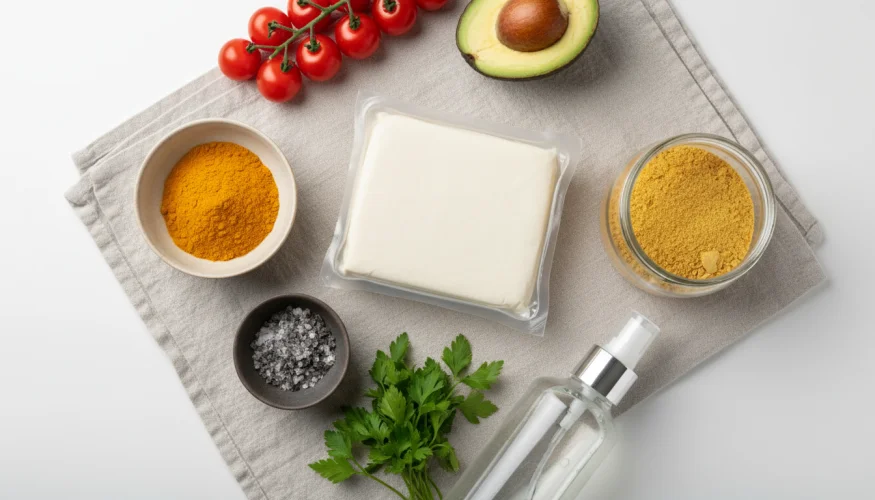
The basic ingredients for a good tofu scramble are available in any larger supermarket or organic shop:
- firm tofu (preferably organic, from European soy)
- turmeric (for colour and a slightly earthy flavour)
- black salt kala namak (for an egg-like taste and aroma)
- nutritional yeast (for cheesy depth of flavour)
- plant-based fat for frying (coconut oil, avocado oil or plant-based butter)
- fresh vegetables according to the season and taste
These ingredients form a base that can be varied endlessly. And it is precisely in that variability that the greatest strength of tofu scramble lies – it is not one recipe, but an entire philosophy of cooking that says good food does not have to be complicated or restrictive.
It is fascinating to observe how a single simple ingredient – a block of white tofu – can transform into something that satisfies the palate, nourishes the body and at the same time does not burden the planet. Perhaps that is precisely why tofu scramble has moved from the margins of vegan cuisine to the centre of attention even among those who do not consider themselves vegan at all. After all, a good breakfast does not have to be defined by what it contains – but by how it tastes.