

# How to Prevent Pilling on Sweaters and Remove It Without a Machine Pilling on sweaters is a commo
Everyone knows it – the favourite sweater you bought with visions of cosy autumn evenings starts looking tired and worn after a few washes. Not because of the colour, not because of the cut, but because of those tiny fibre clusters that settle on the surface of the fabric and turn an otherwise lovely piece of clothing into something you'd rather hide in the wardrobe. Pilling on sweaters is one of the most common problems faced by knitwear lovers, and yet it's surprisingly rarely talked about. How pilling forms, whether it can be prevented, and what to do once it's already there – these are questions worth finding answers to.
Pilling is caused by friction. It sounds simple, but behind this straightforward explanation lies a whole range of factors that determine how quickly and how noticeably pilling will appear on your sweater. Fibres on the surface of the fabric loosen during wear and washing, tangle together, and form tiny knots. The shorter the fibres in the yarn, the faster this happens. This is why cheaper sweaters made from lower-quality wool or synthetic materials pill significantly faster than premium pieces made from merino wool or cashmere with long fibres. The knitting method also plays a role – looser weaves are more prone to pilling than more densely knitted material. And then there's the friction surface: areas such as the underarms, sides, or sleeves around the elbows are subjected to the greatest mechanical stress, which is why pilling appears there first.
Try our natural products

Prevention starts before you even put the sweater on
The most effective fight against pilling is one that takes place before it happens at all. Choosing the right material is a key step that many people underestimate. Natural fibres with long strands – such as merino wool, cashmere, or alpaca – are naturally more resistant to pilling. Synthetic materials like polyester or acrylic, on the other hand, pill readily and quickly, because their fibres are firm and easily catch on one another. Cotton sits somewhere in the middle – it depends on the quality and processing method.
Once you have the sweater at home, a great deal depends on how you wash it. Hand washing in cold or lukewarm water is by far the gentlest option for knitwear. If you use a washing machine, always choose the delicate or wool programme with low spin speed and cold water. Place the sweater in a mesh laundry bag – this small step significantly reduces the mechanical friction forces the fabric is exposed to in the drum. Also avoid overfilling the washing machine, as clothing in an overfull drum gets more compressed and rubs against itself more.
Drying is just as important as washing. Sweaters should never be hung on a line, as wet wool stretches and deforms under its own weight, damaging the fibre structure. Instead, lay them flat on a drying rack or a clean towel, where they can dry in their natural shape. A tumble dryer is almost always a bad idea for knitwear – the high temperature and mechanical movement of the drum accelerate pilling and can also cause the sweater to shrink.
When wearing your sweater, it's worth thinking about what you're wearing underneath or over it. Shirts with rough seams or a coat with a stiff lining can act like sandpaper and significantly accelerate surface wear. An inner layer of smooth material, such as silk or fine cotton, can extend the life of a sweater surprisingly noticeably. Similarly, a shoulder bag or backpack is a direct route to pilling on the shoulders and sides – if the situation allows, opt for a briefcase or a handheld bag instead.
An interesting real-world example: a Stockholm-based fashion designer specialising in sustainable clothing describes how she began recommending that her customers wash knitwear inside out and store it in breathable fabric bags rather than plastic covers. The result? Their sweaters stayed in good condition significantly longer, and customers needed no special equipment or expensive products.
How to remove pilling once it's already there
Even with the greatest care, pilling is sometimes unavoidable. The good news is that this doesn't mean the end of your favourite sweater. There are a whole range of ways to restore knitwear – and not all of them require a special device.
The best-known tool for removing pilling is an electric fabric shaver, but it's far from the only option. Many people successfully use a simple disposable razor – but this is precisely the tool that can be dangerous to the fabric if handled carelessly. Overly aggressive movements or unsuitable blades can damage delicate fibres more than they help. It's therefore worth knowing the alternatives.
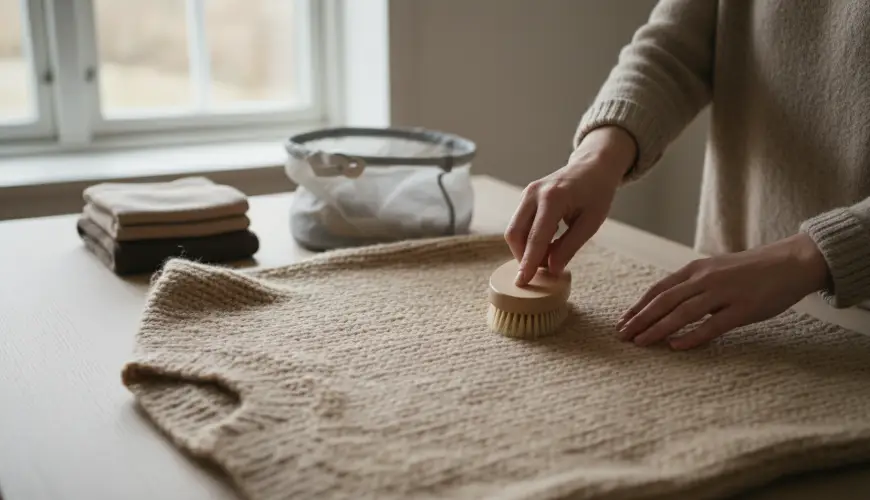
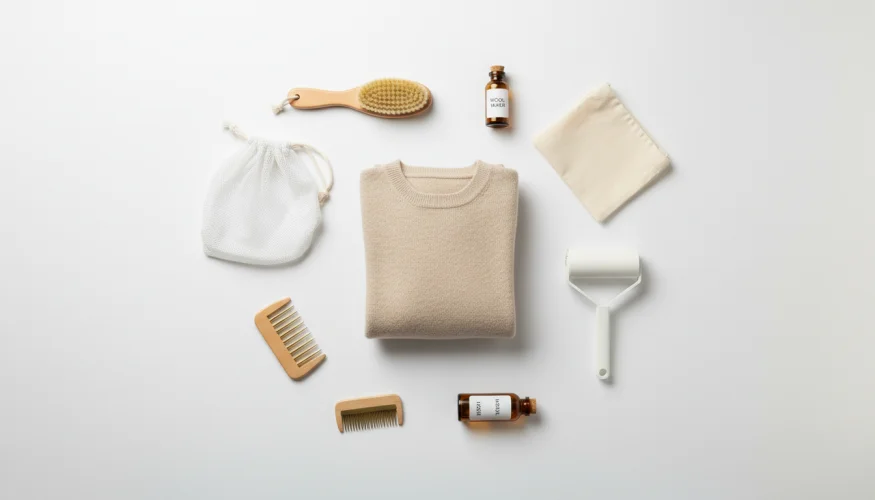
One of the most popular and safest methods is a specialist pilling brush. This is a tool with dense, fine bristles that mechanically loosens and removes pills without damaging the fibres of the fabric itself. It is moved in one direction, with the grain of the fabric, and used slowly and patiently. The results are surprisingly good even on sensitive materials such as cashmere or merino wool. Such brushes are available from online shops focused on sustainable household and clothing care – Ferwer, for example, offers natural alternatives to common synthetic textile care products.
Another option is a so-called pilling sponge or textile pumice stone. It works on a similar principle to the brush – through gentle abrasion, it catches and removes loose fibres from the surface of the fabric. It is better suited to coarser materials, such as fleece or chunky knit wool, than to fine natural fabrics.
A surprisingly effective home method is also a lint roller or even a piece of strong adhesive tape. This method is not designed to remove firmly attached pills, but works excellently for catching loose fibres and small clusters that are just beginning to form. Regularly rolling over the sweater after each wear can significantly slow down the entire pilling process.
For those looking for an even gentler approach, there is a method using a fine razor blade or safety razor held in the hand. The fabric is stretched out on a flat surface – such as a table – and the razor is lightly drawn across the surface with very gentle pressure. This technique requires concentration and patience, but experienced users say they achieve results comparable to an electric fabric shaver. The key is to work slowly, in short strokes, and always in the direction of the fibres.
As British fashion conservator and textile expert Tim Gunn once remarked: "Caring for clothes is not a luxury, it is respect – for the work that goes into them and for the planet from which the materials come." This thought resonates particularly at a time when more and more people are trying to buy less but better, and to keep their existing clothing for as long as possible.
When it comes to professional approaches, dry cleaners in some cases offer specialist knitwear treatments that include pill removal. This option makes sense for very valuable or historically significant pieces where the risk of damage is too high to experiment at home.
It is also important to mention what not to do. Scissors are a tempting but risky choice – trimming individual pills is possible, but laborious, and with a moment's inattention it's easy to snip the fabric itself. Adhesives and chemical solvents are entirely unsuitable for most textiles and can cause irreversible damage. And finally – overly aggressive depilling, with any tool, can thin and weaken the fabric, so that it eventually becomes see-through or tears.
The whole topic of sweater and knitwear care has in recent years been placed in the broader context of sustainable fashion. According to data from Fashion Revolution, textile waste is one of the biggest environmental problems in the fashion industry – and yet a large proportion of clothing ends up in the bin not because it is beyond repair, but because people don't know how to care for it properly. Extending the life of each garment by just two years can reduce its carbon footprint by up to 24%, as the WRAP organisation states in its research on textile waste.
Pilling is therefore not merely an aesthetic problem – it is a symptom of how we treat the things we own. Learning to prevent it and remove it effectively is a small but meaningful step towards making our clothing last longer, look better, and place less unnecessary burden on the planet. And that favourite sweater? With a little care, it can be your reliable companion for many more autumns to come.