

Try homemade kombucha for complete beginners
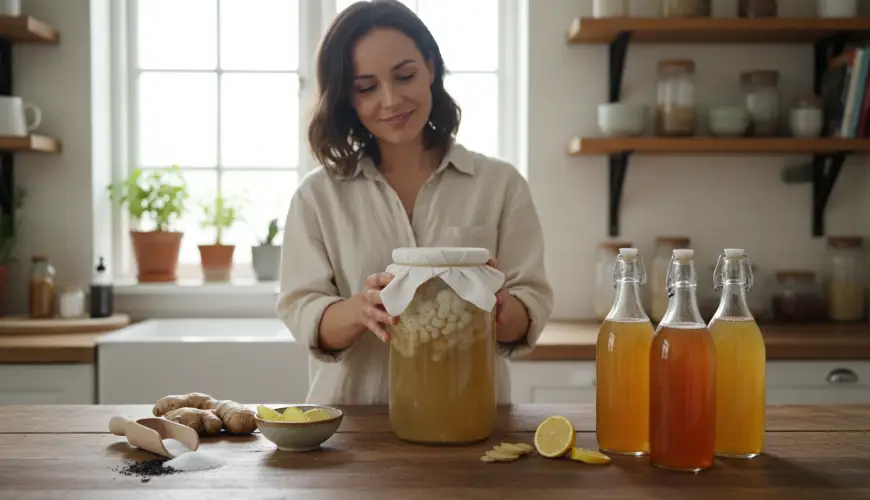
There is something fascinating about how simple tea, a little sugar, and a living culture can transform within a few days into a refreshing, lightly sparkling drink full of beneficial substances. Kombucha, a fermented tea beverage with a thousand-year history, has been experiencing a veritable renaissance in recent years. You can find it in cafés, health food shops, and farmers' markets, but the price of a bottle of quality kombucha can easily come as a surprise. Yet practically anyone can prepare it at home - and the result is usually at least as good as the one from the shop.
Kombucha most likely originates from China, where it was consumed more than two thousand years ago, and gradually spread to Russia, Europe, and the rest of the world. Today it is admired not only by health lifestyle enthusiasts, but also by scientists who study its influence on the gut microbiome and overall health. According to research published, for example, in the scientific journal Frontiers in Microbiology, kombucha contains probiotic bacteria, organic acids, and antioxidants that may have a beneficial effect on digestion and immunity. These are, however, only secondary reasons why people love it - primarily, it is simply excellent.
Try our natural products




What kombucha actually is and why to make it at home
Kombucha is created by fermenting sweetened tea using a symbiotic culture of bacteria and yeast, referred to in English by the acronym SCOBY (Symbiotic Culture of Bacteria and Yeast). This living culture looks like a slimy, rubbery disc and at first glance can appear somewhat off-putting. But once a person understands what is happening inside - how microorganisms convert sugar into acids, enzymes, and CO₂ - they begin to perceive it as a small miracle of nature.
There are several reasons to prepare kombucha at home. The most practical one is economic: a single home batch of two litres costs a fraction of the price of premium kombucha from a shop. Moreover, you have full control over the entire process - you choose the type of tea, the level of sweetness, the degree of fermentation, and any flavourings. Do you want kombucha made from green tea with a ginger and lemon flavour? No problem. Do you prefer the classic made from black tea with a light acidity? That too is simply a matter of adjusting the process.
Home production also has a significant ecological dimension. Plastic bottles, unnecessary packaging, and transportation from the other end of the country are all eliminated. If you acquire a glass jar and take care of your SCOBY, it can accompany you for literally years - and you can give part of the culture to friends, who can thus start their own home cycle.
Some people are afraid that fermentation is complicated or dangerous. In reality, kombucha is one of the most resilient fermentations there is - the acidic environment it creates naturally inhibits the growth of harmful microorganisms. It is enough to follow basic hygiene rules and adhere to a few simple principles, and the result can practically not go wrong.
How to do it: home kombucha step by step
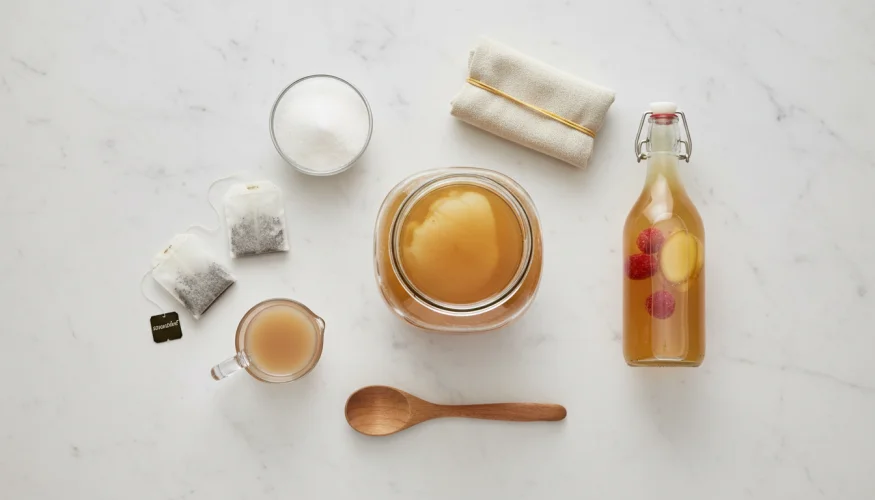
Before you begin, it is good to prepare everything you need. You will need a glass jar with a capacity of at least two litres (ideally with a wide mouth), a clean cloth or coffee filter for covering, a rubber band, tea, white sugar, and of course a SCOBY along with so-called starter liquid - that is, finished kombucha from a previous batch or from someone who gives you the culture. A SCOBY can also be purchased from verified sellers or even grown from store-bought kombucha, although this takes longer.
The foundation is properly prepared tea. Boil approximately 1.5 litres of water and steep four to five tea bags of black or green tea in it for five to ten minutes. Then strain the tea or remove the bags and dissolve 100 to 150 grams of white sugar in the hot tea. It is important to use classic refined sugar - alternative sweeteners such as honey, coconut sugar, or stevia can disrupt or completely prevent fermentation, because the SCOBY needs a specific type of sugar for its metabolism.
Allow the tea to cool to room temperature - this is a key step that beginners sometimes skip. Hot tea would damage or kill the SCOBY. Once the liquid is lukewarm or cold, pour it into the prepared glass jar, add the starter liquid (approximately 200 ml), and carefully place the SCOBY inside. It may sink to the bottom, float on the surface, or tilt to one side - all of this is completely normal and has no effect on the quality of the fermentation.
Cover the jar with a cloth or filter and secure it with a rubber band. The cloth must allow air to pass through while also keeping out insects and impurities. Never use a lid or cling film - kombucha needs access to oxygen for proper fermentation. Place the jar in a dark location at room temperature, ideally between 22 and 28 degrees Celsius, and leave it to ferment for seven to fourteen days.
The length of fermentation depends on the temperature and your taste preferences. The warmer the environment, the faster the fermentation. After seven days, start tasting the kombucha using a straw or spoon - it should be slightly acidic but still pleasantly sweet. If you want a more pronounced acidity, leave it to ferment longer. Once you are satisfied with the result, filter the kombucha into bottles.
At the bottom of the jar and on the surface of the SCOBY, you will notice various strands and sediment - these are yeast chains, which are completely natural and harmless. A new SCOBY (known as a "daughter") typically forms on the surface as a thin, translucent layer and thickens over time. Both the original SCOBY and the new one can be used for the next batch, or one of them can be given away.
Second fermentation: the secret to fizziness
If you want kombucha with bubbles and an interesting flavour, the second fermentation comes into play. Into sealable bottles (ideally with a swing-top cap), add a little fruit juice, fresh ginger, raspberries, or other fruit and pour in the filtered kombucha. Seal the bottles tightly and leave them at room temperature for another one to three days. The sugar from the fruit will ferment and produce CO₂, which dissolves in the liquid inside the sealed bottle - natural bubbles are created.
Beware of excess pressure: the bottles must be carefully "burped" every day to check the pressure and prevent them from bursting. After the second fermentation, move the bottles to the refrigerator, where the fermentation will slow down and the kombucha will keep in good quality for several weeks.
As Michael Pollan, author of a book on fermentation and food, once said: "Fermentation is the oldest form of biotechnology in the world - and at the same time the most accessible." And that is precisely what is so appealing about home kombucha: it is an ancient process that requires no special equipment or expert knowledge, only a little patience and curiosity.
Imagine Martina, a thirty-five-year-old mother of two children from Brno, who started with kombucha a year ago completely by chance - she received a SCOBY from a colleague at work and at first did not know what to do with it. After her first successful batch, she was so enthusiastic that today she makes kombucha regularly every two weeks, experiments with flavours, and has given part of the culture to friends. She says that what surprised her most was how simple the whole process is and how much she enjoys watching the drink change day by day.
The most frequently asked questions and tips for successful fermentation
Beginners most often ask what to do when kombucha does not smell right, or how to tell when something has gone wrong. Healthy kombucha should smell pleasantly sour, somewhat like apple cider vinegar or kefir. If coloured mould appears on the surface - green, black, or pink - this is the only case in which it is necessary to discard the entire batch and start again with clean equipment. Brown or beige strands are not mould, but yeast sediment, and are perfectly fine.
Temperature is one of the most important factors. At temperatures below 18 degrees, fermentation will slow significantly or stop altogether. In winter, many home producers therefore place the jar closer to a radiator or wrap it in a towel. Conversely, excessively high temperatures (above 30 degrees) can damage the beneficial bacteria and favour the yeast, which leads to excessive sweetness and less acidity.
Equipment is also important. Avoid metal containers and utensils - the acids in kombucha can react with metal and release unwanted substances. Glass, ceramic, or food-grade plastic are ideal. Before each batch, carefully wash all equipment with hot water using no cleaning products or a minimal amount, as detergent residue can damage the culture.
If you are planning a longer holiday or want to pause fermentation, simply store the SCOBY in a jar with kombucha, cover it with a cloth, and place it in the refrigerator. There it can wait comfortably for several weeks or even months. Before using it again, allow it to warm to room temperature and, if necessary, "feed" it with fresh sweetened tea.
For those who want to go even further, there is an entire community of home kombucha producers who share tips, recipes, and SCOBY cultures. For example, on the portal Cultures for Health you will find detailed guides, answers to common problems, and inspiration for various flavours and variations. The Czech community of fermentation enthusiasts is also very active - simply look in groups on social media or visit one of the fermentation workshops held throughout the country.
Home kombucha is simply one of those things worth trying. It is not just about a healthy drink - it is about connecting with ancient traditions, about understanding how living organisms work for us, and about the joy of making something valuable with your own hands. And once you understand the basic principle, an entire world of fermentation opens up to you: kefir, kimchi, fermented vegetables, or homemade yoghurt. The journey begins with a single jar of sweetened tea and a small living culture - and that is something truly anyone can manage.