

# Homemade Almond Milk Without Waste and With Pulp
Almond milk has firmly established itself in refrigerators of households around the world over recent years. Whether due to lactose intolerance, a vegan lifestyle, or simply because people enjoy its gently nutty flavour, demand for plant-based milk alternatives continues to grow. Yet anyone who has ever tried comparing the ingredients list on a carton of store-bought almond milk with the homemade version has likely been surprised – and perhaps a little disappointed. Most industrially produced variants contain a surprisingly small amount of actual almonds, while featuring an abundance of thickeners, emulsifiers, and preservatives.
Making homemade almond milk is, however, surprisingly simple, quick, and – if approached with a little ingenuity – completely waste-free. It is precisely this second aspect that tends to be overlooked. After straining the milk, a moist almond pulp remains, which many people discard without hesitation. This is a great shame, because this seemingly useless mass is full of nutrients and culinary possibilities.
Try our natural products

How to Make Homemade Almond Milk Step by Step
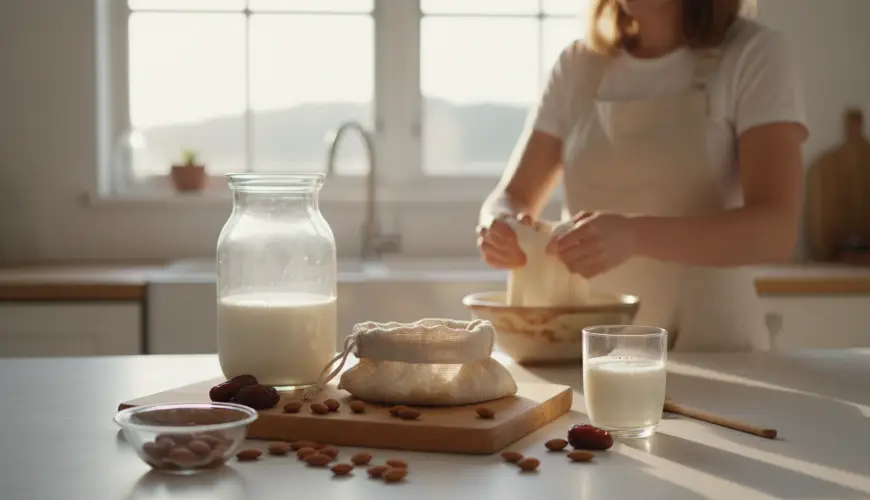
The entire process begins with soaking. Raw, unsalted almonds should ideally be left overnight – or at least eight hours – to soak in cold water. Soaking is not merely a formality: it activates enzymes, reduces the content of phytic acid, which inhibits mineral absorption, and the resulting milk is creamier and easier to digest. According to information published by the specialist portal Healthline, homemade almond milk has a significantly cleaner ingredient profile than most commercial variants, making it a popular choice among people who pay attention to what they eat.
After soaking, simply rinse the almonds with clean water, place them in a blender, and cover with approximately four times the amount of water – so roughly 400 millilitres for 100 grams of almonds. The water ratio can be adjusted depending on how thick a milk you prefer. Less water yields a creamier result similar to cream, while more water produces a lighter drink suitable for coffee or morning cereals. The blender should run for at least one minute, ideally two, to blend the almonds as thoroughly as possible and achieve a smooth milk.
Then comes straining. The best tool is a nut milk bag – the so-called nut milk bag – or a clean piece of cheesecloth. The mixture is poured through the bag into a bowl or jug and gently squeezed. The result is a silky smooth, white milk with a delicate almond aroma. No added sugar, no thickeners, no unnecessary chemicals. Those who wish can add a pinch of salt, a teaspoon of vanilla extract, or a few dates for natural sweetness to the blender – it depends entirely on personal taste and the intended use of the milk.
Milk prepared this way keeps in a sealed jar in the refrigerator for three to four days. It is a good idea to shake the jar before each use, as the natural components separate – and this is actually a good sign. It means the milk contains no emulsifier artificially holding it together.
What to Do with the Almond Pulp? This Is Where the Real Creativity Begins
Once the bag has been squeezed and the milk is ready, a moist, light beige mass remains in the bag – almond pulp, sometimes also called almond meal or okara (although this term is more accurately used for soy pulp). And this is precisely where most people make a mistake: they throw the pulp away. Yet it contains fibre, protein, healthy fats, and a range of minerals. It would truly be a shame to send it to the bin.
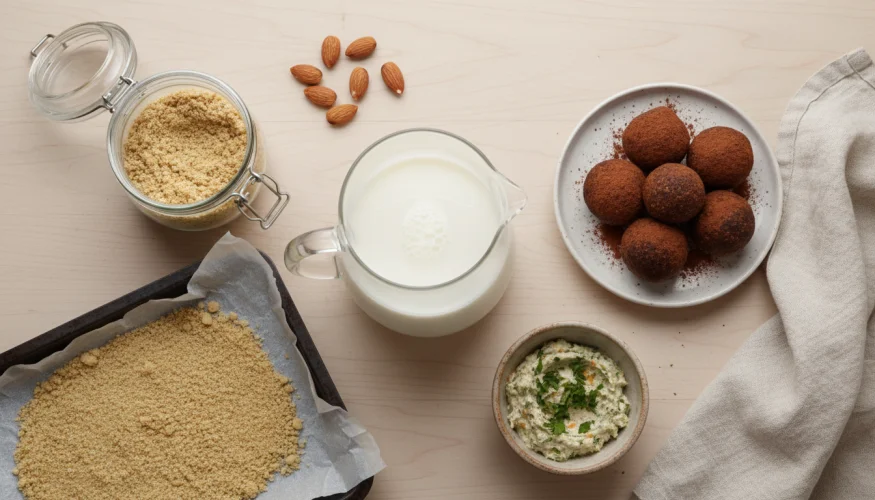
The simplest way to preserve the pulp and use it gradually is drying. Spread on a baking sheet lined with baking paper and placed in an oven heated to 80–90 degrees Celsius for one to two hours, it transforms into a fine almond flour. This can then be used anywhere you would reach for store-bought almond flour – in cakes, biscuits, pancakes, or as part of gluten-free recipes. Dried pulp keeps in a sealed container at room temperature for several weeks.
If, however, you do not want to wait for drying, fresh pulp has its own appeal. It can be added directly to porridge, where it lends a delicate texture and nutty flavour. It works wonderfully in energy balls – mixed with dates, cocoa, and a little coconut oil, it creates a satisfying snack with no baking required. Almond biscuits made from the pulp are also popular; they are naturally gluten-free and surprisingly moist.
One of the most interesting options is using fresh pulp as a base for a vegan "cheese" or spread. Mixed with lemon juice, garlic, salt, and herbs, it becomes a delicious alternative to cottage cheese or ricotta – excellent on bread, in a wrap, or as a dip for vegetables. This use is particularly popular in communities dedicated to zero waste and minimalist cooking.
Imagine Markéta, a young mother from the Central Bohemian Region, who switched to homemade almond milk after she began addressing her family's ecological footprint. At first, she discarded the pulp because she did not know what to do with it. Then she tried adding it to her children's morning porridge – and the result was so good that she now prepares almond milk every week and systematically dries the pulp into flour. "I stopped buying almond flour from the shop altogether," she says. "It works out cheaper and I feel good knowing nothing goes to waste."
Sustainability in the Kitchen Is Not a Compromise, but a Choice
A zero-waste approach to cooking is not merely a fashionable trend – it is a way of thinking that has a direct impact on the amount of waste every household produces. According to data from the Food and Agriculture Organization of the United Nations (FAO), approximately one third of all food intended for human consumption is wasted globally. Part of this waste is generated directly in households – and it is precisely there that it can most easily be reduced.
Homemade almond milk is an exemplary case in this regard. No plastic packaging, no unused leftovers, no unnecessary additives. The entire process from soaked almonds to a jar of milk and a bag of pulp can be completed with a minimum of equipment and maximum results. And if you buy almonds in larger quantities in a paper or fabric bag, the environmental balance is even more favourable.
It is interesting how easily sustainable habits spread. When someone starts making almond milk at home, they naturally begin thinking about other plant-based alternatives too – oat milk, cashew milk, or hemp milk. Each of these variants has its own characteristics, but the principle is similar: simple ingredients, minimal waste, maximum control over what you eat.
It is worth noting that almond milk is not nutritionally comparable to cow's milk – it contains less protein and calcium unless fortified. Those who include it as their primary source of nutrition should ensure a varied diet and consult a nutritionist if necessary. The homemade version, however, offers something that the store-bought version cannot: complete transparency of ingredients and the freedom to tailor the recipe precisely to your needs.
A quote that perfectly captures the essence of this matter comes from American author and activist Bea Johnson, a pioneer of the zero waste movement: "The best waste is the one that is never created." And homemade almond milk with full use of the pulp is imbued with exactly this spirit.
Switching to homemade plant-based milks requires no special equipment or culinary skills. All you need is a blender, a nut milk bag, and a little planning. The result is a drink that tastes better than most store-bought alternatives, costs no more than they do, and leaves behind no pile of packaging waste. And the almond pulp that would otherwise end up in the bin becomes a valuable ingredient for dozens of other recipes.
Anyone who tries it once will find it hard to go back to carton versions. Homemade almond milk is not just about taste or health – it is about a conscious decision to cook thoughtfully, make full use of ingredients, and approach food as something that deserves attention and respect. And that is a value that no emulsifier can put in a carton.