
Try baked chickpeas as a crunchy snack
Everyone knows it – the afternoon arrives, the TV is on, and your hand automatically reaches for a bag of crisps. It's almost a reflex behaviour that most of us don't even notice. But what if we replaced this habit with something that tastes just as great, crunches just as temptingly, yet actually benefits the body? This is precisely the place on the plate that roasted chickpeas can fill – a snack that has been conquering the kitchens of health-conscious eaters around the world in recent years.
Chickpeas themselves are among the oldest cultivated crops in the world. Archaeological finds from the Middle East document their use more than ten thousand years ago. Today we find them in hummus, Indian dal or Moroccan tagine, but few people realise that chickpeas can produce one of the best homemade snacks you can prepare. Roasted chickpeas are surprisingly simple to make, require no special equipment or culinary skills, and the results exceed expectations.
Try our natural products

Why are roasted chickpeas a better choice than regular crisps?
Crisps are one of the most popular snacks in the world – and it's no wonder. They're salty, crunchy and available on every corner. The problem arises, however, when we look at their ingredients. Industrially produced crisps contain large amounts of saturated fats, salt, artificial flavourings and additives whose presence on the label we often can't even read. According to data from the World Health Organization, excessive intake of sodium and saturated fats contributes to the development of cardiovascular disease, obesity and other lifestyle diseases. This doesn't mean that one bag of crisps a month will ruin anyone, but if it's an everyday habit, it's worth looking for an alternative.
And this is precisely where chickpeas come in. The chickpea (Cicer arietinum) is an exceptionally nutritious legume that contains a whole range of beneficial substances. It is rich in plant-based protein – one serving (approximately 100 grams of cooked chickpeas) contains around 9 grams of protein, a value comparable to some animal products. It also contains large amounts of fibre, which supports digestion, helps regulate blood sugar levels and promotes a feeling of fullness. Iron, magnesium, phosphorus, folic acid and a range of antioxidants are also present.
When chickpeas are roasted in the oven with a minimal amount of oil and natural spices, the result is a snack that is not only healthier but also surprisingly tasty. The crispy skin conceals a soft, floury centre, and the resulting texture really does come close to what crisps offer – just without the unnecessary chemicals and excess fat. For many people it comes as a revelation, because such a snack can satisfy without leaving that typical feeling of heaviness and guilt.
Take Markéta, a thirty-year-old accountant from Brno, who had long been trying to cut back on sweets and salty snacks. She replaced regular crisps with various crackers or rice cakes, but was never satisfied – either she missed that real crunchiness, or the snack didn't fill her up at all. Then she came across a recipe for roasted chickpeas with paprika and garlic. "The first time I thought it would be strange, but since then it's been our family favourite. The kids take them to school instead of biscuits," she says. This is precisely the power of this simple dish – it can win over even the most sceptical.
How to prepare roasted chickpeas at home?
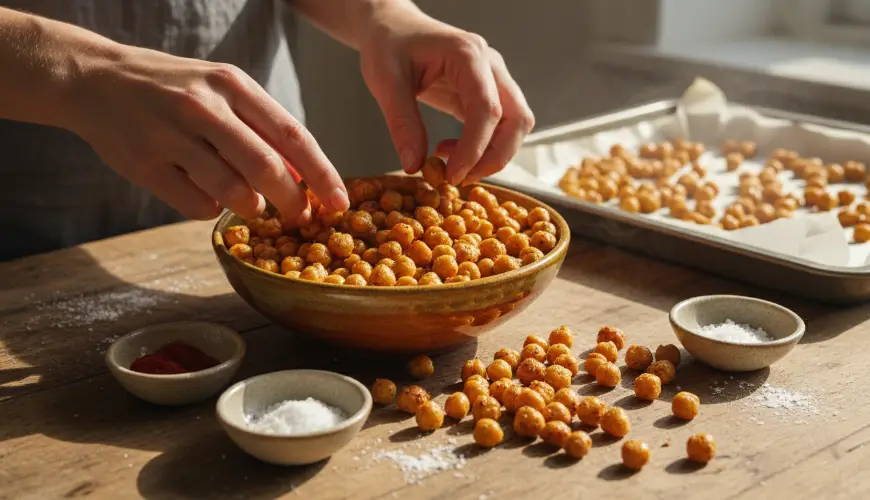
The preparation is truly easy and can be managed by anyone who knows how to turn on an oven. The most important step is properly preparing the chickpeas themselves. If you're using tinned chickpeas, simply rinse them well and – and this is key – dry them thoroughly. Moisture is the enemy of crunchiness. The better you dry the chickpeas with paper towels or a clean kitchen cloth, the better they will roast and the crunchier the result will be.
An alternative is to use dried chickpeas, which are soaked overnight and cooked until soft the next day. This process is more time-consuming, but tinned chickpeas sometimes contain added salt or preservatives, so home preparation from dried legumes has its undeniable advantages.
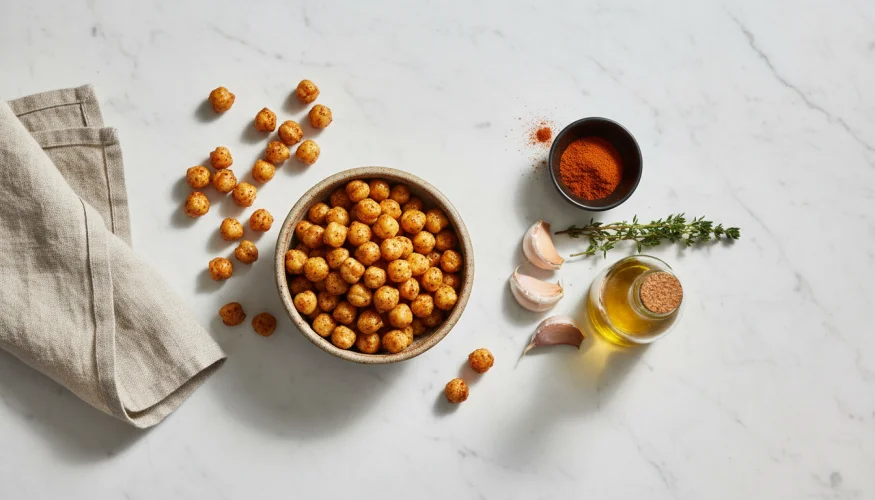
Place the dried chickpeas on a baking tray lined with baking paper, drizzle with a spoonful of quality olive oil and place in an oven preheated to approximately 200 degrees Celsius. Roast for around 30 to 40 minutes, shaking the tray once or twice so that the chickpeas brown evenly on all sides. Only after roasting is it time to season – salt and spices are added at the end or immediately after removing from the oven, because salt added before roasting can draw moisture out of the chickpeas and compromise their crunchiness.
As for spices, the possibilities are practically unlimited. The classic combination of salt, sweet paprika and garlic powder never fails. More adventurous cooks will reach for cumin, turmeric, chilli or even a curry blend. For lovers of sweet-and-salty combinations, cinnamon with a little honey or maple syrup works wonderfully. It is precisely this versatility that makes roasted chickpeas a snack that never gets boring, because each time they can taste different.
The finished snack is best consumed on the day of preparation, when it is crunchiest. If you want to store it longer, keep it in a paper or fabric bag at room temperature – plastic containers cause moisture condensation and the chickpeas would go soft. Some nutrition experts recommend adding a small packet of food-grade silica gel to the container, which absorbs excess moisture.
Nutritionally speaking, roasted chickpeas are truly exceptional. As the Harvard T.H. Chan School of Public Health notes, regular consumption of legumes is associated with a reduced risk of heart disease, better blood sugar control and a healthier gut microbiome. Chickpeas are among the legumes with a very low glycaemic index, meaning that consuming them does not cause sharp fluctuations in blood sugar – which is good news especially for people monitoring their weight or suffering from a pre-diabetic condition.
Fibre also plays an important role, and chickpeas contain it in abundance. An average serving of roasted chickpeas as a snack (around 50 grams) covers approximately 15 to 20 percent of the recommended daily intake of fibre. That is significantly more than a comparable amount of regular crisps can offer.
The comparison of caloric values is also interesting. While 100 grams of industrially produced crisps contain approximately 530 to 550 calories, the same amount of roasted chickpeas comes in at around 360 to 400 calories depending on the amount of oil used. The difference itself may not sound dramatic, but if we consider that chickpeas also satisfy hunger significantly better thanks to their high protein and fibre content, the actual daily calorie intake when eating chickpeas will be noticeably lower.
Roasted chickpeas as a snack also find use beyond classic snacking situations. They work wonderfully as a crunchy topping for soups or cream soups – instead of croutons. They are suitable as part of a platter with hummus and vegetables at a party. They can be added to salads instead of fried tofu or bacon. In short, once you get used to having a supply of roasted chickpeas at home, you'll start adding them everywhere.
It is remarkable how a simple change can influence the overall diet. Nutritional advisors and dietitians repeatedly emphasise that healthy eating is not about strict prohibitions, but about smart substitutions that bring joy and nutrition simultaneously. As American nutritionist Marion Nestle aptly noted: "Food is more than just nutrients – it is pleasure, culture and community." And roasted chickpeas fulfil this statement perfectly: they are tasty, culturally rooted in a millennia-old tradition, and sharing recipes for them has become a veritable community phenomenon on social media.
For those who want to take a step towards a healthier lifestyle but don't want to give up the pleasure of snacking, roasted chickpeas are an ideal starting point. They require no investment in expensive equipment, take no more than an hour of preparation including waiting for them to roast, and the result is a snack you won't stop at after the first handful. Moreover, it is a choice that is also kind to the wallet – chickpeas are among the cheapest legumes on the market, and a kilogram of dried chickpeas costs significantly less than a comparable amount of quality crisps.
Next time your hand automatically reaches for a bag of crisps, it's worth pausing for a moment and remembering that something equally tempting can be created in the oven in half an hour – and one that actually does your body good. Chickpeas have fully earned this comeback in the modern kitchen.