

10 fiber-rich foods that will surprise you
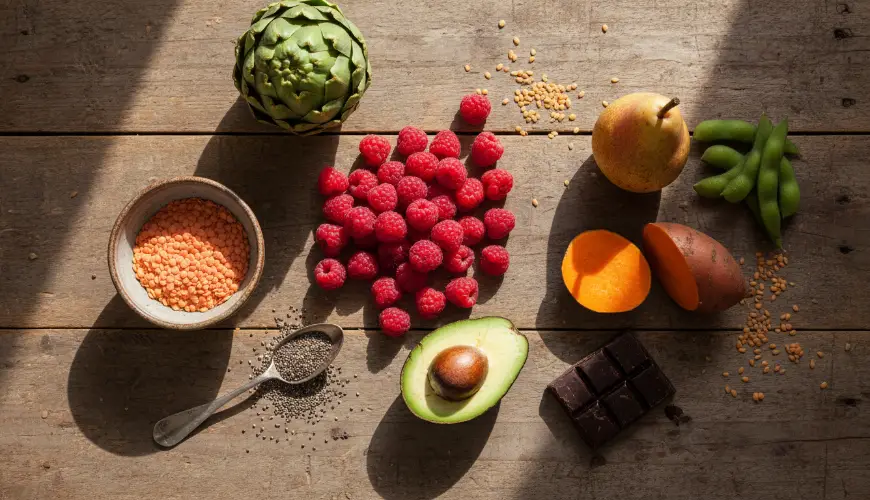
Fiber is a nutrient that is being talked about more and more – and no wonder. It contributes to proper digestion, helps regulate blood sugar levels, promotes a feeling of fullness, and plays an important role in preventing a whole range of lifestyle diseases. Yet the average Czech person consumes only around 15 grams of fiber per day, while the recommended daily intake for an adult, according to recommendations from the European Food Safety Authority (EFSA), is at least 25 grams. This gap between how much fiber we actually consume and how much we should be consuming is surprisingly large – and yet it can be bridged much more easily than it might seem.
Most people, when they think of "fiber-rich food," picture whole grain bread or a bowl of bran for breakfast. But the reality is far more varied. Many foods that are already part of a typical diet, or that can easily be added to a shopping basket, contain surprisingly high amounts of fiber – and yet few people are aware of this. Let's take a look at ten such foods that deserve far more attention.
Try our natural products





Legumes, seeds, and vegetables that surprise
First on the list are legumes, led by red lentils and black beans. While lentils are fairly popular in Czech cuisine, few people realize that a single serving of cooked red lentils (approximately 200 grams) contains up to 16 grams of fiber. That is more than half the recommended daily intake in a single meal. Black beans are similarly impressive – and yet in the Czech Republic they are still considered an exotic ingredient that belongs more in a Mexican restaurant than in a home kitchen. And yet they can be added to soups, salads, or spreads completely inconspicuously.
The second surprise comes from chia seeds. These tiny seeds, originating from the plant Salvia hispanica, have become a symbol of healthy living in recent years – yet few people realize why they are actually so exceptional. Two tablespoons of chia seeds contain approximately 10 grams of fiber, a large portion of which is soluble. Soluble fiber, when it comes into contact with water, forms a gel that slows digestion, prolongs the feeling of fullness, and helps stabilize blood sugar levels. Chia seeds can be added to yogurt, smoothies, oatmeal, or used to make a popular chia pudding.
Third place goes to a food that will surprise many: avocado. This fruit – yes, botanically it is a fruit – is most often mentioned for its healthy fat content, but its fiber content is equally remarkable. One medium-sized avocado contains approximately 10 grams of fiber, combining both soluble and insoluble components. It is a great example of the fact that foods rich in fat are not automatically "empty" in terms of fiber.
The fourth food on the list is artichokes. This vegetable, which has still not made its way into everyday Czech cooking as much as it deserves, is an absolute champion when it comes to fiber content. One medium-sized cooked artichoke contains approximately 10 grams of fiber. It is also a source of inulin – a prebiotic fiber that serves as food for beneficial bacteria in the gut. Research published in the journal Gut Microbes confirms that regular intake of prebiotic fiber has a positive effect on the composition of the gut microbiome, which has far-reaching consequences for overall health.
Fifth on the list are pears. Fruit is generally not considered a significant source of fiber, but pears are an exception. One medium-sized pear with its skin contains approximately 5.5 grams of fiber. The key word here is "with its skin" – a large portion of the fiber is found in the skin, so there is no point in peeling it. Apples are similar in this regard, but pears have a slight edge in this comparison.
Foods you may already have at home without knowing their value
Sixth place goes to flaxseeds. Much like chia seeds, flaxseeds are exceptionally rich in fiber – two tablespoons of ground flaxseeds contain approximately 4 grams of fiber. The ground form is important here, because whole seeds tend to pass through the digestive tract without their contents being fully absorbed. Flaxseeds also contain omega-3 fatty acids and lignans, making them a true nutritional powerhouse. Adding them to morning porridge, homemade baked goods, or a smoothie takes only seconds.
The seventh food is sweet potatoes. One medium-sized baked sweet potato with its skin contains approximately 4 to 6 grams of fiber, depending on size. Sweet potatoes are also a source of beta-carotene, vitamin C, and potassium. They make an excellent alternative to regular potatoes, and their naturally sweet flavor is popular with children too – making them a smart way to increase fiber intake for the whole family.
In eighth place is dark chocolate. This finding will delight many people. Quality dark chocolate with a cocoa content of 70% or more contains approximately 3 to 4 grams of fiber per serving (approximately 30 grams). It is, of course, not a food that should be consumed in unlimited quantities, but as a regular small treat, dark chocolate can contribute to overall fiber intake – while also providing the body with flavonoids that have antioxidant effects. As nutritional advisor Michael Pollan once noted: "Eat food. Not too much. Mostly plants." And dark chocolate, originating from the cacao tree, certainly falls into that category.
The ninth food is edamame – that is, immature green soybeans. One serving of edamame (approximately 155 grams) contains approximately 8 grams of fiber and is also an excellent source of plant-based protein. In Japanese cuisine, edamame is a completely ordinary snack or side dish; in Europe, it is still finding its place. It can be bought frozen in most supermarkets and prepared in just five minutes in boiling water. Sprinkled with sea salt, it makes a tasty and nutritious alternative to potato chips.
The tenth food, which rounds out this overview, is raspberries. If there is one fruit that deserves the title of "highest in fiber," it is raspberries. One cup of raspberries (approximately 123 grams) contains an impressive 8 grams of fiber – more than many vegetables that we would intuitively consider a healthier choice. Raspberries are also packed with vitamin C and antioxidants. Fresh in summer, frozen year-round – raspberries are one of the easiest ways to significantly boost fiber intake without any effort at all.
Consider a specific example: Jana, a thirty-four-year-old accountant from Brno, complained of recurring digestive problems and a chronic feeling of bloating. Her doctor pointed out her low fiber intake. Jana did not undertake any dramatic dietary revolution – she simply started adding a spoonful of chia seeds to her morning yogurt, had a bowl of lentil soup for lunch, and treated herself to a handful of raspberries as dessert in the evening. Within a few weeks, her digestion improved significantly and her feeling of fullness after meals was prolonged to the point where she stopped snacking on sweets from the vending machine at work. This story is not exceptional – many people who have gradually and stress-free increased their fiber intake through foods that are readily available and tasty describe a similar experience.
It is important to note that increasing fiber intake should be gradual. Too rapid an increase can cause bloating or digestive discomfort, especially if the body is not accustomed to a higher fiber intake. It is also essential to ensure adequate fluid intake – fiber only works properly when there is sufficient liquid in the digestive tract. Two liters of water per day is a basic requirement that should not be overlooked.
What is fascinating about the whole topic is the fact that fiber-rich foods do not have to be boring, expensive, or hard to find. You can buy raspberries at any market, lentils are among the cheapest foods in the store, and avocados are now sold practically everywhere. It is simply a matter of starting to pay attention to them – and realizing that a healthy diet is not about deprivation, but about making smart choices about what we add to our plate.