

Exercises for the back will relieve you when you sit all day and will also help the lower back.
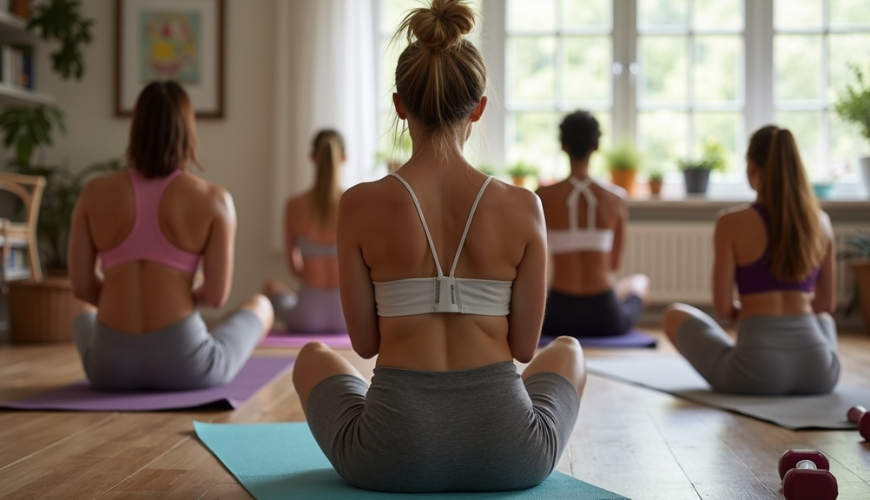
Back pain is no longer just a problem for people who lift heavy loads all day. It often affects those who sit for most of the day, alternate between working from home and driving, and want to "relax" in the evening with their phone. The back is not just a single muscle that can be "fixed" with one movement, but a sophisticated system where the muscles of the torso, pelvis, shoulder blades, and hips work together. If one part doesn't function properly over time, the body starts compensating elsewhere, leading to overload, stiffness, or unpleasant stinging. It's no coincidence that the lower back and the area around the shoulder blades are most commonly mentioned.
The good news is that regular back exercises can help with many common issues. These exercises are simple, safe, and can be done at home without complex equipment. The goal is not to "exercise away" one pain but to gradually improve spine support, thoracic mobility, and core stability. Yes, it can be done in the living room between the coffee table and the sofa. The key is knowing how to exercise your back at home effectively and gently.
Try our natural products



Why back pain is so common (and why it's not just about strengthening)
Back pain can arise for many reasons: prolonged sitting, unilateral strain, stress, lack of sleep, little movement, or even excessive enthusiasm for training without technique. The typical scenario seems harmless: rushing to the computer in the morning, sitting for hours with almost no change in position, transitioning to the car in the afternoon, and doing a quick stretch in the evening "just because." The body adapts—hip flexors shorten, the thoracic area stiffens, shoulder blades lose stability, and the lower back starts taking over the work that the glutes and abdominal muscles should be doing. The result is overload, which can occur when bending over for a shopping bag or during a simple turn in bed.
In recent years, there's been a lot of discussion about how back pain isn't just "mechanical." Psychological factors, long-term stress, and fatigue also play a role. It doesn't mean the pain is "in your head," but that the nervous system is more sensitive, and the body regenerates poorly. This makes a non-aggressive, gradual approach important: a combination of gentle mobility, activation, and strengthening.
If the pain is recurring, sharp, radiates down the leg, is associated with tingling or weakness, or was caused by an injury, a consultation with a doctor or physiotherapist is advisable. However, for common overload, rehabilitative back exercises are very useful—they restore basic function first and then build strength.
"The best back exercise is the one you can do long-term—without fear, without overexertion, and with good technique."
For greater credibility, it's helpful to rely on authoritative sources: useful information about movement and back pain is consistently published by the British healthcare service NHS or Mayo Clinic. Both institutions emphasize that for most non-specific back pain, it's good to stay moderately active and gradually build strength and mobility.
How to exercise your back at home effectively (and find relief)
Home exercise has one major advantage: it can be done frequently and briefly. Frequency is crucial for the back. Instead of one long session a week, 10–15 minutes several times a week might work better, even as "hygiene" after work. However, to avoid a chaotic mix of random movements, it's good to follow a simple logic: first release and mobilize, then activate, and finally strengthen.
Breathing plays a significant role. Under stress, people breathe shallowly and lift their shoulders; the thoracic area stiffens, and the diaphragm doesn't work fully. During exercise, focus on calm abdominal and side rib breathing; the exhale helps engage deeper stabilizing muscles. This isn't esoteric—it's a simple way to signal safety to the body and improve trunk coordination.
Then there's technique. For the back, "less is more." Movement should be smooth, without jerking, breath-holding, or forcing into extremes. If sharp pain occurs during an exercise, it's better to reduce the range, slow down, or change the exercise. Exercises for back pain aren't a competition but an investment in making the body feel stable and secure.
A real-life example might help: in one office, it was repeatedly noted that people stood up "like old folks" after meetings at the table. It wasn't about age but about sitting for two hours without support, with heads pushed forward. One colleague started a simple rule: three minutes of walking down the corridor after each meeting and a short evening routine for thoracic mobility and glute activation. After a few weeks, she noticed it was easier to put on shoes in the morning and the evening tension in her lower back had diminished. Not an overnight miracle, but proof that regular back exercises work when they're realistic and repeatable.
One simple routine (without equipment and with dumbbells)
Below is a comprehensive routine combining rehabilitative back exercises with safe strengthening. It can be done 3–5 times a week, roughly 12–20 minutes depending on the pace. If the exercise is entirely new, start with fewer repetitions and focus on quality.
1) Cat-cow stretch (spinal mobility)
Get on all fours, hands under shoulders, knees under hips. Alternate arching your back (like a cat) and then gently transitioning into a hollow position. The movement is smooth, painless, and the head follows the spine. This exercise helps "wake up" the spine after sitting and often relieves stiffness.
2) Thoracic spine openers (thoracic mobility)
Lie on your side, knees bent, arms in front. Slowly open the top arm backward as if you're "unwrapping" your chest. Hips remain stable. This subtle yet very effective movement is great for people who sit at a computer—teaching the thoracic area to rotate again so the lower back doesn't have to compensate for every turn.
3) Bird-dog (trunk and back stability)
On all fours, extend your right arm and left leg, hold briefly, then return and switch sides. The goal isn't to lift limbs as high as possible but to keep the trunk stable without arching the lower back. Bird-dog is one of the most well-known exercises for back pain because it teaches the body to stabilize the spine during limb movement.
4) Glute bridge (glute activation, lower back relief)
Lie on your back, knees bent, feet on the ground. Lift your pelvis up so the body rests on shoulder blades and feet, briefly squeeze glutes at the top, then slowly lower. If the lower back is significantly engaged, it often means the back is taking over the work—reducing range, slowing down, and focusing on glutes can help.
5) Bent-over rows with dumbbells (upper back strengthening)
Now we move to a classic: back exercises with dumbbells. Take two light dumbbells (or water bottles), slightly bend forward with a straight back, knees slightly bent. Pull the dumbbells towards your waist, elbows pointing back, shoulder blades coming together. It's important not to shrug shoulders and hunch. This exercise strengthens muscles around the shoulder blades, often weakened by a sedentary lifestyle.
6) Romanian deadlift with dumbbells (posterior chain strength, but with respect)
It sounds "fitness," but with good technique, it's one of the best movements for the back and hips. Stand, hold dumbbells in front of thighs. With a straight back, push hips back as if closing a door with your rear, letting dumbbells slide along thighs towards knees and back. The lower back stays firm, movement occurs in the hips. This exercise strengthens hamstrings and glutes, often relieving what's referred to as "sore lower back." If unsure about technique, it's better to start without weights and have the movement checked once.
7) "Dead bug" (abdominals as back support)
Lie on your back, legs raised at a right angle, arms up. Alternately lower one leg and the opposite arm towards the ground, but only as low as the lower back stays grounded. Dead bug is a great complement to back exercises because it strengthens the front of the trunk in a way that doesn't unnecessarily strain the spine.
If the routine needs a simple guide, it's this: after exercising, the body should feel "longer," more stable, and freer, not broken. And if the back feels slightly "sore" the next day, it doesn't have to be bad—muscles are adapting. There's a difference between normal muscle fatigue and sharp spinal pain that worsens.
Back exercises as a habit: what influences the outcome more than a perfect plan
The internet is full of guides for back exercises, but the reality is surprisingly simple: the best plan is the one that fits into life. The back doesn't respond to just one "super" routine but to the overall movement regime. If someone exercises twice a week but spends the rest of the time sitting in one position, the body will keep returning to old habits. There's no need to run a marathon immediately—often adding small things to the day helps: a short walk, chest stretching in a doorway, a few squats without weights while waiting for the kettle to boil.
The environment also plays a significant role. A household that encourages movement works wonders: a mat ready for exercise, a clutter-free space, comfortable clothing that allows breathing and movement. This is part of a healthy lifestyle—small decisions that reduce friction between "I want to" and "I will." Sometimes a simple rule helps: start exercising right after brushing your teeth or turning off the work computer. The body connects two routines, and suddenly, less willpower is needed.
And what if the lower back is particularly bothersome? It's often worth considering if the issue lies in the hips and glutes. When the glutes are "off" and the hips stiff, the lower back tries to take on the role of both stabilizer and mover—an exhausting combination in the long run. That's why exercises like the glute bridge, dead bug, or a light Romanian deadlift make sense in a home program. It's not about bodybuilding but about returning to basic function: so the pelvis and trunk hold together when standing up, carrying groceries, or playing with children on the floor.
It's also fair to say that sometimes people look for "the best rehabilitative back exercises," but they actually need rest and a change in load. If the back hurts after every cleaning, it might be time to reconsider ergonomics—the length of time spent bent over, the height of a mop handle, alternating hands, or simply doing chores in shorter intervals. Sustainability doesn't just apply to fashion or the home; it also applies to the body: excessive sudden load and long-term overexertion aren't sustainable for anyone.
Those who want to add back exercises with dumbbells usually quickly find that the body responds well when the load is increased gradually. Two dumbbells and a little space are enough. It's important that dumbbells aren't an excuse to skip technique. In pulls and deadlifts, quality movement is more important than the number on the weight. If shoulders shrug, the back rounds, and breath is held, the body may "do something," but often it's not what it should.
Ultimately, the biggest secret isn't knowing a hundred exercises but being able to return to them. Regular back exercises are a bit like brushing your teeth: not addressed once a month, but in small, persistent doses. And when combined with a bit of walking, less prolonged sitting in one position, and occasional chest stretching, the back usually becomes more cooperative. Perhaps it's because they finally receive what they've long been missing: attention, movement, and a calm, consistent signal that the body is safe and can be strong.