
Maintenance of silicone seals in windows will extend their lifespan
Windows are one of the most important elements of any home. They let in light, regulate temperature, and separate the cosy interior from the outside world. Yet most people don't pay much attention to them – at least not to their less conspicuous parts. Silicone seals are a key element that determines whether a window truly fulfils its function. Without a functioning seal, heat escapes, moisture penetrates, and draughts begin to form in the room. And yet regular maintenance of silicone window seals is very often forgotten.
The reason is simple – seals are not as immediately visible as dirty glass or cracked window frames. It is a discreet element that quietly does its job, until one day it stops. And that is when problems begin, which can be not only unpleasant but also financially costly.
Try our natural products

What silicone seals actually do and why they matter
Silicone seals perform several important functions in windows simultaneously. Above all, they prevent air from passing between the frame and the glass, or between the frame and the wall, thereby significantly contributing to the thermal insulation of the entire building. They also protect against moisture, which would otherwise penetrate the structure and cause mould or material damage. Properly functioning seals also reduce street noise and improve overall living comfort.
Silicone was chosen as a material for good reasons. It is flexible, resistant to temperature fluctuations, and tolerates UV radiation reasonably well. Yet even the highest-quality silicone does not last forever. The average lifespan of a silicone seal is between 10 and 20 years, depending on many factors – from the quality of the original material and climatic conditions to how regularly the seal is maintained. According to the specialist portal Stavebnictví a interiér, neglecting seal maintenance is one of the most common causes of premature ageing of windows as a whole.
If we recall a situation familiar to almost everyone – in winter, condensation forms on the inside of the window, the masonry around the frame is damp, and the room is draughty even though the windows are closed – then it is likely that the seal is no longer performing its function as it should. Many people in such situations invest in new windows without discovering that the problem could have been solved much more simply and cheaply.
Regular care of silicone seals is not complicated. It requires no specialist knowledge or expensive equipment. You just need to know what to do, how often, and what mistakes to avoid.
Cleaning as the foundation of long service life
The foundation of all maintenance is regular cleaning. Silicone seals are exposed to dust, dirt, grease, and in bathrooms or kitchens also to limescale and soap residue. All of these substances gradually degrade the surface of the silicone, causing it to harden and reducing its flexibility. Once silicone loses its flexibility, it stops sealing and the problems described above begin.
Cleaning should take place at least twice a year – ideally in spring after the winter period and in autumn before the onset of cold weather. In rooms with higher humidity, such as bathrooms or kitchens, it is advisable to clean the seals more frequently, approximately once every three months.
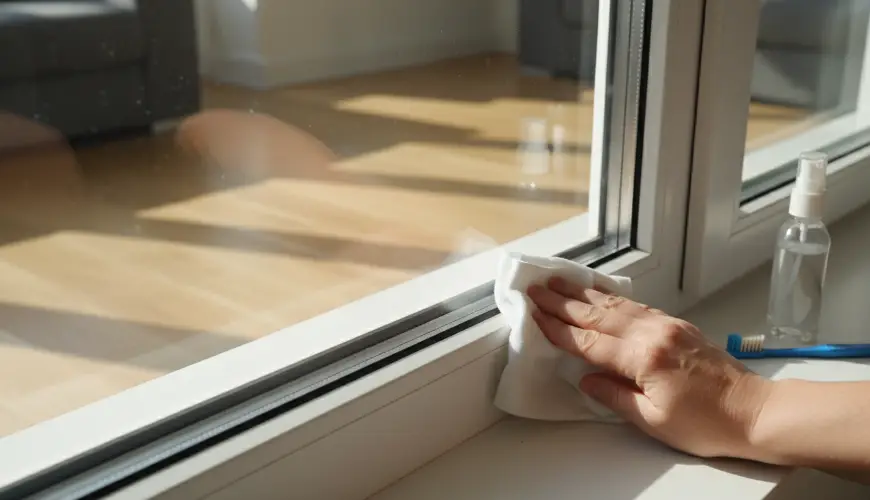
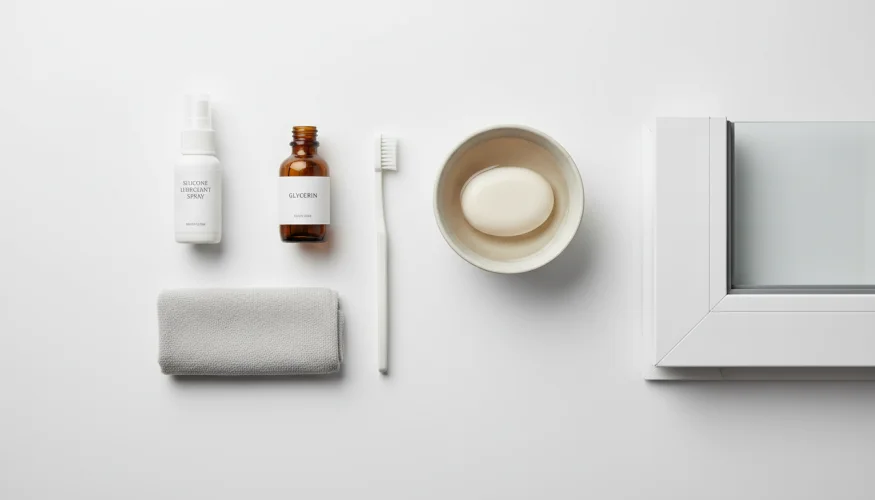
For cleaning, all you need is a soft cloth or an old toothbrush, warm water, and a mild neutral cleaning agent. Aggressive chemicals such as solvents, acetone, or strong degreasers should never be used – while they will remove dirt, they will also damage the structure of the silicone and accelerate its degradation. Abrasive materials such as wire wool or rough scouring pads should likewise be avoided.
When cleaning, it is important to pay particular attention to corners and areas where the seal meets the frame or glass. These are the places where dirt accumulates most frequently and where the first signs of mould appear. If mould has already appeared, it can be carefully removed with a solution of water and vinegar, or with a specialist product based on sodium bicarbonate – i.e. baking soda. After cleaning, it is advisable to dry the surface thoroughly, as moisture is the main enemy of proper seal function.
Interestingly, many people underestimate the drying process itself. A damp seal that is not properly dried is more susceptible to the renewed growth of mould and bacteria. It is therefore advisable after each cleaning to leave the windows open for at least 30 minutes so that the entire area can naturally air out and dry.
Treatment and impregnation – the step most people skip
Cleaning alone is not enough. For silicone seals to remain flexible and perform their function for as long as possible, they need to be treated regularly. This step is the one most frequently overlooked, even though it has a significant impact on the lifespan of the material.
There are specialist products on the market designed specifically for maintaining silicone seals. These are most commonly silicone sprays or glycerine-based products, which restore the flexibility of the material and create a protective layer that prevents further drying out. Application is very straightforward – simply apply the product to a clean, dry seal and gently rub it in with a soft cloth. The whole process takes just a few minutes, but its benefits are considerable.
A practical example is the case of the owner of an older family home who began regularly treating his seals with a silicone spray on the recommendation of a specialist technician. While neighbours in the same development had to invest in replacing entire window frames after ten years due to cracked seals and moisture penetration, his windows continued to function without problems for a further five years. The difference lay precisely in regular maintenance, which took no more than an hour per year.
In addition to commercial products, glycerine has also proven itself as an alternative – an inexpensive and eco-friendly option available from any pharmacy. Glycerine softens silicone, prevents it from becoming brittle, and at the same time repels dirt. It is no coincidence that window manufacturers also recommend it as a basic product for seal care.
As one of the leading Czech experts in building physics put it: "People invest thousands of crowns in quality windows, but then forget that a window is a system – and every system needs regular care to function as it should."
In addition to treating the seal itself, it is advisable to regularly check the fittings and the window closing mechanism. If the window does not close properly, the seal is subjected to uneven pressure, which accelerates its wear. Adjusting the fittings is a quick and inexpensive matter that any experienced DIY enthusiast or service technician can handle.
An important part of maintenance is also regular visual inspection of the entire seal. Ideally this should take place at least once a year – preferably in autumn, before the onset of winter, when the demands on the sealing function of windows are at their highest. During the inspection, the following signs should be looked out for in particular:
- Visible cracks or tears in the seal material
- Loss of flexibility – the seal does not return to its original shape when pressed
- Change in colour – yellowing or blackening may indicate material degradation or the presence of mould
- The seal coming loose from the groove or from the frame
- Draughts or condensation on the inside of the window
If any of these signs appear, it is time to act. Depending on the extent of the damage, a local repair or topping up of the seal may suffice; in more serious cases, complete replacement is necessary.
Replacing a silicone seal is not a particularly complex task, but it does require a certain level of skill and the right tools. The old seal must be carefully removed from the groove, the groove thoroughly cleaned and cleared of any remnants of the old material, and then a new seal of the appropriate cross-section inserted. It is crucial to choose a seal of the correct size and shape, as a seal that is too thin will not seal adequately and one that is too thick may cause problems when closing the window. If in doubt, it is always better to call in a professional.
Choosing the right replacement seal can be surprisingly complex. There is a wide range of types on the market, differing in material, cross-section, hardness, and colour. As a general rule, seals made of thermoplastic elastomer or EPDM rubber are most suitable for standard plastic windows, as they offer good resistance to UV radiation and temperature fluctuations. Silicone seals are preferred in areas with higher humidity, such as bathrooms or conservatories, as they are more resistant to water and mould. A more detailed overview of seal types and properties is offered, for example, by the technical guide of the Association of Window and Door Manufacturers, which is freely available online.
It is also worth knowing that the quality of the new seal installation has a direct impact on its lifespan. A seal that is not correctly seated in the groove or is stretched too tightly will wear out more quickly and may come loose prematurely. It is therefore important to work patiently and carefully – work done thoroughly once every few years is far more worthwhile than repeated quick fixes.
Overall care of silicone window seals is therefore a matter that requires no major financial investment or specialist knowledge, yet yields very tangible results. Lower heating bills, a more pleasant indoor climate, no moisture problems, and a longer service life for the entire window – these are benefits that every property owner will appreciate. All it takes is setting aside time once a year, picking up a cloth and some glycerine, and giving your windows a little attention. Windows will repay this care with years of trouble-free operation.