

Gardening as a Full-Fledged Physical Activity
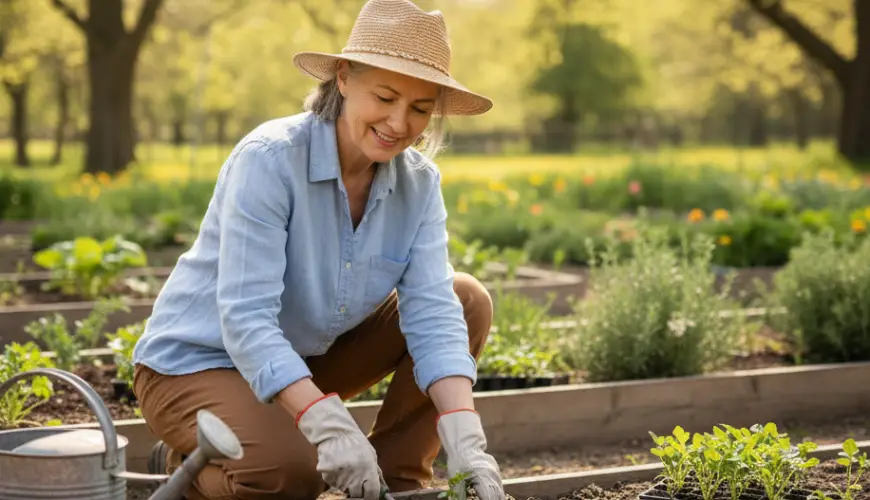
Every spring, gardens come to life, and with them, millions of people reach for shovels, watering cans, and gardening gloves. For many, it is a ritual — a moment of calm and connection with nature. But what if it turned out that this seemingly undemanding activity is also one of the most natural forms of movement that modern humans can engage in? Gardening is not just a hobby — it is movement that benefits the body in ways many people still underestimate.
At a time when the fitness industry revolves around step counters, HIIT workouts, and gym memberships, gardening appears modest by comparison. Yet research repeatedly shows that working in the garden can burn a surprising number of calories, engage dozens of muscle groups, and simultaneously deliver psychological benefits that no treadmill can offer. The British organisation Royal Horticultural Society has long promoted gardening as part of a healthy lifestyle, and in recent years it has been joined by scientific studies that support this idea with concrete data.
Try our natural products


How Many Calories Does Gardening Actually Burn?
The answer depends on exactly what you are doing in the garden — and the results may be surprising. Digging and repotting plants are among the most demanding gardening activities. A person of average weight, around 70 kilograms, can burn approximately 400 to 600 calories per hour during intensive digging, which is comparable to cycling or brisk uphill walking. Mowing the lawn with a push mower requires roughly 300 to 400 calories per hour, while raking leaves comes in at around 250 to 350 calories. Even seemingly passive activities such as watering with a can or repotting plants into planters consume over 200 calories per hour — and entirely naturally, without the feeling that you are "exercising."
The American Centers for Disease Control and Prevention (CDC) explicitly mentions gardening as a moderately intense aerobic activity in its physical activity guidelines. According to these recommendations, adults need 150 minutes of moderately intense movement per week — and regular gardening easily meets this goal without having to set aside time for a dedicated "workout."
Imagine Mrs. Markéta, a woman in her sixties from South Moravia, who always insisted that sport was not for her. Every morning she spent an hour and a half in her garden beds — hoeing, planting, carrying watering cans, kneeling and rising. When her doctor praised her excellent muscle and bone condition after a routine check-up, she was surprised. Yet she had done nothing other than what she enjoyed. Her story is not an exception — it is the rule for generations of people who simply lived gardening without ever calling it exercise.
The key to understanding the energy demands of gardening lies in the variability of movement. Unlike running on a treadmill, where the body repeats the same movement pattern over and over, gardening alternates between squats, bends, carrying loads, walking, and working with the hands and the entire trunk. This diversity of movement is highly valuable from a functional training perspective — the body never "automates" a movement to the point of inefficiency, and different muscle groups take turns bearing the load.
Gardening and Health: More Than Just Calories Burned
It would be an oversimplification to reduce gardening solely to calorie figures. Its health benefits are far more complex, spanning physical and psychological dimensions that are closely interrelated. Regular movement outdoors on natural surfaces strengthens proprioception — the body's ability to sense its position in space — thereby reducing the risk of falls and injuries, particularly in older adults. Kneeling, rising from the ground, carrying heavy containers, or reaching for distant branches are precisely the movements that the modern sedentary lifestyle has erased from our daily routine.
Research published in the Journal of Health Psychology found that gardening reduces cortisol levels — the stress hormone — more effectively than reading a book over the same period of time. This is no small matter. Chronically elevated cortisol levels are associated with a wide range of lifestyle-related diseases, from cardiovascular disorders and metabolic problems to a weakened immune system. The garden thus functions as a natural preventive tool that requires no prescriptions or equipment.
As garden therapist and writer David Messer once observed: "The garden does not need us — we need it." This simple sentence captures something essential: the human relationship with soil and plants runs deeper than mere fondness. It is part of our evolutionary heritage, a return to a rhythm that modern life has interrupted.
Physiotherapists and sports physicians are increasingly drawing attention to a phenomenon known as "natural movement" or natural movement. This is the idea that the healthiest form of movement is not a specialised sport, but diverse physical activity integrated into everyday life — exactly as our ancestors lived. Gardening is in this respect almost a textbook example: it combines walking, carrying, squatting, pushing, and pulling in a natural environment, at a natural pace, and with natural motivation.
The effect on bone density is also significant. Weight-bearing movement — that is, movement in which we carry our own weight or work with a load — stimulates the formation of bone tissue and helps prevent osteoporosis. Digging with a garden spade, carrying bags of compost, or pushing a full wheelbarrow are precisely such activities. Compared to swimming or cycling, which are otherwise excellent sports, gardening holds an undeniable advantage in this regard.
Vitamin D also plays an important role. Working outdoors in natural light — even on overcast days — supports its production in the skin, which has a direct impact on immunity, mood, and calcium absorption. According to the World Health Organization, approximately one billion people worldwide suffer from vitamin D deficiency, with the main cause being insufficient time spent outdoors. Gardeners have a natural advantage in this respect.
The psychological dimension of gardening is inseparable from its physical benefits. Caring for plants brings a sense of purpose, structure to the day, and visible results of one's own work — three factors that psychologists identify as key to mental well-being. It is no coincidence that garden therapy is increasingly being used in the treatment of depression and anxiety, as well as in rehabilitation following various illnesses. In Japan, a similar approach is known as shinrin-yoku, or "forest bathing" — and the scientific evidence of its effects continues to accumulate.
Gardening also has a social dimension that is easily overlooked. Community gardens, which have been springing up in Czech cities in recent years, bring together people of different ages and backgrounds around a shared project. Movement within them is therefore not merely an individual activity, but part of a network of relationships and mutual support — an added value that no gym can offer.
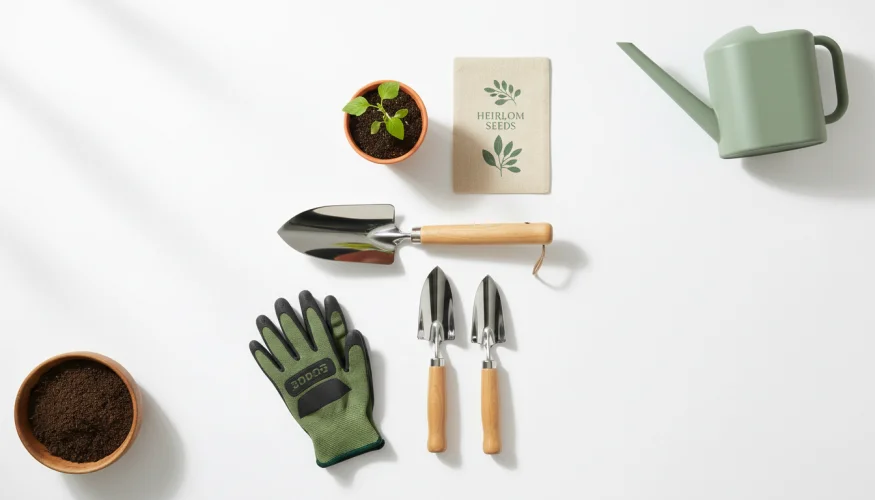
For those who are only beginning to take an interest in gardening, the good news is that you do not need a large plot or professional equipment. Planters on a balcony, a community allotment, or even growing herbs on a windowsill are a perfectly valid starting point. Movement associated with caring for plants is movement regardless of scale — and the body responds to every form of it. If you are looking for quality garden tools or ecological substrates and seedlings to get started, you can find them at specialist online shops focused on sustainable living.
It is worth noting that gardening can be adapted to virtually any level of physical fitness. Seniors, people recovering from injury, or those returning to movement after a longer break can begin with lighter activities such as sowing seeds, repotting, or trimming herbs, and gradually add more demanding tasks. This natural scalability is one of the greatest advantages of gardening over organised sports, where the pressure to perform is often off-putting.
Modern research also shows that contact with soil has a direct effect on the gut microbiome and the immune system. Bacteria present in healthy garden soil, particularly Mycobacterium vaccae, stimulate the production of serotonin in the brain and strengthen the immune response. This is one of the reasons why gardeners anecdotally appear to be happier — and why science is increasingly confirming this impression.
Gardening is therefore far more than a pleasant way to spend free time. It is movement, prevention, therapy, and a way to remain in contact with the natural rhythms that our bodies still need. At a time when people are searching for paths toward a more sustainable and healthier way of life, the garden — however small and modest — stands as one of the most accessible and effective tools available to us. And perhaps it is high time to stop seeing it as a weekend chore and to start treating it for what it has always been: a natural home for both the human body and the human mind.