
Why eat beets when you want inexpensive seasonal vegetables full of flavor
Beetroot has a unique ability to divide society into two camps: some love it for its earthy aroma and deep color, while others avoid it due to memories of school cafeterias. However, today, as more people focus on seasonal cooking, reducing waste, and a naturally diverse diet, beetroot is making a comeback. And it’s not just a trend. With a few simple kitchen tricks, this "ordinary" root vegetable can become an ingredient that is gentle, fresh, rich, and surprisingly elegant. Those who ask, why eat beetroot, usually find that the answer is not just one – it's a combination of taste, nutrition, affordability, and versatility for daily use.
Beetroot also fits perfectly into the philosophy of a more sustainable household: it lasts a long time, can be processed almost entirely, and works in both hot and cold dishes. And perhaps most convincingly – when prepared well, it tastes so good that no one even thinks of it as a "healthy obligation."
Try our natural products




Why eat beetroot: taste, season, and natural nutrition
Let's start with the simplest: beetroot is accessible, affordable, and local. In the Czech context, it is a vegetable that can be easily found from autumn to spring in very good quality, often even in organic varieties. This makes it ideal for a kitchen that wants to be more "honest" and less dependent on ingredients from the other side of the world. Beetroot is also surprisingly versatile – its natural sweetness pairs well with acidic tones (citrus, vinegar, fermentation), dairy products and plant alternatives, nuts, strong cheeses, or even smoked food.
When it comes to how beetroot affects health, its naturally occurring nitrates are often mentioned, as the body can convert them into nitric oxide – a substance associated with supporting blood flow. It's not a miraculous magic, rather a small piece in the mosaic that makes sense in the context of the overall diet. At the same time, beetroot provides fiber and a range of micronutrients; for a basic overview of nutritional values, it's useful to look into the USDA FoodData Central database or the reviews regularly published by Harvard T.H. Chan School of Public Health. Those who want to delve deeper into the connections between beet nitrates and physiology can refer to texts from the NHS or more expert articles in the PubMed database, where there are numerous studies on beetroot and blood pressure or sports performance.
It's fair to add a practical aspect: in some people, beetroot may cause temporary discoloration of urine or stool (so-called beeturia). It looks dramatic, but it's usually harmless. And as with all foods, if a person has specific health restrictions (such as a recommendation to monitor oxalate intake), it's better to discuss frequent consumption with a specialist.
But beetroot isn't just about charts. It's an ingredient that can enhance everyday cooking: it adds color, sweetness, juiciness, and sometimes even "creaminess" without cream. When beetroot is roasted, its flavor softens and concentrates; when grated raw, it can be fresh and crunchy. And when fermented, it takes on a whole new dimension – slightly sour, complex, almost addictive.
"Beetroot is like a small home dye shop – just a few drops of juice and the food looks more festive."
And this is where the most fun part opens up: how to use beetroot in the kitchen so that it’s not just a side dish "to something," but the star of the plate.
How to use beetroot in the kitchen to even please skeptics
The most common problem with beetroot is not in the beetroot itself but in how it is prepared. Overcooked beetroot without acidity and contrast of flavors tastes flat. But as soon as an acidic element, a pinch of salt, something crunchy, and a bit of fat are added, the flavor comes together and starts to make sense. Beetroot loves balance.
A big difference is made by the choice of cooking method. Roasted beetroot is often more accessible to many people than boiled – it is sweeter, more intense, and less "watery." Just wash it, wrap it (even with the skin on), and roast it until tender. The skin can then be easily peeled off. If a little thyme, caraway, or rosemary is added to the roasting, an aroma reminiscent of Sunday roast rather than school salad is created.
The raw variant has the advantage of speed. Grated beetroot with apple, lemon, and a handful of nuts is ready in a few minutes and works as a side dish or a light lunch. When added with a piece of goat cheese or a plant-based alternative along with rye bread, it becomes a full meal. And those who like a "fresh" style can juice the beetroot or blend it into a smoothie – just balance it with something acidic and don't skimp on ginger.
It's often forgotten that beetroot doesn't always have to be the main ingredient. It can function as a quiet helper: a bit of roasted beetroot blended into chickpea spread creates a beautifully pink hummus that often catches children's attention just by its color. Finely grated beetroot can also improve the moisture of dough – for example, in savory pancakes or even in a chocolate dessert, where its flavor gives way to cocoa, but the juiciness remains.
A real example from home practice? Imagine a regular weekday evening: a few leftovers in the fridge, minimal energy for cooking. In such a moment, it's handy to have pre-roasted beetroot in a container. Then, within ten minutes, you can warm up lentils (or use a can), add a handful of arugula, slice the beetroot, toss in some seeds, and drizzle with a simple dressing of mustard, lemon, and olive oil. The result looks like it's from a bistro but was made from what was at hand. This is precisely where beetroot demonstrates why it's worth having "in reserve."
And one more practical note: beetroot stains. On one hand, it's magic; on the other, it's a reality of the kitchen counter. It helps to work on a board that doesn't mind staining, and to rub hands with lemon or wash them with soap as soon as possible after cutting. It's better to keep clothing away – beetroot juice can be stubborn.
Tips for meals and recipes with beetroot that fit into a regular week
Beetroot is most interesting when treated as a full-fledged ingredient, not as a mandatory vegetable. The following beetroot recipe tips are not complicated and most can be adjusted based on what's at home. It's important to stick to the principle: beetroot + acidity + salt + fat + contrast (crunchiness or herbs). Suddenly everything falls into place.
Roasted beetroot for a filling salad
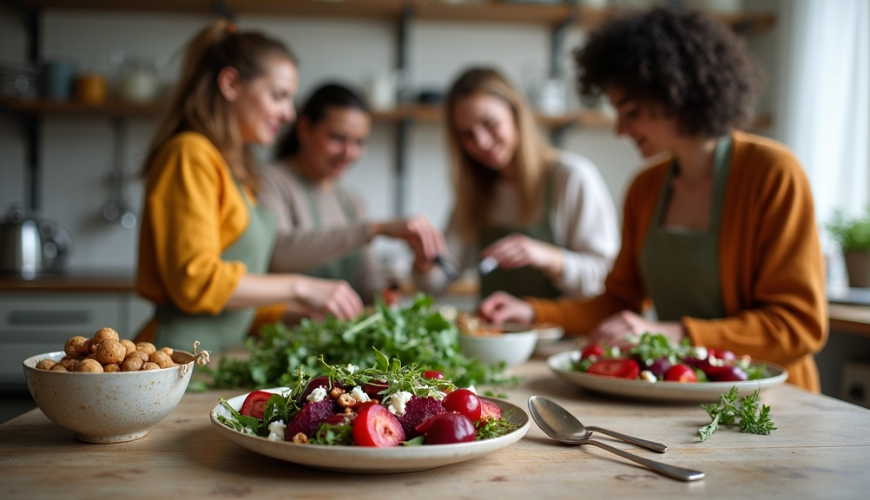
The base is simple: cut roasted beetroot into wedges, add leaves (arugula, lamb's lettuce, spinach), something protein-rich (lentils, chickpeas, cheese, or tofu), and dressing. Dressing often only needs olive oil, lemon, a teaspoon of mustard, and a pinch of salt. Balsamic vinegar or apple cider vinegar works great too. For a more "winter" taste, add walnuts and a bit of horseradish. The result is a dish that tastes robust but is still just a few ingredients.
Creamy beetroot soup without complications
Beetroot soup doesn't have to be just borscht. Try a combination of roasted beetroot, onion, garlic, and vegetable broth. Blend everything until smooth and season with lemon. For smoothness, a spoonful of yogurt or a plant-based alternative is enough, but often nothing is needed – beetroot itself can be creamy. For a more interesting taste, add a pinch of caraway or coriander. And if a handful of roasted seeds is added to the bowl, it creates a contrast that elevates the soup to the next level.
Spread (or dip) that disappears first
Beetroot pairs excellently with legumes. Blended roasted beetroot with chickpeas, tahini, and lemon creates pink hummus that's great in sandwiches or with vegetables. If tahini isn't available, it also works with white beans and a bit of olive oil. It's important to season with acidity and salt; without them, the taste is "dull." This is one of the easiest ways to use beetroot in the kitchen so that even those who usually avoid it will eat it.
Pasta with beetroot sauce that looks festive
Beetroot sauce can be surprisingly simple: roasted beetroot, garlic, olive oil, lemon, and a bit of cheese or cashews (for a vegan version). Blend and mix with hot pasta. The color is vibrant and the taste mildly sweet, so it's good to add pepper and something saltier – like capers or olives. Once tried, people are often surprised that such a "Instagram-worthy" dish is actually quite ordinary.
Quick raw beetroot salad for when there's no time
Finely grated raw beetroot, apple, lemon juice, a pinch of salt, and a handful of seeds. Done. If there's a carrot at home, it fits in well; if there's horseradish, just a little is enough. This salad is also good as a side to baked potatoes or legume patties. And when left to sit for a while, the flavors meld and the beetroot softens.
Fermented beetroot or quick pickling for a "sour" kick
For those who want to elevate beetroot, it can be pickled. Fermentation is a separate chapter, but there is also simple quick pickling: thin slices of beetroot poured with a warm brine of water, vinegar, salt, and a bit of sugar, adding caraway or allspice and leaving in the fridge for a few hours. Such beetroot then excellently complements a sandwich, burger, or bowl with rice and vegetables. And it's precisely this type of small detail that turns a regular lunch into a meal with character.
One practical mini-trick
When beetroot is roasted or cooked "in reserve," it's worth cutting some into cubes, some blending into a puree, and leaving some whole. From one batch, during the week, you can make a salad, spread, and soup – and it's much easier to actually eat beetroot regularly, not just "occasionally."
Beetroot is simply an ingredient that rewards curiosity. Anyone who tries to combine it with lemon, herbs, nuts, or legumes quickly understands that it’s not a boring side dish but a colorful foundation for many simple meals. And perhaps that's its greatest strength: in a time when affordable and sustainable foods are sought after, beetroot quietly reminds us that good cooking often relies on ordinary things – just look at them a little differently.