

Parsnip is a forgotten vegetable full of surprises

There are foods that have survived centuries, nourished entire generations, and then simply disappeared from our diets – not because they stopped being exceptional, but because they were overshadowed by trendier newcomers. Parsnip is one of the most beautiful examples of such a fate. This unassuming white root vegetable was once a staple of European cuisine, featured in peasant soups and royal feasts alike, yet today you'll rarely spot it in your neighbour's shopping basket. And yet, once you taste a properly prepared parsnip, the question of why we forgot about it for so long becomes absolutely inevitable.
Parsnip (Pastinaca sativa) originates from the Mediterranean region and Central Asia, and spread to Europe as far back as antiquity. The Romans considered it a delicacy, and medieval Europe relied on it as one of the few sources of sweetness – sugar was a luxury inaccessible to most of the population at the time. It was only with the arrival of potatoes from North America in the 16th century that parsnip began to slowly fade into the background. Potatoes were more productive, more filling, and easier to store, and so parsnip lost its privileged position in European cuisine. Today, its cultivation and consumption is slowly but surely making a comeback – not only thanks to the fashionable wave of interest in "forgotten vegetables", but also because people are once again seeking variety and authenticity on their plates.
Try our natural products





What parsnip hides beneath its unassuming skin
At first glance, parsnip might be confused with parsley root – both are white, elongated, and smell similar. But taste it once and the difference is immediately apparent. Parsnip has a distinctly sweeter, earthier, and more complex flavour with a slight nutty undertone. This sweetness deepens further after the first frost, when some of the starches in the root convert to sugars – which is why parsnip was traditionally harvested in autumn or winter.
From a nutritional standpoint, parsnip is a true treasure. It contains high amounts of fibre, which supports healthy digestion and positively influences the gut microbiome. It is a rich source of folate, vitamin C, and vitamin K, as well as potassium, manganese, and a whole range of antioxidants. According to data from the United States Department of Agriculture (USDA), 100 grams of raw parsnip contains approximately 75 calories, with more than a third of its total content consisting of carbohydrates – primarily in the form of natural sugars and fibre. This makes it an excellent choice for those seeking an energy-rich yet natural and unprocessed food.
It is also interesting to note that parsnip contains falcarinol and falcarindiol – natural compounds from the polyacetylene group, which are the subject of scientific research in connection with their potential anti-inflammatory and immunomodulatory effects. Studies published in journals such as the Journal of Agricultural and Food Chemistry suggest that these substances may have a positive effect on the human body, although it should be emphasised that research in this area is still ongoing and conclusions are not yet definitive.
Parsnip is also naturally gluten-free and suitable for a wide range of special diets – it is appropriate for vegans, vegetarians, and those following paleo or whole food approaches. Its naturally high fibre content and low glycaemic index compared to potatoes make it an interesting alternative for people monitoring their blood sugar levels.
How do you grow parsnip and where can you find it? In organic food shops or at farmers' markets, you'll generally find it from autumn through to spring – precisely when fresh vegetables are most lacking. A growing number of organic farms are adding it to their range specifically because it is hardy, low-maintenance, and tolerates frosty weather well. If you have a garden, growing parsnip is surprisingly simple – seeds are sown directly into the bed in spring and the harvest comes in autumn after the first frosts.
Parsnip a hundred ways: from soup to crisps
Its versatility is one of the strongest arguments for bringing parsnip back into your kitchen. It is said that a good cook can gauge the quality of an ingredient by how many ways they can prepare it – and parsnip passes this test with ease.
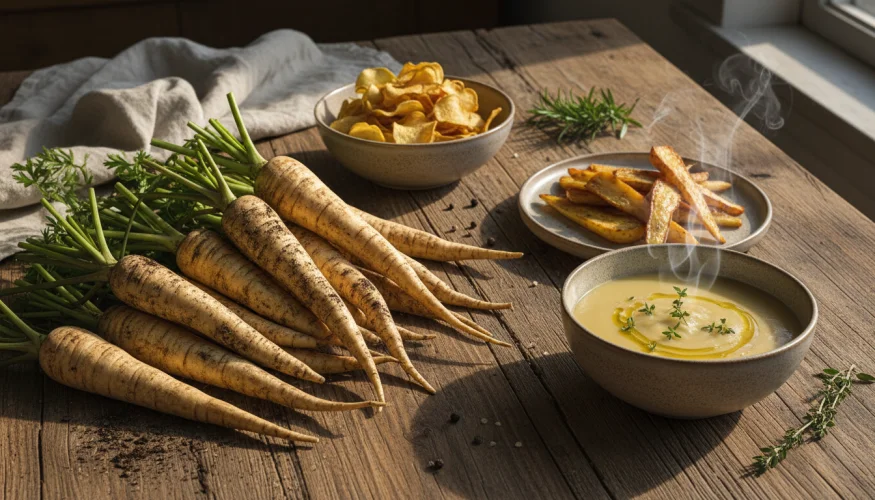
The most classic method of preparation is, of course, soup. Creamy parsnip soup is one of the simplest and most captivating dishes of winter cooking. Simply cook it until soft with onion, garlic, and a little ginger, blend until smooth, and season with coconut milk or cream. The result is a silky smooth, naturally sweet soup with a warming flavour that comforts both body and soul. Try adding a little turmeric or fresh thyme – and a simple recipe is instantly transformed into a sophisticated experience.
But parsnip certainly doesn't end with soup. Roasted parsnip is a delicacy in its own right – cut into wedges, drizzled with olive oil, salted, and sprinkled with rosemary, it transforms in the oven at 200°C in approximately 25 minutes into a caramelised treat with crispy edges and a soft centre. This method of preparation is particularly popular in British cuisine, where roasted parsnip forms a traditional part of a Sunday roast dinner.
A less common but truly exceptional variation is parsnip crisps. Thin slices of parsnip, fried or baked until golden, are naturally sweeter than potato crisps and have a distinctive, complex flavour. They make a great alternative to classic snacks and are easy to prepare at home – without preservatives, without added sugar, and without unnecessary additives. Try seasoning them with sea salt, paprika, or even cinnamon and you'll have a surprisingly addictive treat.
Parsnip also works wonderfully as part of mashes and purées. Mixed with potato or root vegetables such as carrot or celeriac, it creates a purée with a delicate sweet flavour that works well as a side dish for roasted meat or as the base of a vegetarian meal. French cuisine loves to combine it with butter and nutmeg – the result is elegant yet simple.
Raw parsnip is a less common but interesting option. Grated into a salad with apple, walnuts, and a dressing of lemon juice and honey, it creates a fresh winter salad full of contrasts – sweet, sour, crunchy. This combination may sound unusual, but it is precisely such surprising flavour pairings that transform a forgotten vegetable into a modern gastronomic discovery.
It is worth mentioning that parsnip is also excellent in fermented preparations – kimchi made from root vegetables or fermented parsnip sticks are a wonderful way to enrich your diet with probiotics while also reducing food waste. As British chef and sustainable food advocate Hugh Fearnley-Whittingstall once remarked: "Forgotten vegetables remind us that food doesn't have to be exotic to be extraordinary."
Why we are returning to forgotten vegetables
The interest in forgotten vegetables – those varieties that were pushed out by industrial agriculture and standardised supermarket shelves – is not merely a passing trend. It is part of a broader shift in the way we think about food, agriculture, and sustainability. Organisations such as Slow Food International have long been highlighting the fact that biodiversity in agriculture is not only culturally valuable, but also ecologically essential. Growing diverse vegetable varieties reduces dependence on pesticides, enriches the soil, and increases the resilience of the entire food system in the face of climate change.
Take, for example, a family from the South Bohemian countryside who decided to return to traditional gardening and include parsnip, black salsify, and Jerusalem artichokes in their vegetable plot. At first, the neighbours were sceptical – why grow something that nobody buys in the shops anyway? But after the first harvest and the first tasting, the situation changed completely. Neighbours began asking for seeds, a local restaurant expressed interest in regular deliveries, and what began as a personal experiment became a small community project. This story is not exceptional – similar initiatives are springing up all across the Czech Republic and are testament to the fact that interest in authentic, local, and forgotten foods is growing.
Parsnip is also a symbol of a slower and more mindful approach to food. In an age when we are accustomed to the constant availability of everything at any time, seasonal vegetables with a distinctive character force us to adapt to the rhythm of nature. Waiting for the first frost, harvesting in autumn, cooking according to what is growing – these are principles that carry profound meaning, not only ecologically but also psychologically. Research in the field of food psychology suggests that conscious and intentional cooking with local ingredients increases satisfaction with food and strengthens a sense of connection with both nature and community.
And yet parsnip requires no special skills or exotic ingredients. It is accessible, affordable, and its preparation is intuitive – manageable for a kitchen beginner and an experienced cook seeking inspiration alike. Perhaps it is precisely because it is so unassuming and modest that so many people have not yet noticed it. But those who give it a chance tend to return to it time and again – not only for its flavour, but for everything that lies behind it.