

Why Fall in Love with Kimchi Ramen as a Healthy Choice
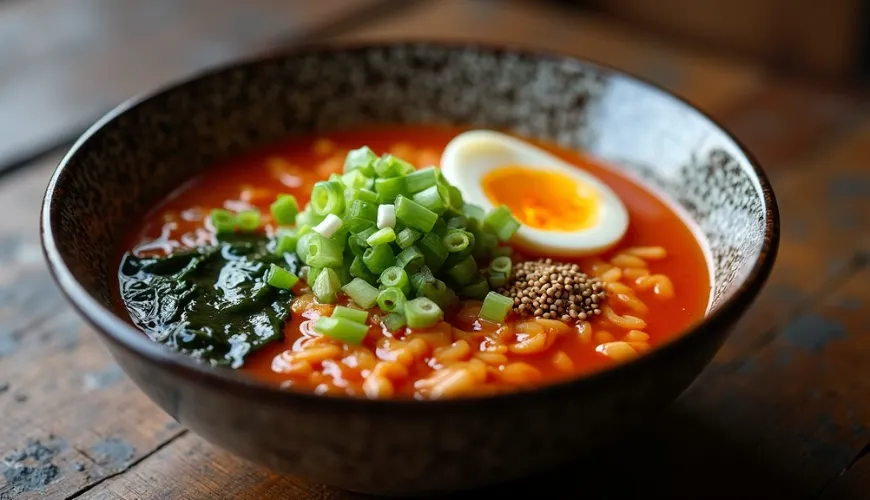
Kimchi Ramen - A Fusion of Korean Fermentation and Japanese Tradition in One Bowl
Ramen. A word that has become synonymous in recent years with a warm, fragrant, and hearty soup that delights not only the taste buds but also the eyes. And kimchi? The traditional Korean fermented vegetable that has gained fame for its spicy tones, rich flavor, and extremely beneficial effects on digestion. When these two culinary stars combine, an exceptional dish is created – kimchi ramen. And that's what we will discuss.
Kimchi and Ramen - Two Worlds, One Taste Harmony
Although ramen originates from Japan and kimchi from Korea, their combination is not a modern eccentricity, but rather proof of how culinary cultures can enrich each other. In recent years, kimchi ramen – that is, ramen with kimchi – has experienced a huge boom not only in Asian metropolises but also in Western Europe and the USA. The reason is simple: this combination offers a deep umami flavor, natural spiciness, and a touch of healthy fermentation, pushing the boundaries of a common experience in a bowl of ramen.
Kimchi itself is a treasure. Not only does it contain vitamins A, B, and C, but thanks to fermentation, it is rich in probiotics, i.e., live bacterial cultures that support a healthy gut microbiome. When added to a hot soup with noodles, broth, and other ingredients, the result is a dish that nourishes, warms, and simultaneously aids the body.
Try our natural products





The combination of kimchi with ramen is not only about taste – it is also about the convergence of cultures and eating philosophies, where health and pleasure do not exclude but support each other.
How to Make Homemade Kimchi Ramen
You don't need to look for the nearest Asian bistro to enjoy this delicacy. A homemade kimchi ramen recipe can be surprisingly simple yet unforgettable in flavor. It all starts with good kimchi – ideally homemade, or quality from a bio store, which does not contain preservatives and is unpasteurized to preserve its beneficial cultures.
Then there's the cornerstone of ramen – broth. In traditional Japanese cuisine, it is often made from pork bones (tonkotsu), chicken skeletons, or fish flakes. For a vegetarian or vegan version, a broth made from kombu seaweed, dried shiitake mushrooms, carrots, onions, and garlic works great – the result will be just as fragrant and full of flavor.
To the broth, miso paste, soy sauce, and sesame oil are added – these ingredients give depth and body. Kimchi is added either during cooking or at the end as a garnish – depending on whether you want it to soften slightly and release more flavor or, on the contrary, remain crunchy and distinct.
Into the bowl, go the noodles – classic wheat ramen noodles, or their gluten-free variant from rice or buckwheat. On top, other ingredients are added according to taste and style: boiled egg, pickled bamboo, fresh spring onion, tofu, mushrooms, or sautéed vegetables.
The result is a dish that not only looks great on the plate but above all surprises with its complexity of flavors and healthy character.
Small Bowl, Big Impact - Why Kimchi Ramen Deserves a Place on Your Table
At first glance, kimchi ramen may seem like just another of many exotic dishes that people order more for variety. In reality, however, it hides much more. Thanks to the combination of fermented vegetables, nutritious broth, and fiber-rich ingredients, it is a dish that can be a regular part of a healthy diet.
One of the most interesting aspects is that kimchi ramen can support digestion and strengthen the immune system, thanks to its fermented components. Kimchi contains live lactic acid bacteria – a natural probiotic beneficial for the gut microbiome. And as modern studies confirm today, a healthy gut means not only better digestion but also mental well-being and resistance to illnesses.
Moreover, kimchi ramen can be very adaptable. Just swap the broth or main ingredients according to dietary style – vegans, vegetarians, and gluten-free eaters will find their version. For example, in a popular café in Copenhagen, where they serve a minimalist version of kimchi ramen with buckwheat noodles, baked tofu, and fermented vegetables from local farms, queues regularly form. This shows that even in Europe, people are learning to seek taste authenticity with regard to health and the planet.
How to Make Kimchi Ramen at Home - A Simple Recipe for Everyone
Below is a basic recipe that can be adjusted according to taste or ingredients you have on hand:
Ingredients for 2 servings:
- 500 ml vegetable or chicken broth
- 1 tablespoon light miso paste
- 1 teaspoon soy sauce
- 1 teaspoon sesame oil
- 150 g cooked ramen noodles or buckwheat noodles
- 100 g quality kimchi
- 1 boiled egg (optional)
- Spring onion for garnish
- Shiitake mushrooms, or oyster mushrooms
- Tofu cubes or slices of baked tempeh
- Sesame seeds, chili to taste
Instructions:
Heat the broth and add the miso paste, soy sauce, and sesame oil. Stir until dissolved. Add sliced mushrooms to the warm broth and simmer briefly. Add noodles, kimchi, tofu, and boiled egg. Serve into bowls and sprinkle with spring onion, sesame seeds, and optionally chili.
This basic recipe is just an entry point – don't be afraid to experiment with different variations. Kimchi ramen is like a canvas on which you can paint according to mood and season.
Kimchi Ramen as the Food of the Future?
While kimchi ramen was once the domain of Asian households and specialty establishments, it is now becoming part of global cuisine. Not only because of its taste but also due to its sustainability and nutritional value. In a time when more and more people are concerned about the origin of food, its impact on health, and the environment, kimchi ramen represents an ideal choice: it uses seasonal vegetables, fermentation instead of preservation, and offers room for plant-based alternatives.
As Korean chef Edward Kwon says: "Kimchi is like jazz – the foundation is given, but the interpretations are endless." And this is twice as true for ramen.
Thus, kimchi ramen is not just another trend in the food world. It is an example of how to combine health, taste, and sustainability into one plate – or rather bowl. Whether you prepare it according to a traditional recipe or create your own variation, you will always taste something a little more than just soup: a piece of the connected world on a spoon.