

Try a three-minute breathing exercise for stress relief
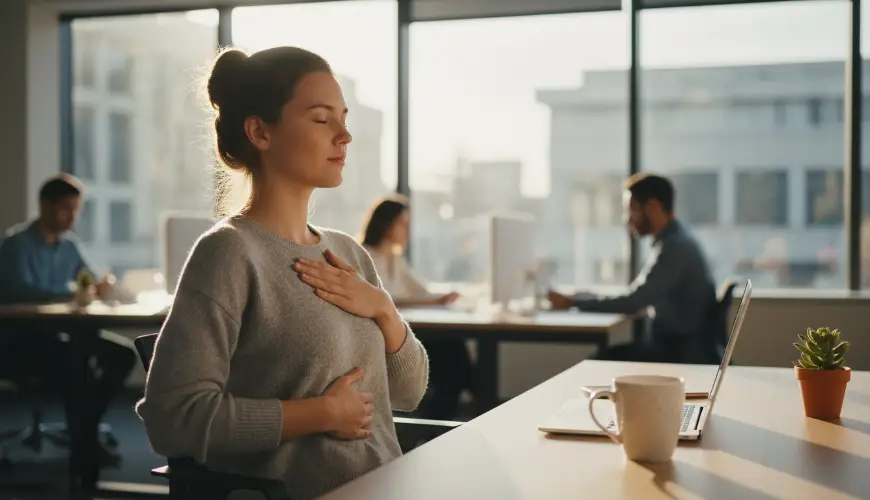
The modern world moves at a dizzying pace. Work deadlines, an overflowing diary, an endless stream of phone notifications – and the body responds to all of it in its own way. Muscles tense, the heart beats faster, the mind jumps from one worry to the next. These are precisely the moments when a quick reset would come in handy. And surprisingly, all it takes is three minutes and something people do their entire lives completely automatically: breathing.
But breathing consciously is an entirely different discipline from breathing out of mere necessity. Conscious work with the breath is one of humanity's oldest tools for managing tension, anxiety and overwhelm. We find it in yogic pranayama techniques thousands of years old, in Buddhist meditation, and in the most modern protocols of clinical psychology. And the best part? You don't need any equipment, special clothing or an expensive course for it to truly work.
Try our natural products
Why does breath have such a powerful effect on stress?
To understand why breathing exercises for stress actually work, it helps to peek a little under the hood of human physiology. The human nervous system is divided into two branches: the sympathetic, which triggers the "fight or flight" response, and the parasympathetic, which calms the body and puts it into a rest and recovery mode. In moments of stress, the sympathetic branch takes over – breathing speeds up and becomes shallow, muscles tense, and cortisol levels rise.
The key connection between these two systems is the vagus nerve, known in Latin as the nervus vagus. This nerve connects the brain to most of the internal organs and is extraordinarily sensitive to the rhythm and depth of breathing. Slow, prolonged exhalations activate the parasympathetic system and literally signal to the brain that the danger has passed. Research published in journals such as Frontiers in Human Neuroscience has repeatedly confirmed that controlled breathing can measurably lower cortisol levels and slow the heart rate within just a few minutes.
It is therefore no piece of mysticism that grandmothers used to advise "take a breath and count to ten." They intuitively sensed what modern science can now measure and describe.
Three minutes that are truly enough
Three minutes may seem like a laughably short amount of time. But this accessibility is precisely the greatest advantage of breathing techniques – they can be practised anywhere and at any time, without disrupting the rhythm of daily life. Try to imagine a situation that many people know all too well: before an important meeting, an exam or an unpleasant phone call, that uncomfortable tightness in the chest sets in. This is exactly when a brief breathing exercise serves better than coffee, a cigarette or mindless scrolling through social media.
What does such a three-minute practice look like? There are several techniques that are scientifically supported and yet simple enough for absolutely anyone to master.
The best-known and most thoroughly studied method is so-called box breathing. This technique is used, for example, by members of the US Navy SEALs to manage extreme stress in combat situations – and translated into civilian life, it works just as reliably. The principle is straightforward: inhale for four counts, hold for four counts, exhale for four counts, hold for four counts. This cycle is repeated for three minutes. The regular, symmetrical rhythm of breathing works directly with the nervous system and quickly induces a sense of calm and focus.
The second popular technique is the 4-7-8 method, popularised by American physician and integrative medicine expert Andrew Weil. The inhale lasts four seconds, the breath is held for seven seconds, and the exhale lasts eight seconds. The prolonged exhale is key here – it is what most powerfully activates the parasympathetic nervous system. This technique is particularly well suited to use before sleep or during moments of intense anxiety.
The third approach, especially suitable for beginners, is simply conscious diaphragmatic breathing. It involves shifting attention from shallow chest breathing down into the belly – on the inhale, the abdomen expands; on the exhale, it falls. A hand placed on the belly serves as simple biofeedback. Three minutes of this kind of breathing is enough for the body to visibly relax.
As world-renowned psychiatrist and trauma research pioneer Bessel van der Kolk has noted: "Breath is the only bodily function that is simultaneously automatic and consciously controllable – and it is precisely this duality that makes it the most accessible gateway to regulating the nervous system."
How to build the practice into everyday life
Knowing about breathing techniques is one thing. Actually using them when stress arrives is another. The brain under pressure reaches for established patterns – and if conscious breathing is among them, it will reach for it automatically. This is why regular practice is key, ideally before a crisis even arises.
The simplest approach is to anchor a breathing exercise to an existing ritual. In the morning before the first coffee, in the car before stepping out at work, or in the evening after putting down the phone. Three minutes is so short that it fits in virtually anywhere. Some people set a discreet reminder on their phone for the time of greatest work pressure – and instead of checking emails, they allow themselves a three-minute breathing pause.
An interesting example comes from the experience of a primary school teacher who began incorporating a short breathing exercise before every written test. The pupils initially reacted with typical adolescent resistance, but after a few weeks they started asking for "those breathing things" before other challenging situations as well. Test results did not improve overnight, but the atmosphere in the classroom changed noticeably – less panic, more focus.
Breathing practice works similarly in the corporate environment. A number of progressive employers around the world have begun incorporating short breathing or meditation breaks into the working day, with research showing a positive effect on both productivity and employee wellbeing. This is not a passing trend, but a pragmatic response to the epidemic of occupational burnout which, according to data from the World Health Organization, is affecting an ever-growing portion of the working population.
It is also important to understand what breathing exercises are not. They are not a miracle cure that will resolve chronic stress caused by an unsuitable job, toxic relationships or lack of sleep. They are a first-aid and prevention tool – powerful, but with their limits. Long-term stress management requires a more comprehensive approach, one that includes physical activity, quality sleep, meaningful relationships and, where necessary, professional help.
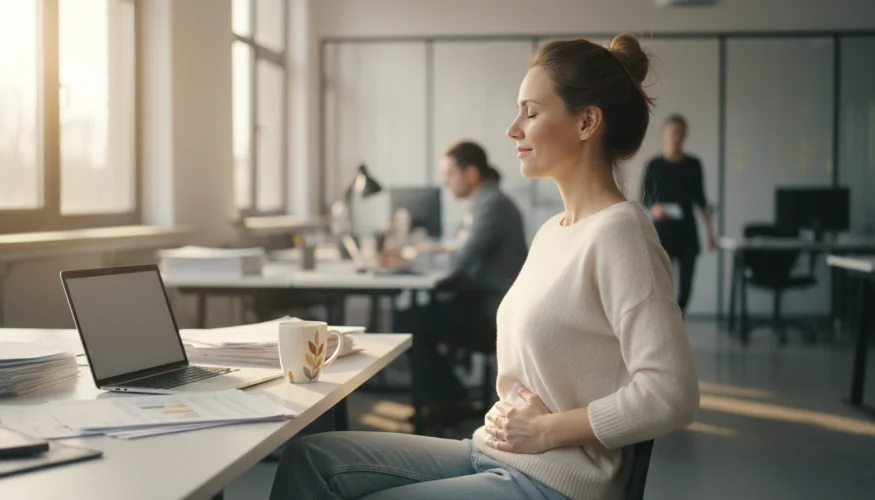
Nevertheless, the ability to quickly calm one's own nervous system through breath is a skill that pays off for everyone. Whether it is a parent of young children, a student facing exam season, a manager before a demanding presentation, or an older person whose body responds to stress more sensitively than before – three minutes of conscious breathing is equally accessible to all.
It is also useful to know that the effects of breathing exercises accumulate. Research in the field of neuroplasticity shows that regular breathing practice gradually changes the way the brain responds to stress stimuli. People who practise conscious breathing over the long term show lower baseline cortisol levels and a faster return to a calm state after a stressful event. In other words, the more one practises, the better it works – and the less the everyday pressures knock one off balance.
It is worth mentioning that breathing exercises combine wonderfully with other elements of a healthy lifestyle. Movement in nature, a quality diet rich in nutrients that support the nervous system, or even aromatherapy with calming essential oils – all of these can amplify the effect of conscious breathing. Self-care is not a luxury, but a fundamental condition for being able to function fully and with joy.
As for where to begin, the answer is surprisingly simple: here and now. There is no need to wait for ideal conditions, a quiet place or a special meditation cushion. All it takes is to pause for a moment, place a hand on the belly and begin breathing consciously. Four seconds in, four seconds out. Again. And again. Three minutes that everyone deserves – and that can change the entire rest of the day.