
Morning routine in 10 minutes that lasts all day
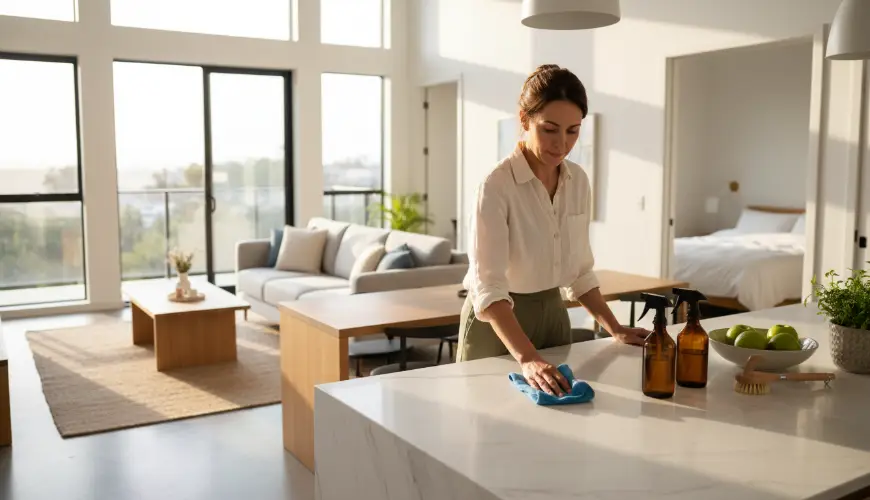
Every morning, the same drama unfolds. The alarm goes off, the coffee brews, and in the meantime you overlook the pile of clothes on the armchair, last night's dishes, and shoes scattered by the door. Leaving the house is accompanied by a mildly unpleasant feeling of returning to chaos. And return you will — because the chaos wasn't resolved, just postponed. Yet there's a simple way to tackle the morning tidy-up in just ten minutes and ensure that order truly lasts the entire day, not just until the first household member comes home.
This isn't about any revolutionary method or expensive organisational systems. It's about understanding how chaos actually arises — and about a few habits that stop it before it has a chance to spread.
Try our natural products
-1-m.jpg)
-1-m.jpg)
-1-m.jpg)
-1-m.jpg)
-1-m.jpg)
Why order falls apart before noon
Most people approach tidying reactively. They wait until the mess has piled up to the point where it can no longer be ignored, and only then take action. The problem is that this kind of cleaning takes hours and is mentally exhausting. Research shows that cluttered and disorganised environments increase cortisol levels — the stress hormone — and reduce the ability to concentrate. A study published in the journal Personality and Social Psychology Bulletin found that women who described their homes as messy showed higher levels of stress throughout the day than those who perceived their homes as tidy and cosy.
A few morning minutes devoted to order are therefore not just about aesthetics. It's an investment in mental wellbeing and productivity. Ten minutes in the morning can save an hour in the evening — and, on top of that, you get to spend the whole day in an environment that calms you rather than stresses you out.
The key to maintaining order isn't doing more — it's doing the right things at the right time. And the right time is precisely in the morning, before the day picks up pace.
Ten minutes that will change your whole day
Imagine Lucie, a thirty-four-year-old mother of two who works from home. Every morning after her children left for school, she spent roughly forty minutes cleaning up what had accumulated since the previous evening — breakfast dishes, backpacks, shoes, scattered toys. Then she discovered a simple system: ten minutes of structured morning tidying divided into a few specific steps. The result? She spends her mornings working instead of cleaning, and in the evening she doesn't come home to chaos, but to a space that has maintained basic order.
What does such a system look like in practice? It's built on a few simple principles that can be applied in any household, regardless of its size or the number of people living in it.
The first step is making the bed immediately after getting up. It may sound like a cliché, but the neuroscience behind it is solid. Naval Admiral William McRaven said in his famous speech at the University of Texas: "If you make your bed every morning, you will have accomplished the first task of the day. It will give you a small sense of pride, and it will encourage you to do another task, and another, and another." A made bed visually organises the entire bedroom and puts the brain into a "I have things under control" mode. It takes literally two minutes.
The second step is a quick kitchen clean-up after breakfast. It doesn't have to mean washing everything perfectly — it's enough to put the dishes in the dishwasher or the sink, wipe down the worktop, and throw away any packaging. The kitchen is the heart of the home, and its state affects the overall feel of the flat more than anything else. Three minutes in the kitchen in the morning prevents dishes from piling up throughout the day and waiting as an unpleasant surprise in the evening.
The third step is the so-called "reset" of the living room or main shared space. Cushions back on the sofa, magazines back on the coffee table, last night's tea mug to the kitchen. It's two minutes of mechanical work that has a disproportionately large visual effect. When the main room is tidy, the whole flat feels well-kept — even if mild chaos reigns in the other rooms.
The remaining three minutes can be devoted to whatever is most problematic in a given household. For some, it's the entrance hallway with shoes and coats; for others, it's the bathroom or the children's room. The idea is to identify the so-called "chaos hot spots" — places where mess accumulates most quickly — and give them regular attention before the situation gets out of hand.
The secret to lasting order: prevention over reaction
Ten minutes in the morning is only half the equation. The other half is setting up your home so that chaos spreads more slowly. This is where the smart organisational principles advocated by minimalist lifestyle experts such as Marie Kondo or Swedish author Margareta Magnusson with her "döstädning" method — so-called Swedish death cleaning — come into play.
The core idea is simple: every item must have its place. Keys always on the hook by the door, shoes always in the shoe rack, remote controls always in a specific spot. When things don't have their places, they end up everywhere. When they do, the brain automatically forms the habit of returning them there — without conscious effort.
Another factor is reducing the number of things that need to be looked after. The fewer objects a household contains, the less work it requires. This doesn't mean you have to live like an ascetic monk, but reflecting on how many things we actually use every day tends to be eye-opening. A study by UCLA's Center on Everyday Lives of Families found that the average American household contains over 300,000 items. A large proportion of these are never used at all — yet all of them require care, cleaning, and space.
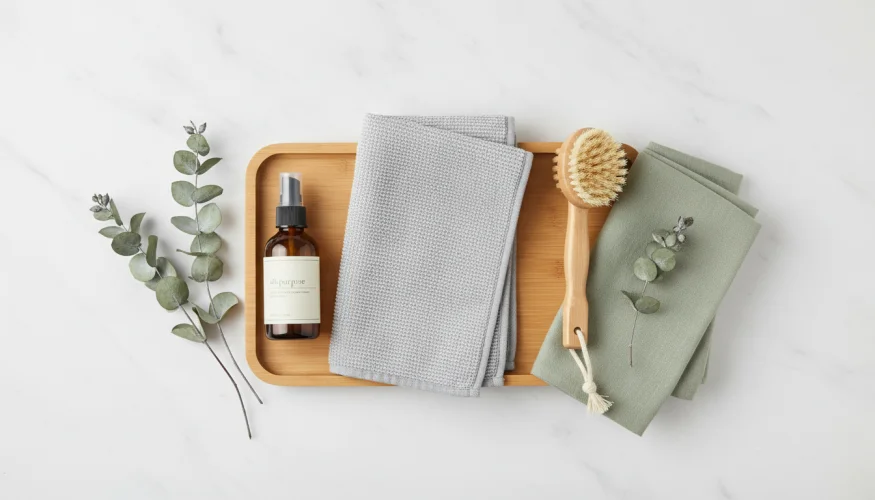
Eco-friendly cleaning tools that make quick daily cleaning easier are also a practical aid in maintaining order. High-quality microfibre cloths, such as those from Ferwer's collection of sustainable cleaning products, can wipe down a worktop or washbasin in ten seconds without chemicals — which significantly lowers the psychological barrier to small everyday cleaning tasks. When tidying is easy and quick, people do it. When it requires preparation and effort, they put it off.
Equally important is the role of the other members of the household. A ten-minute morning tidy works when everyone participates. Children can make their beds and take their mugs to the kitchen. A partner can unload the dishwasher. Dividing small tasks among more people doesn't mean each person does less — it means the overall burden is manageable and no one feels like the sole guardian of domestic order.
An interesting approach is also the so-called "one-touch rule", advocated by organisational experts. The principle is that every item you pick up should be put straight in its place — not on the nearest available surface with the intention of moving it "in a moment". That moment rarely comes. Post ends up on the table, a jacket on the armchair, and bags on the floor — and the morning begins with gathering what wasn't put away the night before.
Sustainable order as a way of life
It's worth noting that a morning tidying routine should not feel like a punishment or an obligation, but rather as a form of caring for your own space and, by extension, for yourself. The Japanese concept of "ikigai" — finding meaning and joy in the small things of everyday life — can be applied to tidying as well. A clean kitchen in the morning isn't just about hygiene; it's a way to start the day with a clear head.
It also helps to link tidying with something enjoyable. A podcast, favourite music, or an audiobook playing in the background during those ten minutes transforms a routine task into a pleasant ritual. Many people who have tried this approach describe how they started looking forward to the morning tidy — not because they love washing dishes, but because they came to associate it with a moment of calm before the hectic day begins.
A sustainable approach to the home also means choosing products that are kind both to your living space and to the environment. Natural cleaning products, reusable tools, and quality organic materials not only serve you better but also reduce the amount of waste a household produces. Investing in higher-quality, longer-lasting products pays off in the long run — both economically and ecologically.
Morning order in ten minutes, then, is not about perfection. It's about consistency. About small steps repeated every day until they become a natural part of the morning — just like a cup of coffee or brushing your teeth. And it is precisely this consistency that ensures order doesn't last only until noon, but truly throughout the entire day. The environment we live in shapes how we feel — and it's entirely up to us what kind of environment we want it to be.