

How to Clean When You Don't Have Time and Still Achieve Visible Order at Home Quickly

The daily reality for most households looks similar: work, school, activities, shopping, caring for loved ones, and somewhere in between, trying to catch a breath. And in the midst of it all, small things pile up— a mug on the table, crumbs under the counter, laundry "just for a moment" on the chair. It's no wonder that the question how to clean when you don't have time is among the most common. There's also a hidden trap: if cleaning is postponed for too long, it starts to feel like a huge project that can only be tackled with a free weekend and iron will. However, effective home cleaning often doesn't rely on perfection or hours of work, but on simple habits, smart sequencing of steps, and realistic goals.
Stress-free cleaning isn't about never having clutter at home. It's about not letting clutter grow to a point where it drains energy and motivation to start anything. And above all: cleaning should stop being seen as a moral test. In practice, it's true that cleaning without stress even with a lack of time is possible when the perspective changes—from "I must clean the entire apartment" to "I'll do now what has the greatest impact."
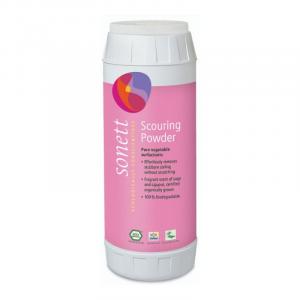
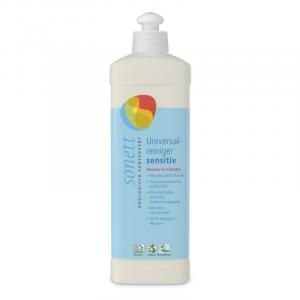
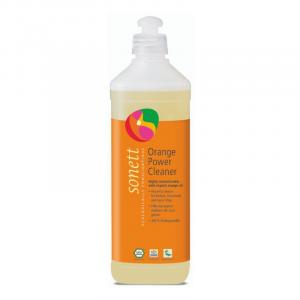
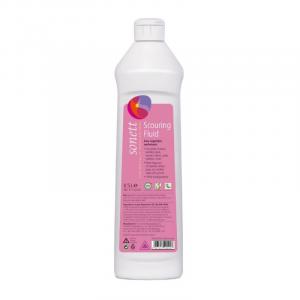
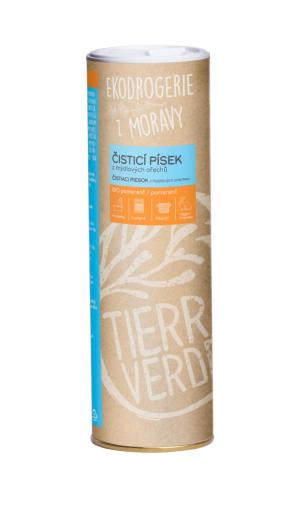
Try our natural products
Why cleaning takes the most time (and how to turn it to your advantage)
The biggest time-waster isn't usually the mopping or vacuuming itself. Often, it's the decision-making, jumping between rooms, and searching for things: where's the cloth, where does this cable belong, why is the kitchen counter full again? This creates a strange paradox—you're in motion, but the result isn't visible. And when the result isn't visible, frustration grows.
A simple rule helps: first, tackle the "visual noise," and only then start cleaning. In other words, first put things in their place (or at least in a temporary box), and then dust and clean surfaces. If done the other way around, the cloth just dodges piles, extending the work.
It's also good to accept that there's no single right way. Some manage quick cleaning sprints, others need a calm pace. What's important is that the system works long-term. After all, even expert sources on household hygiene emphasize that regularity and focus on high-traffic areas—kitchen, bathroom, and frequently touched surfaces—are key. Practical context can be found in, for example, the Centers for Disease Control and Prevention (CDC) recommendations on cleaning and disinfecting, which clearly distinguish between regular cleaning and situations requiring a more thorough regime.
When time is limited, it's worth focusing on three things that make the biggest difference: a clear floor, a clean kitchen counter and sink, and a quickly tidied bathroom. Most households immediately feel tidier, even if the rest isn't perfect.
Quick basic cleaning: what to achieve in 15–30 minutes to make it noticeable
The notion that cleaning must take an entire afternoon is a common reason why it never starts at all. However, tips and tricks for quick basic cleaning are based on doing just the "skeleton"—which keeps the household afloat. Moreover, if the right order is chosen, results are quickly visible, motivating continuation the next day.
The method "from the most visible to the least visible" and "from dry to wet" works well. First, organize things and remove crumbs, then dust, and finally mop. And importantly: don't worry about details that no one will see when there's a pile of things in plain sight.
A realistic scenario could be a regular weekday evening. Imagine a household with two children, arriving home around half-past five. There's fatigue in the air, morning mugs left in the kitchen, and a mix of park needles, crumbs, and pebbles on the hallway floor. In such a moment, the plan "we'll clean the whole apartment" won't help. A short, clear framework will: 20 minutes and done. The children get a simple task—put shoes away and take items from the table to their room. Meanwhile, an adult clears the dishwasher (or at least the sink), wipes the counter, and quickly vacuums the worst spots. In twenty minutes, the home isn't catalog-perfect, but it's functional, you can cook, sit, breathe. And during a time crunch, that's often the biggest win.
To tackle it without overthinking, it's worth having "cleaning essentials" on hand—a few tools that don't cause delays. Ideal are universal products and reusable textiles. In households also considering environmental impact, concentrated cleaning agents, quality microfiber, and brushes that last for years are effective. Fewer bottles, less searching, less waste.
If a quick clean is to be truly quick, just stick to a short outline. No complexities, no perfectionism—just what improves the day:
A single short checklist to keep the household "afloat"
- Organize visible surfaces (table, counter, coffee table): anything without a place goes into one tote/bag "to deal with later."
- Kitchen: empty the sink, quickly rinse or stack dishes, wipe the counter.
- Bathroom: wipe the sink and faucet, wipe the mirror, put towels and toiletries in their "zones."
- Floor in high-traffic areas: quickly vacuum or sweep the hallway + kitchen.
This quartet of steps is surprisingly effective. And if any point isn't completed, it's okay—it's still better than waiting for the perfect moment, which won't come.
Cleaning without stress: small habits that save time every day
Stress from cleaning often doesn't come from the work itself, but from the feeling that "it never ends." When the household is set up so that clutter doesn't accumulate as much, cleaning naturally shortens. And that's exactly what people seek when they ask questions like how to clean when there's no time—it's not magic, but prevention.
One of the most practical principles is the "one-touch rule": solve what can be solved with one touch immediately. Received mail? Either into the trash or in one designated spot. A removed sweater? Either into the closet or the laundry basket. A mug? Into the dishwasher or at least by the sink. It sounds trivial, but these little things make the difference between an apartment you can clean in 20 minutes and one that requires a whole morning to "rescue."
Zoning is also a great helper. It doesn't have to be a complex system, just a few clear "homes" for things: keys always on the hook, backpacks always in the hallway, chargers in one box, children's trinkets in one basket. The less decision-making, the quicker the cleanup. And the less searching, the less stress.
Adding to this is simple psychology: people better maintain what's easy to return to its place. If storing things is inconvenient (an overfilled closet, a missing basket, too many decorations on a shelf), the household will start "helping" itself by putting things down. Sometimes the fastest cleanup is paradoxically one that starts with a small decluttering of space. Not drastic throwing away, but a gentle simplification: fewer things on the counter, fewer trinkets on the table, fewer textiles that catch dust.
Another element that comes into play, which isn't often discussed: fatigue. When someone is exhausted, they're more likely to choose the simplest path—putting something down "just for a moment." That's why it's worth having a forgiving environment set up at home. For example, a laundry basket where clothes are taken off, not in the bathroom across the whole apartment. Or a small brush in the kitchen so crumbs don't have to wait for a major vacuuming. Effective home cleaning is often just about shortening the distance between the problem and the solution.
And when sustainability is mixed in, there's no need to make compromises. On the contrary: minimalism in tools and chemicals often speeds up work. Instead of five specialized sprays, a few proven helpers suffice—for example, a mild all-purpose cleaner, citric acid or vinegar for limescale (sensibly and according to surface), baking soda for odor absorption, and a few quality cloths that can be washed. In many households, a simple rule works: clean as gently as possible—it's better not only for nature but also for the air at home.
"A perfect home isn't one where messes never happen, but one where they can easily be put right again." This sentence captures the essence of cleaning without stress even with a lack of time: the goal isn't sterility, but sustainability in everyday life.
For those wanting to go a step further, notice one practical detail: the biggest cleaning burden often involves places where things "accumulate" without a clear rule—a chair for clothes, a corner of the kitchen counter, a dresser by the door. Simply choose one such spot and give it a function: either it becomes a drop zone with a basket (and a rule to "empty it once a day"), or the drop zone is removed (perhaps by moving the chair elsewhere). This surprisingly quickly reduces the time needed for regular cleaning.
And what if guests are coming and time is really tight? In that case, a simple strategy helps: focus on what's visible and what's used. Hallway, living room, toilet. Everything else can wait. Quick airing, a clean sink, and an empty bathroom bin do more than a meticulously arranged bookshelf. Sometimes the biggest relief is allowing yourself the sentence: today "good enough" is enough.
In the end, it turns out that the answer to the question how to clean when you don't have time isn't one miraculous method, but a set of small decisions that repeat. A short cleaning sprint instead of a big plan, clear places for things instead of constant rearranging, a few reliable tools instead of an overfilled cabinet, and above all, a kinder standard. The household should serve life, not life serve the household—and when basic order is maintained without stress, there's more room for what's ultimately more important than a perfectly polished faucet.