

Lentil ragù as a filling for baked peppers
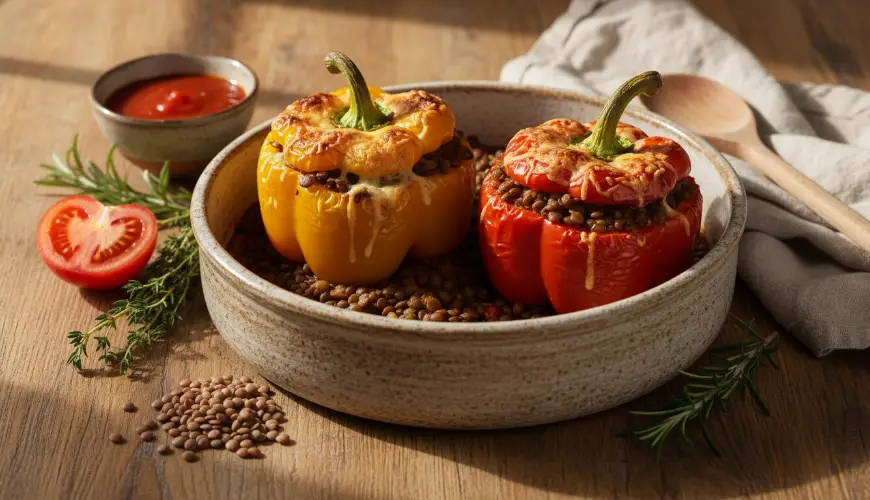
Stuffed baked peppers hold a firm place in Czech cuisine – they are hearty, fragrant, and thanks to their natural sweetness, beloved across generations. Traditionally filled with minced meat, rice, and tomato sauce, in recent years more and more households have been turning to plant-based alternatives that are equally satisfying, but lighter on digestion, gentler on the planet, and surprisingly delicious. One of the best such alternatives is lentil ragù – a thick, aromatic filling that feels right at home in a baked pepper.
Lentils are an ingredient with a long history. They are among the oldest cultivated crops in the world, with roots stretching back to the Fertile Crescent region, where people consumed them more than eight thousand years ago. Today, the Food and Agriculture Organization of the United Nations (FAO) identifies them as one of the key legumes for future food security – and it is no wonder. Lentils are rich in plant-based protein, fibre, iron, and folic acid, while their cultivation places minimal strain on the soil.
Try our natural products



Why choose lentils instead of meat?
Many people ask whether a plant-based filling can truly replace classic minced meat without the dish losing its character. The answer is surprisingly simple: it depends on the method of preparation. Lentils on their own have a mild, slightly earthy flavour that pairs beautifully with tomatoes, root vegetables, garlic, and herbs. The key, however, lies in the "ragù" itself – a cooking method in which ingredients are slowly braised, melding together to create a rich, full flavour reminiscent of a meat ragù.
Lentil ragù differs from a simple lentil goulash primarily in its consistency and depth of flavour. While a classic lentil goulash tends to be thinner and served as a soup or side dish, ragù is intentionally thick, compact, and full of aroma. Adding red wine, a spoonful of tomato paste, sautéed onion with garlic, and fresh thyme or rosemary transforms an ordinary legume into something that truly deserves to be called a filling. The finished dish then develops an even deeper flavour in the oven, as the pepper caramelises during roasting and imparts its natural sweetness to the filling.
It is no coincidence that plant-based eating has been gaining more and more followers in recent years, even among people who do not identify as vegetarian or vegan. The so-called flexitarian approach – reducing meat consumption without eliminating it entirely – is, according to research by Euromonitor International, becoming one of the fastest-growing dietary trends in Europe. And dishes like baked peppers with lentil ragù are a perfect example of how one can eat less meat without any sense of deprivation.
Consider a specific scenario: Jana, a working mother of two from Brno, decided to cook meat-free once a week – not for ideological reasons, but simply to give her family a more varied diet and save a little on the household budget. Baked peppers with lentil ragù became one of her favourite recipes, because they can be prepared in advance, easily adapted to children's tastes (less spice) and adults' preferences (more garlic, a touch of chilli), and the leftovers taste just as good the next day, if not better.
How to properly prepare lentil ragù for stuffed peppers
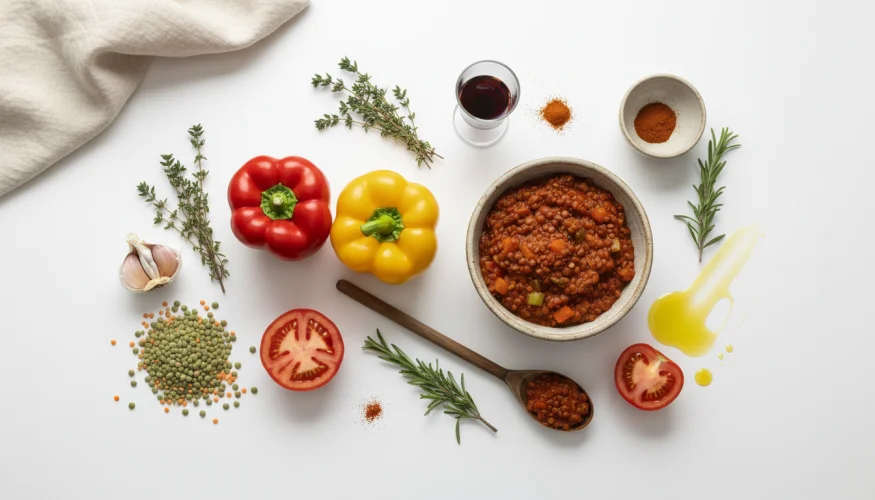
Preparation begins with choosing the right lentil. Red lentils are the ideal choice for those who want a smoother, creamier ragù – they break down during cooking and create a thick paste. Green or brown lentils, on the other hand, hold their shape better, resulting in a ragù with a more pronounced texture and visible pieces. Both options work well; it comes down to personal preference.
The base of the ragù is the classic trinity of Italian cooking – onion, celery, and carrot, known as soffritto. It is important to sauté this vegetable mixture thoroughly in olive oil until it softens and begins to lightly caramelise. Only then does the garlic, tomato paste, and optionally a little red wine come into play, which is allowed to evaporate. The lentils are then added, covered with vegetable stock, and the whole mixture is simmered over low heat until the lentils are tender and the liquid has been absorbed. The result should be a thick, aromatic mass that holds together but is not dry.
Seasoning plays a crucial role in this recipe. In addition to classic salt and pepper, smoked paprika works wonderfully, adding a slightly smoky flavour reminiscent of meat, as does cumin, oregano, or Italian herbs. Those who prefer a bolder flavour can add a teaspoon of Worcestershire sauce or soy sauce – either will deepen the umami notes of the ragù and add complexity.
When it comes to the peppers themselves, it is best to choose firm, evenly shaped ones, ideally red or yellow, which are naturally sweeter than green peppers. Before filling, they can be briefly pre-roasted in the oven or blanched in boiling water – this shortens the overall cooking time and ensures the pepper becomes tender at the same moment the ragù is thoroughly heated through. Once filled, the peppers are placed in a baking dish, covered with tomato sauce or vegetable stock, and baked covered with foil for approximately thirty minutes, then uncovered for a further ten to fifteen minutes to allow the surface to lightly brown.
As for cheese on top – traditional meat-stuffed peppers generally do without cheese, but in the lentil version, grated cheese such as Edam or Parmesan can add a pleasant golden crust and round out the flavour. For a vegan version, there are now high-quality plant-based cheese alternatives available that behave very similarly when baked.
As British chef Yotam Ottolenghi, whose cookbooks devoted to plant-based cooking have won millions of readers worldwide, once noted: "Vegetables don't need meat to be interesting – they need time, heat, and the right seasoning." This thought applies to lentil ragù with absolute precision.
An important part of the whole process is also the selection of quality ingredients. Organically farmed lentils are typically pesticide-free and gentler on the soil, while peppers from local growers have a more pronounced flavour and a smaller carbon footprint than those imported from distant countries. In the Czech Republic, peppers thrive particularly in South Moravia, where the climatic conditions are ideal – and the local varieties are known for their exceptional sweetness and firmness. The pepper season in this country peaks in August and September, making it the ideal time to prepare this dish from fresh, locally sourced ingredients.
Baked peppers with lentil ragù are also highly practical from a meal-planning perspective. An entire batch of ragù can be prepared in advance and stored in the refrigerator for up to three days, or frozen for several weeks. The peppers can then simply be filled and baked just before serving. This approach is particularly appreciated by people with busy working weeks who want to eat home-cooked, healthy food without spending long hours at the stove every day.
There is a wide range of side dishes that pair well with this meal. The classic choice is fresh bread or a baguette, perfect for mopping up the sauce from the bottom of the dish. A lighter option is a green salad with lemon dressing, which provides a pleasant contrast to the richness of the ragù. Those who want a more filling meal can add boiled potatoes or quinoa – the latter, incidentally, complements lentils beautifully from a nutritional standpoint as well, since it contains all essential amino acids, together forming a complete source of protein.
From a nutritional perspective, this dish is truly remarkable. A single serving of baked pepper stuffed with lentil ragù contains approximately 20 to 25 grams of plant-based protein, a high amount of fibre supporting digestion and the gut microbiome, vitamin C from the pepper, iron and magnesium from the lentils, and antioxidants from the tomatoes and herbs. All of this at a relatively low caloric value and zero saturated fat content – precisely what nutritional advisors recommend as the foundation of a balanced diet.
It is therefore unsurprising that lentils and legumes in general are becoming an increasingly frequent topic not only in cookbooks focused on healthy living, but also in academic literature. For example, the Harvard T.H. Chan School of Public Health lists legumes as one of the most important sources of nutrients in a plant-based diet and recommends their regular consumption as part of the prevention of cardiovascular disease and type 2 diabetes.
Baked peppers with lentil ragù are therefore far more than just a fashionable plant-based alternative. They are a dish with history, with a story, and with a flavour that holds its own even before the most discerning diner. Whether you are preparing them for your family, friends on a Sunday, or getting them ready as work lunches for the whole week, this recipe will in all likelihood become a regular part of your repertoire – not out of necessity, but out of the conviction that good food does not need to contain meat in order to be truly exceptional.