

# How to Enjoy Lentils Beyond Soup Lentils are an incredibly versatile ingredient that can be used

Lentils have a somewhat unfair reputation in Czech cuisine. Many people associate them exclusively with New Year's soup or a thick broth that wafts from grandmother's pot every winter. And yet they are one of the most versatile legumes in the world – packed with protein, fibre, iron and folic acid, while their preparation takes far less time than, say, chickpeas or beans. Lentils require no soaking, cook quickly and work wonderfully in dozens of different dishes. But if you are still only preparing them as soup, you are missing out on the enormous culinary potential that this unassuming legume conceals.
Let us take a look together at how to turn lentils into meals that will surprise, satisfy and yet remain healthy, economical and perhaps even ecological – because legumes are one of the most sustainable foods of all, with a minimal carbon footprint compared to meat.
Try our natural products




Lentils as the basis of a main course
One of the biggest mistakes people make with lentils is viewing them only as a side dish or the base of a soup. In reality, lentils can be the fully-fledged centrepiece of an entire meal. A great example is lentil dhal – a traditional Indian dish prepared in various forms throughout the South Asian subcontinent. Red lentils are cooked down to a creamy consistency, seasoned with spices such as turmeric, cumin, coriander and fresh ginger, and the result is a dish so aromatic and filling that even the most devoted meat lover would not miss it. It is served with rice or flatbread and can be prepared in less than half an hour.
Moroccan lentils with tomatoes and harissa – a spicy paste made from chilli peppers that is now available in many health food shops – work in a similar way. Simply fry onion, garlic and cumin in olive oil, add canned tomatoes, pre-cooked lentils and a spoonful of harissa paste, and within minutes you have a dish full of colour and flavour that could easily be served in a restaurant. This very combination has shown many home cooks that lentils need not be boring – they simply need the chance to shine with the right ingredients.
A very popular dish that has found its way into Czech households in recent years is the lentil patty or burger. Cooked lentils are mixed with fried onion, breadcrumbs, an egg (or a flax egg for the vegan version), herbs and spices, shaped into patties and pan-fried or baked in the oven. The result is surprisingly firm, tasty and works beautifully in a wholegrain bun with mustard, lettuce and a slice of tomato. Anyone who has once tasted a properly seasoned lentil burger will find it hard to go back to the belief that plant-based alternatives cannot be genuinely good.
Another excellent way to use lentils as a main course is to prepare lentil ragù, which can fully replace a meat-based Bolognese sauce. Brown or green lentils have a firmer texture than red ones once cooked, and therefore behave similarly to minced meat in this recipe – they hold their shape, absorb the sauce and create a hearty, satisfying texture. Combined with tomato purée, carrot, celeriac, onion, garlic and a splash of red wine, the result is a sauce that pairs wonderfully with pasta or polenta, or baked under a layer of béchamel as vegetarian lasagne.
Lentils in lighter dishes and salads
Not every meal needs to be warm and hearty. Lentils work equally well in lighter, fresher dishes that are ideal for lunch or as a side dish at dinner. Lentil salads are thoroughly underrated in this regard – and yet they are quick, nutritious and can be prepared in advance, making them an excellent solution for those who bring food to work.
French Puy lentil salad – made with the small, dark green variety that retains its firm texture even after cooking – with Dijon mustard, red onion, parsley and a dressing of red wine vinegar and olive oil is a classic that holds its own even at a festive table. Add roasted beetroot, goat's cheese and walnuts, and you have a salad that is not only visually appealing but also nutritionally balanced and full of different textures.
As the British chef and advocate of plant-based eating Yotam Ottolenghi once noted: "Lentils are one of the few ingredients that can be both humble and magnificent at the same time – it all depends on what you add to them." And this thought captures the very essence of why it is worth experimenting with lentils.
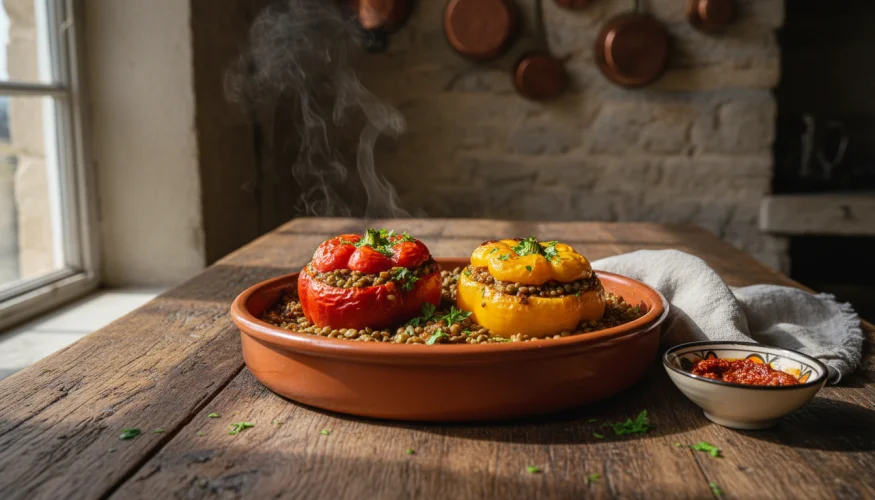
An interesting variation is lentil-stuffed peppers or courgettes. The vegetables are hollowed out, filled with a mixture of cooked lentils, rice, spices and herbs, covered with tomato sauce and baked in the oven. It is a dish that appeals to both the eye and the palate, and is also suitable for the whole family – children can choose their own pepper, while adults can spice theirs up with a hot sauce.
Less common ways of using lentils
You may be surprised to learn that lentils also find a place in dishes where you would least expect them. One of these is lentil flatbreads or pancakes – popular especially in Indian and Middle Eastern cuisine. Red lentils are soaked for several hours, blended with water, salt and spices into a thicker batter and cooked on a dry pan. The resulting flatbreads are naturally gluten-free, rich in protein and can be filled with vegetables, hummus or a yoghurt sauce.
A very interesting option is also the use of lentil flour, which is made by grinding dried lentils and can be purchased in health food shops or organic stores. This flour works well in breads, flatbreads, savoury biscuits or as a thickener for sauces. It is naturally gluten-free and has a significantly higher protein content than regular wheat flour, making it an interesting alternative for those who monitor their nutrient intake.
It is worth noting that lentils are a truly exceptional ingredient from a nutritional standpoint. According to data from the World Health Organization, legumes are among the key components of a healthy and balanced diet – they are rich in plant-based protein, complex carbohydrates and fibre, while having a low glycaemic index that helps maintain stable blood sugar levels. This is particularly appreciated by people with diabetes or those who want to avoid an afternoon energy slump.
Lentils can also be used to prepare spreads and dips. Cooked red lentils are blended with olive oil, lemon juice, garlic and spices into a smooth cream that works wonderfully on wholegrain bread, as a dip with vegetables or as the base of a sandwich. It is a quick, inexpensive and nutritious alternative to classic chickpea hummus.
For those who enjoy experimenting, lentil hash may also serve as an inspiration – an American breakfast classic that is usually made with potatoes but works equally well with lentils. Cooked lentils are fried in a pan with potatoes, peppers, onion and spices until a crispy crust forms, and served with a fried or sunny-side-up egg. It is a hearty, protein-packed breakfast that will keep you going all morning.
Let us return for a moment to the practical side of things. Imagine coming home tired from work, finding little in the fridge and not wanting to cook anything complicated. It is precisely at such moments that you will appreciate having a supply of red lentils at home – they cook in fifteen minutes without any prior soaking, and with a little creative seasoning they can become a dhal that will impress the whole family. Or simply add the cooked lentils to leftover vegetables from the previous day, pour in a little tomato purée and you have a quick ragù. Lentils are simply one of those ingredients that will never let you down in the kitchen.
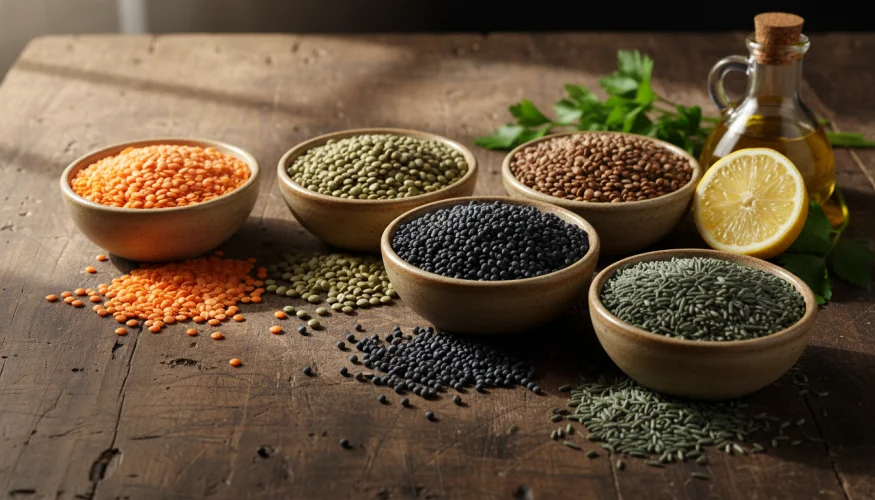
There are also many varieties of lentils, each suited to something slightly different. Red lentils cook down quickly and are ideal for dhal, spreads and thick sauces. Green and brown lentils retain a firmer texture and are well suited to salads, ragù and patties. Puy lentils or beluga (black lentils) are premium varieties with a distinctive flavour that shine in simpler recipes where they can take centre stage. They can now be purchased in any good health food shop, organic store or directly from e-shops focused on sustainable foods.
From a sustainability perspective, lentils are one of the most ecological foods you can include in your diet. Research published in the academic journal Nature Food shows that lentil production generates significantly lower greenhouse gas emissions than animal products, while also contributing to the enrichment of soil with nitrogen, thereby reducing the need for synthetic fertilisers. Choosing lentils is therefore not only a decision for your health, but also a conscious step towards a more responsible way of eating.
Lentils are therefore by no means just an ingredient for New Year's tradition or an unassuming filler for soup. They are an ingredient with enormous potential, simply waiting for you to give them the chance to show themselves in a different light – as the base of a spicy dhal, a crispy burger, a fresh salad or a creamy spread. All it takes is a little courage and a willingness to step beyond the boundaries of what we know in the kitchen.