

Learn intuitive cooking without a recipe from scratch
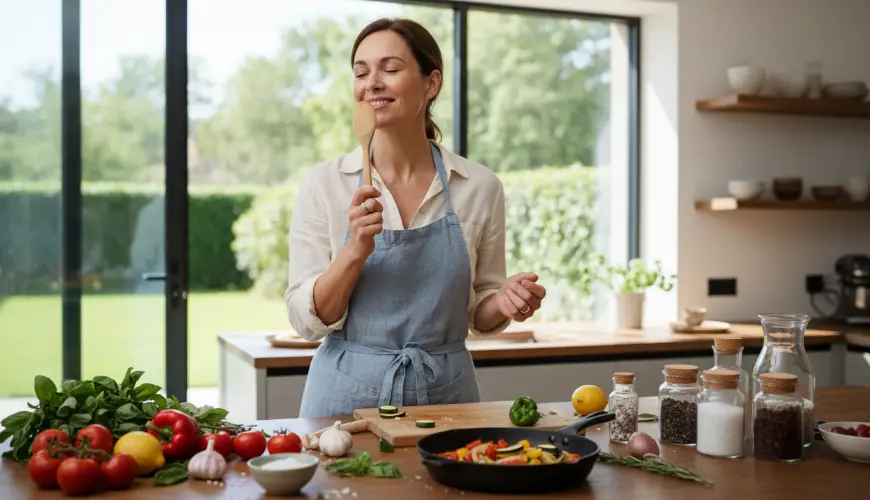
Every person who has ever stood over a pot, desperately scrolling through a recipe on their phone, knows the feeling. Precise grams, measured teaspoons, timed minutes – cooking by the book can feel safe, but it rarely brings genuine joy. There is, however, a different approach that cooks around the world have practiced for generations: intuitive cooking, where one cooks by eye, listens to the ingredients, and trusts their own senses more than a printed page. It is neither magic nor an innate talent. It is a skill that can be learned – and one that can completely transform your relationship with food and your own kitchen.
Intuitive cooking does not mean chaotically throwing ingredients into a pot and hoping for the best. It is more about a deep understanding of how ingredients work, how they behave under heat, and how flavours communicate with one another. French chef Auguste Escoffier, whose legacy continues to shape professional gastronomy to this day, once said: "The best recipe is the one that comes from understanding ingredients, not from blindly following instructions." This idea is at the heart of the entire concept – first understand, then create.
Try our natural products




Why recipes are not enough
Recipes are a great starting point. They help beginners find their footing, teach basic techniques, and prevent catastrophic mistakes. But they have one fundamental weakness: they are static, while cooking is inherently dynamic. Summer tomatoes are sweeter than winter ones. Onions from a farmers' market differ from those bought at a supermarket. Your neighbour's oven bakes differently from yours. A recipe does not account for these variables – and this is precisely where intuitive cooking takes the reins.
When a person learns to cook by eye, they stop depending on a specific list of ingredients and begin to understand principles. Instead of searching for a recipe for "chicken breast with lemon and herbs", they understand that chicken needs heat, fat, acidity, and aromatics – and then freely choose whatever happens to be in the fridge. This shift in thinking is key.
Consider a concrete real-life example. Jana, a forty-three-year-old teacher from Brno, cooked exclusively by recipes for years, and any deviation stressed her out. She then signed up for a cooking course focused on techniques rather than recipes. Within three months, she discovered she could prepare a delicious dinner from whatever she had at home – leftover vegetables, a tin of pulses, and a handful of spices. "I stopped being afraid of the kitchen," she described her transformation. "Now it feels like a game, not an exam."
Her story is not unique. Many people who embark on the path of intuitive cooking describe a similar sense of liberation. The key, however, is a systematic approach to learning – simply stopping reading recipes is not enough; one must build the knowledge upon which intuition can draw.
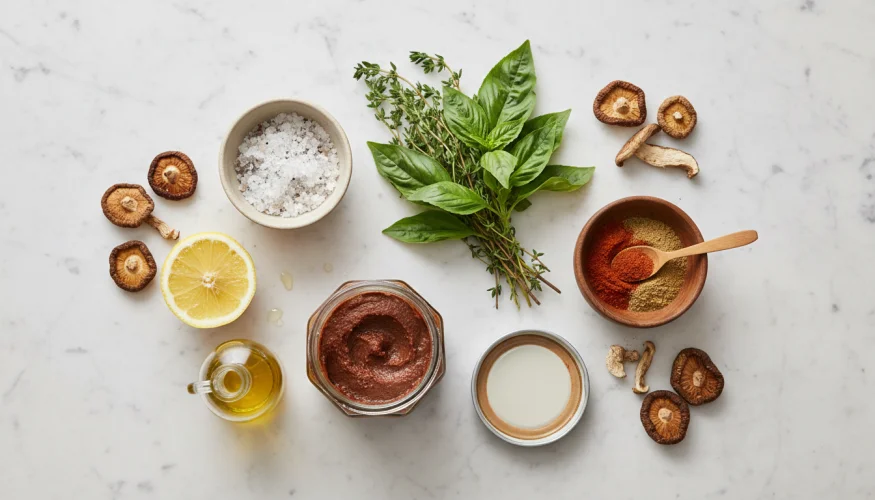
The foundation of everything is understanding the so-called building blocks of flavour. Every dish works with several fundamental dimensions: saltiness, acidity, sweetness, bitterness, and umami. Salt is not merely a seasoning – it is an amplifying element capable of awakening all other flavours. Acidity, whether from lemon, vinegar, or fermented foods, adds vibrancy and lightens heavy dishes. Sweetness tempers bitterness and balances sharpness. Bitterness, such as from dark chocolate or chicory, adds complexity. And umami – that mysterious fifth taste present in mushrooms, soy sauce, or aged cheeses – creates the depth that the palate craves.
Once a person grasps these principles in practice, they begin to perceive them instinctively with every meal they cook. They taste and ask: What is missing here? Does it taste flat? Then perhaps it needs acidity. Is it too sharp? A little honey or some roasted carrot will bring it into balance. This internal dialogue is the essence of intuitive cooking.
How to start cooking by eye: from technique to freedom
Paradoxically, the path to cooking without recipes runs through careful study of fundamental techniques. There is no need to attend culinary school – it is enough to devote attention to a few key skills that then serve as universal tools.
One of the most important is mastering heat. Every ingredient responds to heat differently, and understanding this behaviour is essential. Vegetables sautéed over high heat develop caramelisation and sweetness – this is the Maillard reaction, in which amino acids and sugars create hundreds of new aromatic compounds. The same vegetables braised slowly over low heat will be soft, tender, and full of liquid. Both techniques are correct – it simply depends on what you wish to achieve. Understanding heat is perhaps the most important step on the path to intuitive cooking.
Another pillar is working with fats. Olive oil, butter, coconut fat, or lard – each brings a different flavour and suits different purposes. Butter burns at high temperatures, but added at the end of cooking it lends a sauce silkiness and richness. Olive oil drizzled cold over a finished dish brings fruity freshness, while when used for sautéing it creates a more neutral base. These nuances cannot be learned from a recipe – they must be experienced.
Spices and herbs are a chapter unto themselves. Dried herbs release their aroma during longer cooking and suit braised dishes. Fresh herbs, by contrast, are delicate and are added at the end to preserve their vibrancy. Spices such as cumin, turmeric, or paprika are ideally toasted briefly in a dry pan or in fat, which activates their essential oils and produces more pronounced flavours. Once a person knows this, they stop blindly measuring half a teaspoon of cumin and begin adding as much as they feel the dish needs.
A practical way to develop these skills is through conscious tasting during cooking. Many people taste their food only just before serving – by which point it is too late for significant corrections. Tasting continuously and thinking about what you are sensing is the fundamental habit of every intuitive cook. Add a pinch of salt and taste again. Add a spoonful of lemon juice and observe how the dish transforms. This real-time experimentation is the best school there is.
A great help is also building what might be called an aromatic vocabulary – a store of flavour memories upon which one can draw while cooking. When a person first tastes a properly made soffritto of onion, garlic, and tomato, they commit that flavour to memory. The next time they want a similar depth, they will reach for the same combination instinctively. The more varied the dishes a person tastes and consciously perceives, the richer this vocabulary becomes.
Knowledge of compatible flavours also plays an indispensable role. There are combinations that work across cultures and millennia because they share aromatic compounds or naturally complement one another. Garlic and lemon, tomato and basil, chocolate and coffee, apple and cinnamon – these are not random pairings but time-tested alliances. The Flavor Bible by Andrew Dornenburg and Karen Page is an excellent guide in this regard, mapping thousands of flavour combinations and serving as inspiration for one's own experiments.
Intuitive cooking is also closely connected to the ingredients available to us and how we approach them. People who cook by eye tend to keep a well-stocked pantry with several essential building blocks: quality olive oil, various types of vinegar, dried pulses, whole spices, nuts and seeds, fermented products such as miso or kimchi. From these ingredients, the foundation of almost anything can be assembled. A good pantry is to the intuitive cook what a palette is to a painter – the more colours, the more possibilities.
Interestingly, scientific research supports the idea that cooking without strict adherence to recipes can have a positive effect on creativity and mental wellbeing. A study published in the Journal of Positive Psychology found that everyday creative activities – and cooking is among them – contribute to higher levels of positive emotions and a sense of meaning. The kitchen thus becomes a place not only for preparing food, but also for personal growth.
The transition from recipes to intuition is gradual and never truly complete. Even experienced head chefs continue to learn, continue to be surprised by ingredients, and continue to seek new combinations. The difference is that their store of knowledge and experience is so rich that their intuition can work quickly and reliably. A beginner setting out on this path should be patient – the first attempts will not always be perfect, but each one will bring something new.
A practical way to begin is to take one favourite recipe that you know well and next time try cooking it without looking at it. From memory alone, by eye, with trust in your own senses. Then compare it with the original – not to judge your mistakes, but to understand where your intuition fell short and why. This reflection is enormously valuable. Gradually introduce more improvisation: swap one ingredient for another, try a different method of cooking, add a spice that was not in the original recipe.
Cooking by eye is not only about technique – it is also about one's relationship with food and with oneself. People who cook intuitively tend to have a deeper connection with what they eat, because they put a piece of themselves into every dish. It is not about perfection, but about presence – being fully in the moment, perceiving aromas, colours, and textures, listening to the sizzle of the pan and the bubbling of the pot. The kitchen then ceases to resemble a chemistry exam and begins to feel like a studio, where mistakes are part of the process and every dish is an original.
Perhaps this is precisely why intuitive cooking has enjoyed such popularity in recent years – in an age when we are overwhelmed by information and instructions for everything, the kitchen offers a rare space for genuine freedom. The freedom to make yourself exactly what you feel like for dinner, from whatever you have at home, without a single recipe.