

# Why is olive oil healthy and how to choose the right one
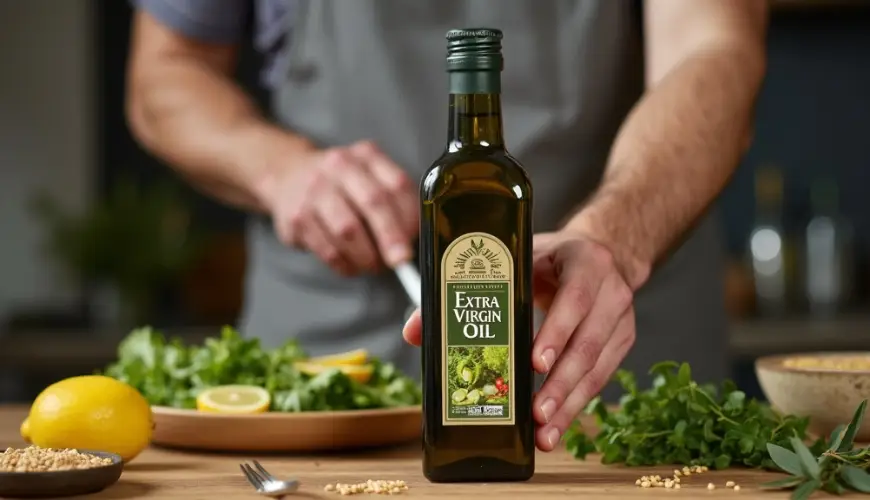
Olive oil is one of the oldest foods known to humanity. The ancient Greeks called it "liquid gold," and its healing properties have been celebrated by civilizations for thousands of years. Today, we can find it in every other supermarket, on the shelves of health food stores, and in the offerings of specialized online shops. But this very popularity comes with a dark side – the market is flooded with low-quality products that present themselves as premium extra virgin, while in reality they are industrial blends of oils worth just a few pennies. Before we get into how to tell the real thing from a fake, let's first remind ourselves why olive oil is worth it in the first place.
The Mediterranean diet, of which olive oil is the backbone, has long been one of the most studied dietary patterns in the world. Research repeatedly shows that people who follow it have a lower risk of cardiovascular disease, type 2 diabetes, and certain types of cancer. The World Health Organization even cites it as one example of healthy eating. And olive oil plays a key role in this – it's not just a fat, it's a biologically active food full of substances the body needs.
Try our natural products

What makes olive oil so exceptional for health
The foundation is monounsaturated fatty acids, particularly oleic acid, which makes up as much as 70–80% of the composition of quality olive oil. This acid helps lower LDL cholesterol levels – the "bad" kind – while also supporting HDL cholesterol levels, which in turn protect the heart. But that's far from all. Olive oil also contains polyphenols – natural antioxidants that fight inflammation and oxidative stress in the body. These substances are responsible for the slightly bitter, pungent taste that is characteristic of truly high-quality extra virgin oil.
One of the most significant polyphenols is oleocanthal, whose effects resemble those of ibuprofen – a common anti-inflammatory medication. Research published in the scientific journal Nature back in 2005 highlighted that this very substance may explain part of the health benefits of the Mediterranean diet. Of course, this doesn't mean that olive oil replaces medication, but long-term, regular consumption as part of a balanced diet genuinely contributes to protecting the body.
Another reason to reach for olive oil is its vitamin E content, which supports immunity and skin health, and vitamin K, which plays a role in blood clotting. Its effect on digestion is also noteworthy – olive oil stimulates bile production and supports the absorption of nutrients from other foods. Those who suffer from constipation or sluggish digestion may find a spoonful of quality olive oil on an empty stomach to be a natural remedy. Just ask in Greece, where this morning ritual has been passed down through families for generations.
It's also important to mention how olive oil responds to heat. For a long time, there was a myth that it was not suitable for cooking at all. The reality is different – extra virgin olive oil has a smoke point of around 190–210°C, which is more than sufficient for regular frying and sautéing. Moreover, thanks to its high antioxidant content, it is more stable when heated than many refined oils, which produce harmful substances much more quickly.
How to recognize quality olive oil and detect a fake
And this is where we get to the heart of the matter. The olive oil market is one of the most adulterated food segments in the world. Europol and Interpol repeatedly mention it in their overviews of food fraud. Italy's Guardia di Finanza uncovers hundreds of tonnes of oil every year that was labeled as premium extra virgin, but was in reality a blend with cheap refined oils, or oil from other countries repackaged under an Italian brand.
So how do you make sense of it all? First and foremost, it's essential to understand the categories. Extra virgin olive oil is the highest quality grade – it is oil obtained solely by mechanical pressing without the use of heat or chemicals, with a free fatty acid content not exceeding 0.8%. Virgin olive oil is the second category, with an acidity of up to 2%. Then there is "olive oil," which is a blend of refined and virgin oil – a product that has undergone industrial processing. And finally, there is "olive pomace oil," the lowest category, suitable only for industrial use.
However, a customer in a shop cannot easily determine the acidity of an oil. That's why other signals are important. The first is price – quality extra virgin olive oil cannot be cheap. If a litre costs less than 200–250 Czech crowns, it is very likely a product of dubious quality or an outright fake. Olives are harvested by hand, pressing is done gently, and yields are limited. This simply has to be reflected in the price.
The second signal is the packaging. Quality oil should be in a dark glass bottle or opaque container, because light damages it and accelerates oxidation. Clear plastic bottles are an immediate warning sign. The best-before date is equally important – fresher oil is better oil. The harvest takes place in autumn, so the freshest products reach the market in winter and spring.
The third clue is origin. The label "product of the EU" without further specification is a euphemism for a blend of oils from various countries that may not meet strict standards. Conversely, oils with protected designations of origin – PDO (Protected Designation of Origin) or PGI (Protected Geographical Indication) – are subject to strict certification and regular inspections. Greek Kalamata, Spanish Priego de Córdoba, or Italian Toscano IGP are examples of designations backed by genuine quality control.
Then there is the taste test. True extra virgin olive oil should have a pronounced fruity aroma – freshly cut grass, green apple, sometimes even artichoke. After swallowing, it should leave a slightly bitter and pungent sensation at the back of the throat. That pungency is evidence of the presence of polyphenols. Oil that tastes neutral, greasy, or rancid is either old or of poor quality.
There is also a simple home test, though not entirely reliable: put the oil in the refrigerator for 30 minutes. Quality extra virgin should begin to solidify or at least turn cloudy, because it contains natural waxy substances. Refined or adulterated oils remain liquid. It's only an indicative test, but it works well as a first filter.
Imagine a situation that is far from uncommon: Jana bought oil at a supermarket with an Italian flag on the label for 89 crowns. It tasted neutral, barely had any scent, and had none of that characteristic pungency. Yet she thought she was doing something good for her health. Then she received a bottle from a small Greek farm as a gift – and the difference was immediately obvious. An intense aroma, a pronounced flavour, a slight cloudiness. And above all, the knowledge that this was a real product, behind which stood specific people and a specific olive grove.
As Italian gastronome and writer Pellegrino Artusi once said: "Olive oil is to the cook what colour is to the painter – without it, nothing truly good can be created." But colours can also be false.
Independent testing is carried out by, for example, the International Olive Council, an international organisation that sets global quality standards and issues certifications. Their database of certified producers is publicly available and can be a good starting point when looking for a trustworthy product. Similarly, consumer organisations such as dTest in the Czech Republic regularly test olive oils available on the domestic market and publish the results – it's worth checking their latest reviews before making a purchase.
Investing in quality olive oil is simply worth it – not only for your health, but also for the taste of your food. A salad with good oil, fresh lemon, and a pinch of salt is an experience; a salad with a cheap fake is just a greasy affair without character. And that's exactly the difference we feel every day, even if we don't always consciously notice it.
When choosing, a few simple rules apply: pay attention to price, origin, and certification; choose dark glass bottles; note the harvest date; and don't be afraid to pay more for a product that truly lives up to what the label promises. There are hundreds of excellent producers in the world – small family farms and larger certified operations alike – who make their oil with care and integrity. Finding them takes a little effort, but the result is worth it.