

Learn how to train your pelvic floor discreetly anywhere

The pelvic floor belongs to those muscle groups that are only spoken about in whispers – if they are spoken about at all. Yet it is one of the most important parts of the human body, influencing not only bladder and bowel function, but also sexual health, spinal stability, and overall quality of life. The good news is that pelvic floor exercises require no equipment, special clothing, or dedicated time – they can be performed literally anywhere and at any time, without anyone nearby noticing.
Most people only become aware of their pelvic floor when it starts making itself known through problems. Women after childbirth, men after prostate surgery, but also middle-aged people who have never been pregnant or undergone any procedure, may experience urine leakage when coughing, laughing, or jumping. According to data from the World Health Organization, over 400 million people worldwide suffer from urinary incontinence, with the vast majority never discussing this problem with a doctor. Yet regular and correctly performed pelvic floor exercises can, in many cases, significantly reduce or completely eliminate these difficulties.
The pelvic floor can be imagined as a network of muscles, ligaments, and connective tissue that forms the "floor" of the pelvis. These muscles support the organs in the pelvic area – the uterus, bladder, and rectum – and ensure their proper function. Like any other muscle in the body, the pelvic floor needs regular movement to maintain its strength and flexibility. The problem is that this muscle group cannot be effectively exercised through ordinary sporting activities in the same way as, for example, the muscles of the legs or arms. It requires targeted, conscious engagement.
Try our natural products





How to find where the pelvic floor actually is
Before anyone begins exercising, they first need to locate the pelvic floor muscles. This sounds simple, but in practice it can be surprisingly difficult – particularly because these are muscles that most people have never consciously used. The most commonly recommended way to locate them is to imagine trying to stop the flow of urine or hold back gas. The muscles that contract in doing so are precisely the ones in question. It is important that the rest of the body does not contract during this movement – the buttocks, abdomen, and thighs should remain relaxed.
Physiotherapist Markéta, who specialises in the pelvic floor, explains it to her clients this way: "The pelvic floor is like a lift. Don't clench it forcefully, but raise it slowly and consciously, floor by floor. And then lower it back down just as slowly." This image is not only anatomically accurate, but also helps avoid the most common mistake – an overly abrupt and brief contraction without a subsequent conscious release.
Relaxation is just as important as the contraction itself. A pelvic floor that is chronically overloaded or too tense can cause pain in the pelvic area, the lower back, or even during sexual intercourse. The goal of the exercises is not only to strengthen, but also to teach the muscles to relax properly. This is an aspect that is often overlooked in popular articles about Kegel exercises – named after American gynaecologist Arnold Kegel, who described them in 1948.
Exercises that can be performed discreetly in everyday life
The greatest advantage of pelvic floor exercises lies in their unobtrusiveness. While stretching your hamstrings or strengthening your biceps requires space and time, the pelvic floor can be trained while queuing in a shop, behind the wheel, during a work meeting, or while watching television. No one around you can see anything, hear anything, and yet you are doing beneficial work for your body.
The basic exercise – the so-called Kegel exercise – involves contracting the pelvic floor muscles, holding the tension for three to five seconds, and slowly releasing. This cycle is repeated ten to fifteen times in a row, ideally three times a day. Research published in the specialist journal Neurourology and Urodynamics has repeatedly confirmed that consistent performance of these exercises over a period of eight to twelve weeks leads to demonstrable improvement in bladder control.
Take as an example Petr, a forty-four-year-old manager, who after the birth of his partner's second child began to appreciate how much women struggle with these difficulties. He read for himself that men can have similar problems following prostate surgery or simply as a result of ageing. He decided to start exercising his pelvic floor as a preventive measure – and admitted that the greatest surprise for him was how easily it could be incorporated into the day. Every morning while waiting for his coffee, during phone calls at work, and in the evening while reading. Without a single extra minute.
There are also more advanced variations that increase the intensity of training. Quick pulses – that is, short, rapid contractions and immediate releases repeated ten times in a row – train the muscles' ability to respond quickly, which is important for example when coughing or laughing, when the pressure in the abdominal cavity suddenly increases. Slow, deep contractions, on the other hand, build endurance and strength. An ideal training programme combines both variations.
An interesting option is also the so-called functional engagement of the pelvic floor – that is, consciously contracting the muscles just before an activity that increases intra-abdominal pressure. Before lifting a heavy bag, before coughing, or before jumping. This conscious engagement gradually becomes automatic and significantly reduces the risk of urine leakage during sudden movements.
When sitting at a desk or in a car, body position can also be used to advantage. An upright spine and lightly activated deep abdominal muscles naturally support the pelvic floor and create conditions for its more effective engagement. Conversely, slouching and sliding into a "comfortable" position on a seat passively overloads and weakens the pelvic floor muscles.
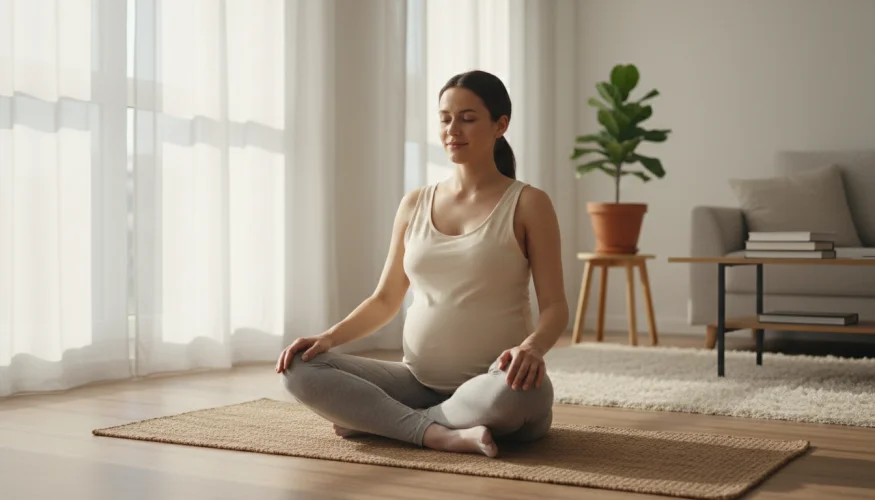
For women who have been through pregnancy and childbirth, regular pelvic floor exercise is particularly important. During pregnancy, the pelvic floor bears a significantly increased load in the form of the growing uterus, and during vaginal birth it is directly stretched and may be injured. The Czech Society of Midwifery and many maternity hospitals now recommend beginning pelvic floor exercises during pregnancy and continuing immediately after birth – naturally in accordance with the recommendations of a doctor or physiotherapist.
Men need the pelvic floor just as much as women, even though this is spoken about less. The pelvic floor muscles in men support the function of the urethra and rectum, play a role in erection and ejaculation, and contribute to spinal stability. Weakening of these muscles in men most commonly manifests as urinary leakage – particularly after prostate surgery – or erectile dysfunction. A study published in the British Journal of General Practice showed that men who regularly exercised their pelvic floor achieved significantly better results in treating erectile dysfunction than those who underwent only medication-based treatment.
What to watch out for and when to seek professional help
Although pelvic floor exercise is generally safe and suitable for almost everyone, there are situations where it is better to begin under professional supervision. If the pelvic floor muscles are too tense – which manifests as pain in the pelvic area, lower back, or during sexual intercourse – further strengthening them without prior relaxation may worsen the difficulties. In such a case, a visit to a physiotherapist specialising in the pelvic floor is appropriate, as they can assess the current state of the muscles and propose a suitable exercise plan.
Another signal that should not be ignored is persistent urine leakage despite regular exercise. This may indicate that the problem has a different origin – for example neurological or anatomical – and requires medical examination. Pelvic floor exercise is an effective tool for prevention and rehabilitation, but it is not a universal remedy for all difficulties in this area.
A useful aid for those who are unsure whether they are exercising correctly are various mobile phone applications or biofeedback devices. Biofeedback – a method in which a device measures muscle activity and displays it on a screen – provides immediate feedback and significantly increases the effectiveness of training. Some physiotherapy practices offer these devices, but more affordable home versions also exist.
Consistency is key when it comes to the pelvic floor. Results do not appear overnight – most experts state that the first results can be noticed after four to six weeks of regular exercise, with the full effect becoming apparent only after three months. This can be frustrating for many, but it is natural – the pelvic floor muscles are like any other muscles and strengthening them requires time and patience.
A meaningful step is to link pelvic floor exercises with already existing habits. In the morning while brushing your teeth, while waiting at a traffic light, at every ring of the phone. This anchoring of a new habit within an existing routine – a method popularised by author James Clear in his book Atomic Habits – significantly increases the likelihood that the exercise will become a permanent part of everyday life, rather than merely a short-term effort.
The pelvic floor is quiet, unobtrusive, and for most of life functions without notice. That is precisely why it deserves a little conscious attention – not hours in the gym, not expensive equipment, but a few minutes of focused care each day, which in the long term pays off richly.