
# Everything About the Pelvic Floor and How to Exercise It at Home
Few health topics are as important and yet as rarely discussed as the pelvic floor. And yet it concerns practically everyone – women and men, athletes and those who lead a predominantly sedentary lifestyle. Most people don't think about their pelvic floor muscles until a problem appears: urine leakage when sneezing, a feeling of pressure in the lower abdomen, or pain in the pelvic area. But it is precisely prevention and regular care of this area that can prevent a range of unpleasant issues that can significantly reduce the quality of everyday life.
The pelvic floor consists of a group of muscles and ligaments that span the bottom of the pelvis and function as a kind of "hammock" – holding the bladder, uterus, rectum, and other pelvic organs in place. When these muscles are strong and flexible, a person doesn't even notice their existence. But once they weaken, symptoms begin to appear that people are often embarrassed to talk about. And it is precisely this embarrassment that is one of the reasons why pelvic floor problems are addressed late or not at all.
According to experts from Mayo Clinic, approximately one-third of women experience pelvic floor weakening during their lifetime, with the risk increasing with age, after childbirth, and during menopause. But it would be a mistake to think this is exclusively a women's issue. Men can experience pelvic floor problems after prostate surgery, with chronic constipation, or as a result of excessive physical strain. The pelvic floor is simply a universal topic and deserves far more attention than it typically receives.
Try our natural products


Why the pelvic floor weakens and who it affects
Imagine a young woman, let's call her Kateřina, who has just given birth to her first child. The delivery went without complications, the baby is healthy, and Kateřina is looking forward to a new chapter in life. But several weeks after giving birth, she discovers that when she laughs or lifts her baby, a small amount of urine sometimes leaks involuntarily. Her doctor tells her it's common and that she should strengthen her pelvic floor. Kateřina nods, but she actually has no idea how to do it. And because she's embarrassed about the problem, she doesn't confide in anyone and hopes it will go away on its own. This scenario is, unfortunately, incredibly common.
Pregnancy and childbirth are among the most common causes of pelvic floor weakening in women. Over nine months, the pelvic floor bears the ever-increasing weight of the growing baby, amniotic fluid, and uterus. During vaginal delivery, the muscles must stretch extremely to allow the baby's head to pass through, and they don't always return to their original state on their own. According to a study published in the journal The Lancet, up to half of women after vaginal delivery have some degree of pelvic organ prolapse, although it is not always a clinically significant condition.
But childbirth is far from the only factor. The pelvic floor can also be weakened by chronic coughing (for example in smokers), repeated heavy lifting, obesity, hormonal changes during menopause, chronic constipation, or even certain high-impact sports such as running or CrossFit. Interestingly, the pelvic floor can be not only weakened but also overly tense – so-called pelvic floor hypertonicity manifests as pelvic pain, difficulty urinating, and painful intercourse. Therefore, the solution is not just mindless muscle clenching, but a comprehensive approach that includes both strengthening and relaxation.
A sedentary lifestyle, which is unfortunately the norm for most of the population today, further worsens the situation. When a person spends eight or more hours a day sitting, the pelvic floor muscles gradually lose tone because they are not sufficiently activated. At the same time, the hip flexors shorten and the gluteal muscles weaken, which has a direct impact on the stability of the entire pelvis. The pelvic floor does not work in isolation – it is part of the so-called deep stabilization system, which also includes the diaphragm, deep abdominal muscles, and muscles along the spine. When one component of this system fails, the others must compensate, leading to further problems such as back pain, trunk instability, or indeed incontinence issues.
It is also worth mentioning the psychological dimension of the whole matter. People who suffer from urine leakage or other symptoms of a weakened pelvic floor often withdraw from social life, limit their sporting activities, and experience feelings of shame. As physiotherapist and pelvic floor book author Katy Bowman once aptly noted: "The pelvic floor isn't just about muscles – it's about quality of life." And that is exactly how it should be approached.
How to strengthen the pelvic floor at home and when to seek professional help
The good news is that pelvic floor exercises can be performed very effectively at home, require no special equipment, and take only a few minutes a day. The foundation consists of so-called Kegel exercises, named after American gynecologist Arnold Kegel, who described them in 1948. The principle is simple: it involves consciously contracting and relaxing the pelvic floor muscles – the muscles a person would use if they wanted to stop the flow of urine.
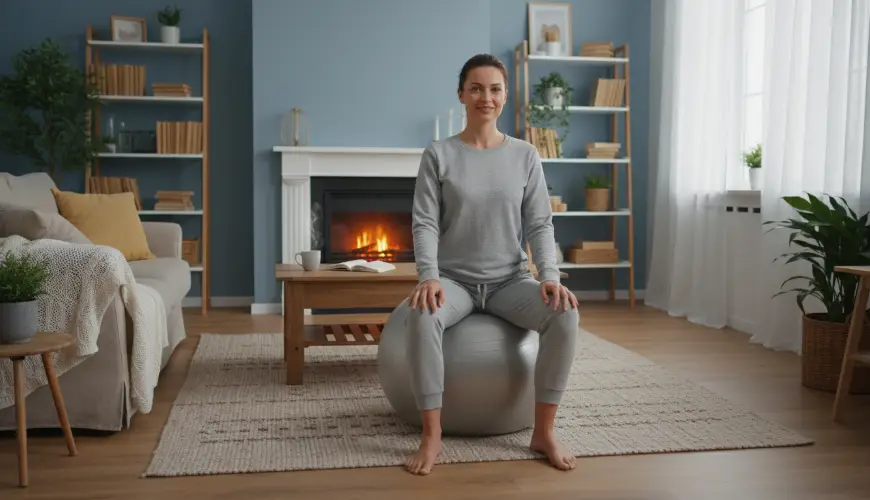
However, proper execution requires a bit of practice. Many people, when trying to activate the pelvic floor, mistakenly contract the gluteal muscles, thighs, or abdomen. The key is to focus on the sensation of "drawing up" and inward without engaging the surrounding muscle groups. For beginners, it is recommended to try exercising while lying on your back with knees bent, as it is easier to isolate the correct muscles in this position. Gradually, you can progress to exercising while seated and standing, which better simulates everyday situations.
A basic exercise protocol might look as follows: contract the pelvic floor muscles, hold the contraction for five seconds, then relax for five seconds, and repeat the entire cycle ten times. This set should be performed three times a day. Over time, you can extend the duration of the contraction and add quick, pulsing contractions that train the muscles' response to sudden increases in intra-abdominal pressure – exactly the situation that occurs when sneezing, laughing, or lifting a heavy object.
In addition to classic Kegel exercises, there are a number of other approaches that support pelvic floor health. Deep diaphragmatic breathing is very effective – during inhalation, the diaphragm moves downward and the pelvic floor naturally relaxes, while during exhalation, the diaphragm returns upward and the pelvic floor gently activates. This connection between breathing and the pelvic floor is absolutely essential and often overlooked. Yoga, Pilates, and tai chi are disciplines that naturally work with this principle, which is why they are exceptionally beneficial for pelvic floor health.
Another excellent exercise is the bridge – lying on your back with knees bent, you lift your pelvis toward the ceiling on the exhale while activating the gluteal muscles and pelvic floor simultaneously. This exercise strengthens the entire muscle complex around the pelvis and is suitable both for postpartum women and for anyone who wants to improve trunk stability. Similarly beneficial are bodyweight squats, during which the pelvic floor is naturally stretched and strengthened through the full range of motion.
For postpartum women, it is important not to begin intensive exercise too early. Experts recommend first having a check-up with a gynecologist, ideally supplemented by an examination with a specialized pelvic floor physiotherapist. This specialist can assess the condition of the muscles through manual examination or ultrasound and design an individualized exercise plan. In the Czech Republic, the availability of such specialists is improving, and although there may be a longer waiting time for an appointment, it is definitely worth it.
When is it necessary to seek professional help? Certainly when home exercises have not brought improvement after several months, if incontinence is worsening, if pelvic pain appears, if intercourse is painful, or if there is a sensation of organ prolapse (pressure or heaviness in the vagina). In such cases, physiotherapy using biofeedback, pelvic floor electrical stimulation, or in more serious cases surgical intervention may be indicated. Modern medicine offers a range of solutions, but the sooner the problem is addressed, the better the outcomes.
The role of lifestyle in pelvic floor care should not be overlooked either. Adequate intake of fiber and fluids helps prevent constipation, which is one of the main enemies of the pelvic floor – repeated straining during bowel movements places enormous stress on the muscles and ligaments in the pelvic area. Maintaining a healthy weight reduces chronic pressure on the pelvic floor. And proper habits when lifting heavy objects – activating the deep trunk muscles and exhaling during exertion – protect the pelvic floor from overload.
There are also various aids available on the market for pelvic floor training, from simple vaginal weights to sophisticated electronic trainers with a phone app. These aids can be particularly useful for those who are unsure whether they are performing the exercises correctly, as they provide feedback on the strength and endurance of the contraction. When choosing, however, it is important to opt for quality products made from safe materials and ideally to consult with a physiotherapist.
Caring for the pelvic floor should be just as natural a part of a healthy lifestyle as regular exercise, a balanced diet, or quality sleep. It is not a topic only for postpartum women or only for the older generation. Anyone who wants to live actively and without limitations should dedicate at least a few minutes a day to their pelvic floor. Simply linking Kegel exercises to some routine activity – such as brushing your teeth or waiting for the tram – and within a few weeks, the first results will appear. Kateřina from our example eventually started exercising regularly, her problems improved significantly after three months, and today she laughs without worry. And that is exactly what it's all about – the freedom to live fully, without unnecessary limitations.