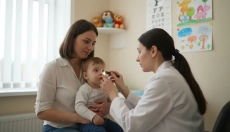

Laryngitis in children and the nocturnal barking cough that terrifies parents
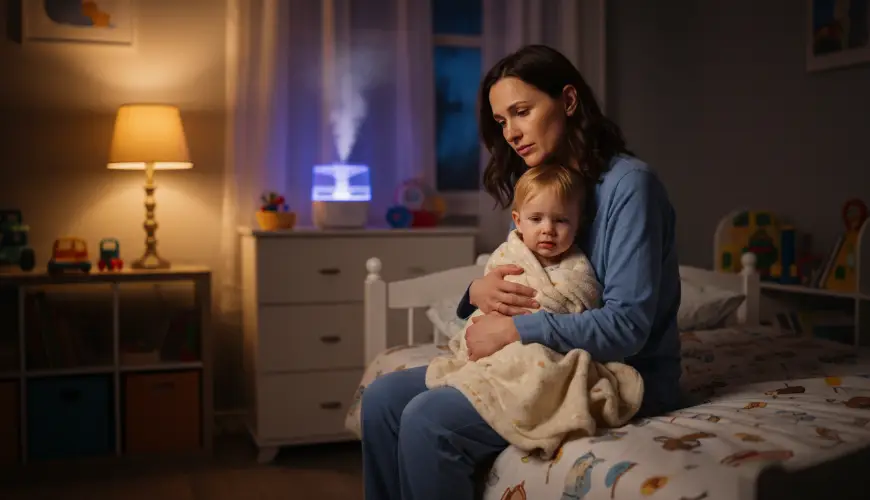
Imagine: it's midnight, your child wakes up and starts coughing in a way you've never heard before. The sound resembles the barking of a dog or a seal, the child is having difficulty breathing, and their voice has suddenly become hoarse. For most parents, this is one of the most frightening moments of parenthood. Yet it is a fairly common condition with its own name – laryngitis, colloquially known as croup or pseudocroup.
It's important to clarify one key terminological misunderstanding right from the start. The term "croup" in modern medicine does not refer to diphtheria as such – that is, the bacterial disease caused by Corynebacterium diphtheriae, against which children are routinely vaccinated today. Rather, it refers to acute subglottic laryngitis, an inflammation of the larynx and the area below the vocal cords that causes the characteristic barking cough. To avoid unnecessary confusion, doctors today more commonly use the terms croup or pseudocroup.
Try our natural products

What actually happens in a child's throat
Laryngitis most commonly develops as a viral infection of the upper respiratory tract. The majority of cases are caused by parainfluenza viruses, particularly types 1 and 2, although other viruses may also be responsible, such as respiratory syncytial virus (RSV), adenoviruses, or influenza. The infection causes swelling of the mucous membranes of the larynx and trachea. In young children, this anatomical area has a specific characteristic – it is narrow, and any swelling affects breathing far more rapidly than in an adult.
The cough typically develops during the night, for a very specific physiological reason. During the day, children sit or stand more, the mucous membranes are better perfused, and swelling is less pronounced. At night, while lying down, perfusion changes, mucosal swelling may worsen, and air passing through the narrowed airways creates that characteristic, unmistakable sound. Additionally, cool night air irritates the trachea, making the whole situation seem more dramatic than it actually is – though this is of little comfort to parents hearing it for the first time.
The condition most commonly affects children between six months and five years of age, with peak incidence between the second and third year of life. Boys tend to be affected slightly more often than girls. Seasonal occurrence corresponds to the autumn and winter months, when the circulation of respiratory viruses generally increases. According to data from the World Health Organization, respiratory tract infections in young children are among the most common reasons for visiting a doctor worldwide.
How to distinguish laryngitis from other conditions
Parents who hear their child coughing this way for the first time often immediately call emergency services or head to the emergency room – and that is entirely understandable. The barking cough is truly an alarming sound. Nevertheless, it is useful to know how to distinguish laryngitis from conditions that are genuinely more serious and require immediate medical attention.
Typical laryngitis begins as a common cold or mild viral illness, followed by hoarseness and then the characteristic barking cough. The child may have a mildly elevated temperature, but their overall condition is usually relatively good – the child is alert, responsive to their surroundings, and drinking fluids. Symptoms worsen at night, and the condition generally improves in the morning, then may worsen again the following night. The entire course of the illness typically lasts three to five days.
Warning signs that require immediate help are different. If the child produces a loud, high-pitched sound when inhaling (known as stridor) even at rest, if they have visible difficulty breathing, if the spaces between their ribs or the notch above the breastbone are visibly retracting during inhalation, if their lips or fingernails have a bluish tinge, or if they are noticeably lethargic and refusing to drink – then prompt action is necessary. Similar symptoms can occur with epiglottitis, an inflammation of the epiglottis, which is a serious condition requiring hospitalisation. Unlike laryngitis, epiglottitis is rare today thanks to vaccination, but not unknown.
Several approaches have proven effective at home for relieving the symptoms of laryngitis. Cool, humidified air has a soothing effect on the swollen mucous membranes. Many parents describe how they opened a window in winter or took the child outside into the cool night air, and within a few minutes the breathing improved. A similar effect can be achieved with cool mist from a humidifier. Conversely, hot steam from the bathroom, which was previously recommended, is no longer considered the optimal approach – the effectiveness of hot steam has not been convincingly demonstrated, and there is a risk of burns.
Keeping the child calm and reassured plays a crucial role. Crying and agitation cause the child to breathe faster and less effectively, which worsens the symptoms. A parent who remains calm and holds the child in their arms is in fact actively helping with treatment. Fluids are also important – hydration keeps the mucous membranes moist and helps the body fight the infection.
In more severe cases, a doctor may prescribe corticosteroids – most commonly dexamethasone or budesonide – which reduce inflammation and mucosal swelling. These medications are very effective in treating laryngitis and their effect sets in relatively quickly. Antibiotics, on the other hand, have no place in the treatment of viral laryngitis, as viruses do not respond to them. Nevertheless, parents sometimes request antibiotics, which is an understandable but counterproductive reaction.
Paediatrician and medical communicator Jan Boženský noted in one of his texts: "Laryngitis is a condition that looks more dramatic than it actually is – but that doesn't mean it can be ignored." This sentence captures the essence of the whole issue. In most cases, the condition itself is not life-threatening, but it can change rapidly, and parents need to know when to act.

Prevention and supporting a child's resilience
Because laryngitis is most commonly caused by viruses, specific prevention is difficult. There is no vaccine that protects directly against parainfluenza. What does work, however, is strengthening the body's overall resilience and reducing the risk of viral infection transmission.
Regular handwashing remains one of the most effective tools for preventing respiratory illness in children. Research repeatedly confirms that thorough hand hygiene reduces the incidence of respiratory tract infections in children in group settings. Group care facilities are natural breeding grounds for viruses – a child starting nursery for the first time encounters a whole range of pathogens they have not yet been immunologically prepared for. This is unpleasant, but from a long-term perspective it is a natural and important process of building immunity.
Quality sleep, sufficient outdoor physical activity, and a balanced diet rich in vitamins and minerals are the foundations that help a child's immune system function properly. Particular attention should be paid to vitamin D, a deficiency of which is very widespread among children in the Czech Republic during the winter months. The Czech Paediatric Society recommends vitamin D supplementation for infants and toddlers throughout the year, precisely because adequate levels support the body's immune responses.
At home, it is advisable to maintain appropriate air humidity, particularly during the heating season, when central heating significantly dries out the air in flats and houses. Dry air irritates the mucous membranes and reduces their natural ability to defend against viruses. A humidifier or even bowls of water placed on radiators can make a significant contribution to the comfort of both children and adults. Products for healthy indoor air, such as quality humidifiers or air purifiers, are not merely a fashionable accessory – they have a real impact on the health of the entire family.
Interestingly, breastfed children generally have a lower incidence of respiratory infections, as breast milk contains antibodies and bioactive substances that strengthen the immunity of newborns and infants. This does not, of course, mean that breastfed children never develop laryngitis, but the overall course of infections tends to be milder in breastfed children.
Parents who have experienced a night-time episode of laryngitis with their child are unlikely to forget the experience. One mother from the Central Bohemian Region described her experience as follows: her daughter woke her at two in the morning, coughing so severely that she barely recognised her. She immediately called emergency services, but while waiting for them to arrive, she opened the window and held the child near the cool air. By the time the paramedics arrived, the cough had significantly subsided. The paramedics administered corticosteroids, and the girl woke up the next morning almost completely recovered. "If I had known in advance what it was, I wouldn't have been so frightened," she said. And that is precisely where the greatest value of being informed lies – not in making parents less vigilant, but in helping them know how to respond and when to genuinely call for help.
Laryngitis is part of childhood, which brings its own challenges. Being well-informed and reacting calmly, along with knowing when a situation is serious and when care can be managed at home, are the best tools parents can have. And a quality home environment – clean air, appropriate humidity, a healthy diet, and sufficient rest – are the foundations that help children cope not only with laryngitis, but with the whole range of childhood illnesses that naturally come with growing up and building immunity.