
# Clean tarnished silver cutlery without chemicals using home tricks
Silver cutlery holds a special place in many households. These are objects passed down from generation to generation, brought out for festive occasions, and their shine can transform even an ordinary dinner into something exceptional. However, silver has one unpleasant characteristic - over time it darkens, turns grey, and loses that distinctive sparkle we love it for. What can be done about it? Many people reach for aggressive chemical cleaning products that work, but can damage the surface of silver and are certainly not kind to the environment or to health. Yet there are simple, natural, and surprisingly effective ways to restore silver cutlery to its original beauty - and you'll find most of the ingredients you need right in your kitchen.
Before we get into specific methods, it's worth understanding why silver tarnishes in the first place. It's not rust or ordinary dirt. The process behind the tarnishing is called sulfidation - silver reacts with sulphur present in the air, in foods (particularly eggs, onions, or mustard), and in human sweat, forming silver sulphide, a dark layer that settles on the surface of objects. This layer is not permanent and can be removed without resorting to aggressive chemicals.
Try our natural products
Tried-and-tested home methods that actually work
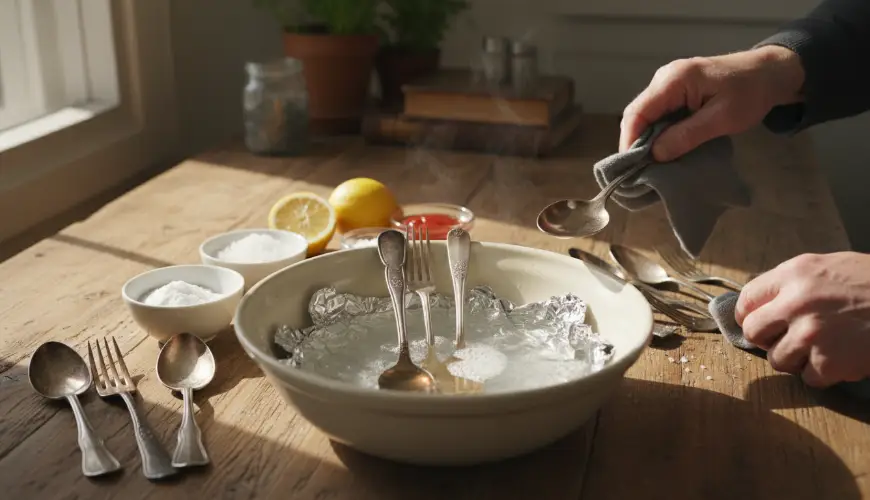
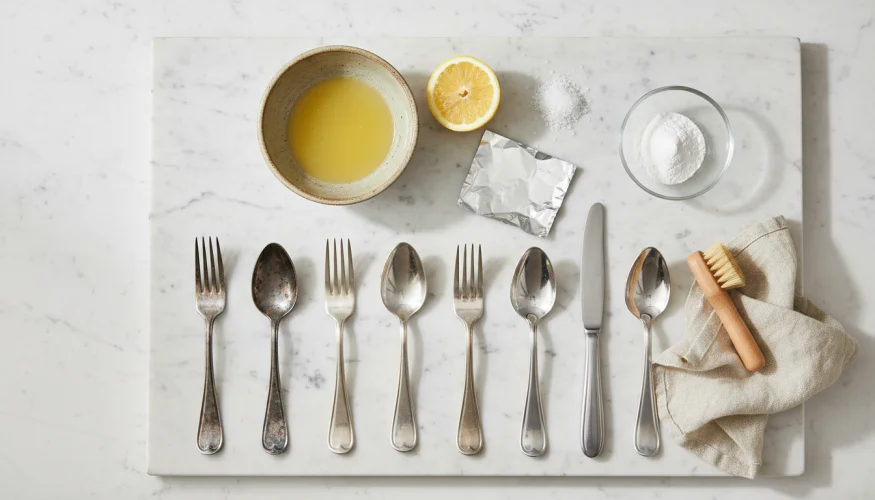
One of the most popular and effective ways to clean silver is the method using baking soda, aluminium foil, and hot water. The principle is purely chemical - it involves an electrolytic transfer in which silver sulphide passes from the cutlery onto the aluminium. Simply line the bottom of a larger pot or bowl with aluminium foil, add two to three tablespoons of baking soda, pour in boiling water, and submerge the tarnished cutlery in this solution so that it touches the foil. After a few minutes, the dark layer will literally begin to disappear before your eyes - and the result is astonishing even for those who see it for the first time.
This method was tried, for example, by Markéta from Brno, who inherited a set of silver cutlery from her grandmother dating from the early twentieth century. The cutlery was so tarnished that her family considered it almost unusable. "I couldn't believe it could be so simple. In ten minutes the cutlery looked like new, without a single scratch and without any chemicals," she described her experience. This is precisely why this method is spreading among lovers of eco-friendly cleaning as one of the most reliable alternatives to industrial cleaning products.
Another tried-and-tested option is a paste made from baking soda and water, or alternatively from toothpaste without abrasive ingredients. Simply apply a thick paste to a soft cloth or an old toothbrush and gently work it into the surface of the silver using circular motions. This method is particularly suitable for smaller objects or areas with relief decoration that a liquid solution cannot reach as easily. After polishing, simply rinse the cutlery thoroughly with lukewarm water and dry it with a soft dry cloth - ideally flannel or microfibre, which leaves no fibres or scratches.
Surprisingly effective is also lemon juice combined with kitchen salt. The citric acid in the lemon helps dissolve silver sulphide, while the salt acts as a gentle abrasive. Mix the juice of one lemon with a teaspoon of salt, dip a soft cloth into the mixture, and carefully wipe the surface of the cutlery. This method is slightly gentler than baking soda, but requires a little more patience and physical effort. It is particularly suitable for cutlery that is only mildly tarnished or that you want to maintain with regular care.
A lesser-known but highly effective method is the use of ketchup or tomato juice. It may sound unbelievable, but the acids contained in tomatoes have the ability to break down the dark layer on the surface of silver. Simply coat the cutlery with ketchup, leave it to work for five to ten minutes, then rinse with water and finish with a soft cloth. This method is particularly popular in English-speaking countries, where it is recommended even by renowned institutions - for example, the Smithsonian Institution lists it as one of the gentle alternatives for caring for metal objects in domestic settings.
What to avoid when cleaning silver
Just as important as knowing what works is knowing what harms silver. Never use steel wool, coarse sponges, or abrasive powders - these will remove the dark layer, but at the same time scratch the surface of the silver so severely that it will become far more susceptible to further tarnishing and will lose its natural shine. Be equally cautious with chlorine-based products or strong acids, which can irreversibly damage silver or cause discolouration.
Also be careful with excessively hot water when soaking cutlery with bone, mother-of-pearl, or wooden handles - heat can cause them to crack or loosen the adhesive. In such cases, it is better to clean only the metal part of the cutlery and protect the handles or clean them separately using a gentle approach.
As the saying goes, "prevention is better than cure" - and this applies to the care of silver too. Cutlery that is stored correctly tarnishes considerably more slowly. The ideal is to keep it wrapped in special anti-tarnish cloths or at least in a cotton cloth, separately from other metals and away from moisture and direct light. Some households also place pieces of chalk or activated charcoal in the cabinet with the silver, which absorb moisture and sulphur from the air - thereby slowing down the tarnishing process.
An interesting insight also comes from research by conservators at the Victoria and Albert Museum in London, who have long been concerned with the care of metal objects of historical value. According to their recommendations, regular and gentle care is far more effective than occasional intensive cleaning - silver that is cleaned too aggressively or too frequently gradually loses its natural patina and can become dull.
The ecological approach to household cleaning in general has been experiencing a marked revival in recent years. People are increasingly aware that synthetic cleaning products contain substances that burden the environment, can irritate the skin and respiratory tract, and whose production and disposal are resource-intensive. Baking soda, lemon, vinegar, or kitchen salt, by contrast, are biodegradable, readily available, inexpensive, and versatile in the home. It is therefore no wonder that more and more people are returning to them as an alternative to industrial chemicals - and not only when cleaning silver.
As for the frequency of cleaning, silver cutlery that is used regularly paradoxically tarnishes less than pieces lying hidden away in a sideboard. Contact with hands and food may leave fingerprints, but regular use and washing in warm water with a little washing-up liquid prevents the build-up of thicker layers of sulphide. Cutlery that is only brought out at Christmas or on special occasions tends to be the most heavily tarnished - and that is when one of the methods described above becomes necessary.
Cleaning silver cutlery without chemicals is also a pleasant ritual that connects a person with tradition and with caring for objects whose value goes beyond their monetary worth. At a time when we are accustomed to discarding things at the first sign of wear and buying new ones, caring for the family silver is a small but meaningful act of resistance against the culture of disposability. Silver cutlery that is cared for with love and wisdom can last for centuries - and be passed on as a tangible memory of those who used it before us.
Whether you reach for aluminium foil and baking soda, lemon juice, or a little patience and a flannel cloth, the result will be the same: cutlery that shines once more, without unnecessary chemicals, without unnecessary expense, and with the knowledge that you have chosen a path that is kind to yourself and to the planet. And that is reason enough to make it worth caring for.