

Flowers suitable for the bedroom can help make the space cozy without disturbing your sleep.
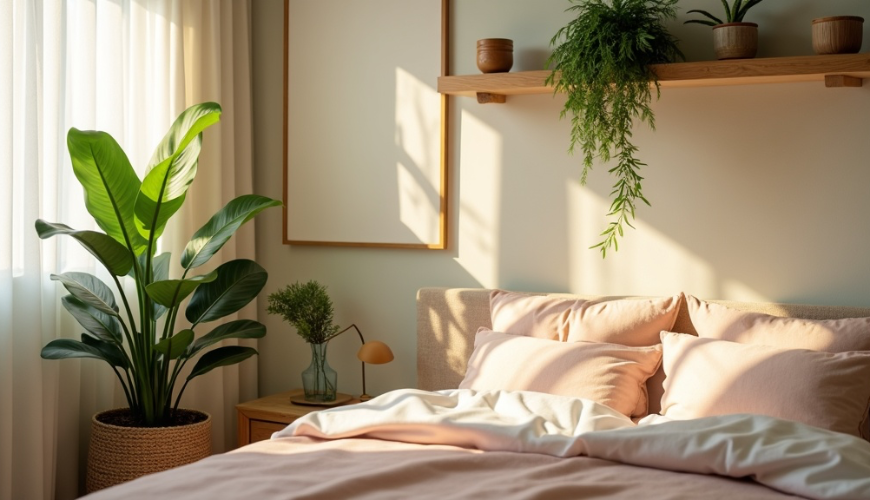
The bedroom tends to be a special territory in an apartment. By day it's inconspicuous, in the evening it becomes a quiet haven, and in the morning it transforms into the starting line for the entire day. It's no wonder that many small "rules" revolve around it—from the right temperature to what truly belongs there. Among the most frequent questions in recent years, one surprisingly simple one keeps returning: should there be flowers in the bedroom? And if so, which flowers are really suitable for the bedroom, so they don't interfere with sleep but rather help create a pleasant environment?
The answer isn't black and white, as it depends on what a particular household expects from the bedroom—some want mainly "clean air," others coziness, and yet others are looking for a way to soften dry air during the heating season. The good news is that flowers suitable for the bedroom do exist, and they are often those that are easy to grow and tolerate less light. It's just useful to know why there's so much talk about plants in the bedroom context and what to watch out for, so a good idea doesn't turn into a source of worry.
Try our natural products

Should there be flowers in the bedroom? What they can do and what is sometimes attributed to them
Plants in the interior immediately give a "soft" impression—they visually calm, add color, and life. This is the fastest reason why people put them in the bedroom. In recent years, their impact on air quality is also often mentioned. Here, it's good to maintain a sober perspective: houseplants can contribute to a more pleasant microclimate, but they are not a substitute for ventilation, reasonable humidity, and a clean home without unnecessary chemical scents.
It's often repeated that plants "take oxygen at night" and therefore don't belong in the bedroom. Yes, most plants breathe at night similarly to humans—they consume oxygen and release carbon dioxide. However, in common quantities (one, two, three plants), this effect is negligible in a real bedroom. The number of people in the room, the size of the space, and whether it is ventilated play a much larger role. Moreover, there are species with a different photosynthesis regime (so-called CAM), which tend to absorb CO₂ at night—typically some succulents. It's not about turning the bedroom into a greenhouse, but there's no reason to fear plants.
It's also fair to mention that some "miraculous" claims about air cleaning tend to be exaggerated. When referring to the ability of plants to reduce certain pollutants, it often comes from laboratory conditions. A good context is, for example, the overview and interpretation of research on houseplants and air quality by the American NASA agency (it's an interesting foundation, but real-life home conditions are more complex). In practice, plants are great for atmosphere, psyche, and feeling of home, and as a bonus, they might slightly help with the microclimate—but the main "healthy effect" of the bedroom still relies on ventilation, reasonable temperature, cleanliness of textiles, and limitation of irritating scents.
And now the most important thing: when discussing which flowers belong in the bedroom, it's not only about "oxygen," but also about allergies, intense scents, molds in overwatered soil, and overall maintenance. The bedroom should be a place of peace—and a plant that requires constant attention or, conversely, easily rots, can do more harm than good.
Which flowers for the bedroom: species that bring joy without great demands
When choosing, a simple rule applies: plants suitable for the bedroom are those that tolerate stable temperatures, don't have aggressive scents, and handle typical light well (often more semi-shade than direct summer sun). It's also worthwhile to prioritize species that forgive occasional irrigation lapses—because who wants to deal with dramatically drooping leaves instead of relaxing in the evening?
A very popular classic is the snake plant (sansevieria). It looks modern, grows slowly, tolerates drier air and less light, and doesn't need frequent watering. It's suitable for the bedroom precisely because it's a "quiet companion"—it doesn't require daily care and at the same time looks clean and neat. Similarly low-maintenance is the zamioculcas (often called "ZZ plant"), which survives even in rooms where there's more lamp light than sunlight. When looking for flowers suitable for the bedroom for busy households, these two species are a sure bet.
For something gentler, one might opt for a peace lily (spathiphyllum). It has elegant leaves and white spathes, giving a calm and "hotel-like" impression. It's important to monitor that it doesn't stand long in overwatered soil—bedrooms can sometimes be cooler, and then overwatering is less forgiving. When the peace lily thrives, it can be a beautiful centerpiece on a dresser or nightstand without being disruptive.
The spider plant (chlorophytum) is often recommended for the bedroom. It has a light, cascading growth, looks fresh, and propagates well. It's suitable for hanging pots or higher shelves, where it creates a "curtain" of leaves. The spider plant handles typical conditions and is also good for households where watering is occasionally forgotten.
If the goal is more of a minimalist look and as little care as possible, then aloe vera or some other easy-going succulents are a good choice. Aloe is also perceived as practical—its leaf gel is traditionally used in cosmetics, although in home conditions it's better to be sure it's the correct type and used safely. It suits the bedroom because it has a simple silhouette and doesn't need frequent watering.
An interesting option is pothos (epipremnum). It's a plant that can quickly green up a space, can be grown on a trellis or left to hang from a shelf, and looks good almost anywhere. In the bedroom, it can soften sharp furniture lines and create a feeling that the room is "alive" without being disruptive.
And then there's the category of plants sought for their scent—typically lavender. Here, caution is advised. A gentle lavender scent can have a calming effect, but not everyone likes it and for more sensitive individuals, it can be irritating. Furthermore, lavender needs a lot of light, so in a darker bedroom, it will likely suffer. If placed in the bedroom, it often works better as a small plant on a sunny windowsill or as a dried bundle away from the nose. The scent should be a background, not the main feature.
To keep it practical and clear, here's a simple shortlist that can be used as an indicative "yes" for most bedrooms:
- Sansevieria (snake plant) – minimal care, tolerates semi-shade, understated elegance
- Zamioculcas – very hardy, suitable even for darker corners
- Peace lily (spathiphyllum) – decorative, just be careful not to overwater
- Spider plant – fresh, undemanding, suitable for hanging
- Pothos (epipremnum) – grows quickly, easy to shape
- Aloe vera – simple appearance, little watering, appreciates a lot of light
In the bedroom, plants with sturdy leaves and a "calm" silhouette often work better than species that constantly shed, dust pollen or require misting several times a day. The fewer minor worries, the more the bedroom remains a bedroom.
What to watch out for: scents, allergies, mold, and plant placement
The question of "which flowers belong in the bedroom" also has another side: which ones to place there thoughtfully. Not because they are "bad," but because the bedroom is a sensitive environment. At night, scent perception changes, the body regenerates, and if someone is allergic, they may be bothered by things they wouldn't even notice during the day.
The first topic is strongly scented flowers. Lilies, hyacinths, or some types of jasmine can scent the apartment within minutes but may be too intense in the bedroom. Some people fall in love with the scent, while others get a headache from it. If the bedroom is to be a place where one breathes freely, it's better to choose plants with a neutral scent or leave the scent for the living room or hallway.
The second topic is allergies and pollen. Blooming plants are beautiful, but pollen in a more enclosed room can worsen sleep for sensitive people. This doesn't mean that nothing flowering can be in the bedroom—rather, it's worth observing one's reactions and possibly choosing species that don't flower prominently or often. For allergy sufferers, it might be better to favor green plants with leaves.
The third topic is humidity and mold. An overwatered pot in a cooler room is a recipe for musty soil and, in extreme cases, mold in the substrate. The bedroom, where there is less heating, might be more prone to overwatering than the kitchen or living room. Simple discipline helps: water only when the top layer of the substrate is dry and use pots with drainage or at least reasonable drainage. A clean pot and non-soggy soil will do more for comfort than any promises on a label.
The fourth topic is placement. A plant on a nightstand might look romantic, but if it gets in the way of the lamp, spills soil, or gets knocked over at night, the charm quickly fades. Often, a "single standout plant" on a dresser or by a window works better in the bedroom than numerous small pots all around the bed. And if there's a cat or dog in the household, safety must be considered—some common houseplants can be problematic if ingested. In such cases, it's better to choose carefully and place plants out of reach.
On top of all this is one more practical aspect: the bedroom is often a place where people want the least amount of dust. Plants with large leaves may "catch" dust, but then they need to be wiped occasionally. This can be done as a small ritual—a few strokes with a damp cloth once a week, and the plant looks better, while the impression of the whole room improves. As one household rule aptly circulating among plant enthusiasts states: "If you take care of the leaves, you also take care of the air in the room."
And what does this look like in real life? Imagine a typical apartment in a panel building, where the bedroom faces north and doesn't get much sunlight during the day. The owners want the room not to feel cold, but they also don't want daily care. Ultimately, they choose one sansevieria in the corner by the dresser and a pothos on a high shelf, where it can cascade down. After a week, they notice something peculiar: the room doesn't feel "cluttered," but it's cozier, and when they turn off the lights at night, the green silhouettes in the dim lamp light create a calmer atmosphere than bare walls. It doesn't change their whole life, but it improves a daily detail—and that's often what the bedroom is about.
So, when the original question returns "should there be flowers in the bedroom, and if so, which ones?", the answer is: yes, if chosen wisely. Best are those that are undemanding, without strong scents, suitable for poorer lighting conditions and won't unnecessarily increase the risk of soggy soil. The bedroom deserves simplicity—and that's the magic of well-chosen greenery: subtly reminding that even in the quietest room of the apartment, there can be a piece of living energy that doesn't disturb but naturally softens every evening and morning.