

Why Our Body Hurts When We Don't Move, and What Really Happens in the Body During Prolonged Sitting
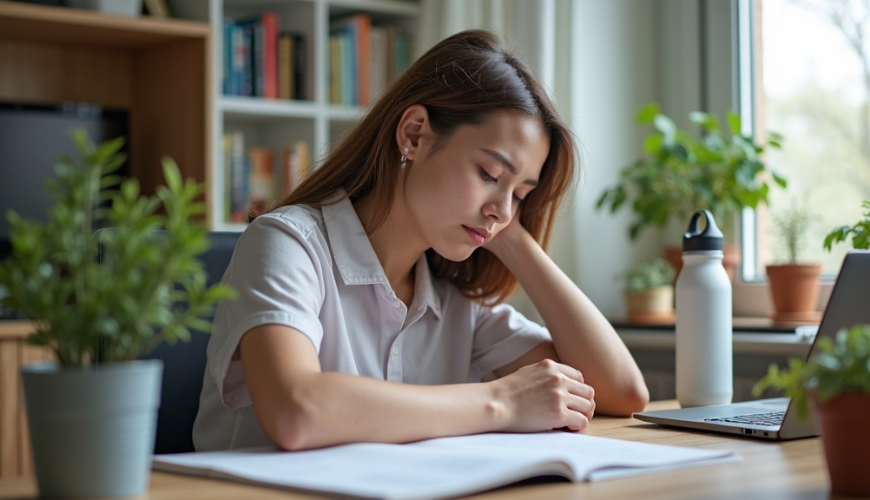
A sedentary day can be subtly exhausting. You sit down at your computer in the morning, switch to a car or tram in the afternoon, and "reward" yourself with the couch in the evening. Then it hits you: neck pain, a pull in the lower back, stabbing between the shoulder blades, a stiff hip, or a knee that acts up when you walk down the stairs. A question lights up in your mind that sounds almost suspiciously simple: why does our body hurt when we don't move?
It's not just about "weak willpower" or the body being angry. It's more like a well-set alarm going off. The human body is designed for movement, for alternating exertion and relaxation, for walking, squatting, stretching, turning. When we offer it just one position for too long, it starts to take its toll—and it often does so through pain in the body parts that suffer the most from sitting.
Try our natural products




Why the body hurts when we don't move: the silent toll of comfort
Sitting is a bit of a paradox for the body. It's comfortable, but from a biomechanical perspective, it's a position where some muscles are overworked and others are switched off. Typically, the hip flexors shorten, the chest pulls forward, the neck extends (the head suddenly becomes "heavier" than it should be), and the deeper stabilizing muscles of the trunk gradually give up. The body then holds together more "on the edge" through surface muscles, which become tired and stiff.
Another thing adds to this: in long-term immobility, the exchange of pressure and tension in the tissues becomes more difficult. Joints and discs are not "lubricated" on their own—movement helps them by supporting cartilage nutrition and natural blood circulation in the area. When we don't move, the muscles work less like a pump. The result can be a feeling of heavy legs, stiff back, or an unpleasant "blockage" in the lower back at the first forward bend.
It's also common that pain does not originate in the place that is the true cause of the problem. Neck pain can be related to restricted mobility of the thoracic spine, and lower back pain can be related to hips that shorten when sitting. The body is an interconnected system and knows how to "help" itself through a substitute path—but that substitute often comes at a cost.
And why does it happen so quickly? Because the body adapts to what we do most often. A sedentary lifestyle is a signal to it: "This is the new standard." Shortened muscles shorten even more, weakened muscles engage even less. It's not a punishment; it's adaptation.
A useful context for understanding how sedentary behavior affects health can also be found in the overview on the WHO's pages on physical activity and sedentary behavior—among other things, it reminds us that even smaller doses of movement matter and that it's good to regularly interrupt long periods of sitting.
Where it typically hurts and why
The most common "map" of sedentary pain looks surprisingly similar in students, office workers, and people working from home:
- Neck and trapezius: the head is pushed forward, shoulders rise, muscles work statically. After hours of sitting, this manifests as pressure, burning, or headaches originating from the cervical spine.
- Between the shoulder blades: the upper back doesn't move, the chest closes, shoulder blades lose their natural movement. The body then "holds" tension in small muscles that easily become overworked.
- Lower back and sacrum: long sitting changes the pelvis's alignment, deep stabilizing muscles sleep, and the lower back takes on work it wasn't designed for. The result is stiffness, "catching," or unpleasant tension.
- Hips: shortened hip flexors can trouble you when walking uphill, running, or even when simply standing up from a chair—the body seems "unwilling" to open up.
- Knees and ankles: less common, but typical for people who sit for long periods with bent knees and walk little. Joints then miss natural work in their full range.
Usually, it's not about a one-time injury, but about long-term overloading and stiffness. And that's why the solution is often surprisingly straightforward: why we need movement is not a question of athletic performance, but basic maintenance.
Why we need movement (and why even a little is enough to improve)
Movement is like regular airing for the body. It won't solve everything, but without it, a "stale" feeling starts to accumulate—in the body and in the head. Walking, stretching, or brief strengthening improves circulation, muscles alternately engage and relax, and joints move in the range they were designed for. The nervous system gets a signal that it's safe to release unnecessary tension.
The good news is that even a little is enough to improve. The body often doesn't need an hour-long workout to stop protesting. It needs regularity and interrupting long periods of immobility. Sometimes, just standing up every 45–60 minutes, walking around the apartment, doing a few shoulder circles, and taking three deep breaths into the belly can make a big difference.
For those who like a concrete idea, imagine a typical workday: eight hours at a desk, plus commuting by public transport and an evening with a phone in hand. In such a day, often nothing "bad" happens—no injury, no heavy lifting. Yet, back or neck pain appears in the evening. This is where the power of small changes becomes apparent.
A real-life example? A typical situation in households: a parent on parental leave or someone working from home alternates working on a laptop with quick cleaning and cooking. It's not about laziness—it's about the fact that the body is in a forward bend most of the day (at the computer, at the counter, with toys on the floor). When you add an evening "rest" on the couch, the neck and lower back are in one line of tension practically all day. In such a situation, introducing two short movement breaks can be surprisingly effective: five minutes in the morning, five minutes in the afternoon. No changing clothes, no equipment. Just targeted exercises to stop the body from hurting.
And by the way: movement isn't just about muscles. For many people, regular movement improves sleep, mood, and the ability to handle stress. It's not magic; it's biology—the body and brain work better when they "walk around" a bit during the day.
"The body is not fragile. It just remembers what we do with it most often."
Tips for specific exercises to stop body pain (without a gym and without complications)
The following simple exercises target areas that are most sensitive to a sedentary lifestyle. It's important not to exercise through sharp pain. If the pain is intense, radiates into the limbs, is associated with tingling or weakness, or lasts long-term, it's advisable to consult a physiotherapist or doctor. For common stiffness and "office" overload, however, regular, gentle routines often help.
A small routine for 8–10 minutes (1× to 2× daily)
-
Neck and upper back release (1 minute)
Sitting or standing, stretch the top of your head upwards, slightly tuck your chin in (like a "double chin," but gently). Then slowly make 5 circles with your shoulders back and 5 forward. Next, tilt your head to the right shoulder, hold for a moment, and switch sides. The goal is not to pull forcefully, but to signal to the neck that it can relax. -
Chest opening against a wall or in a doorway (1–2 minutes)
Press your forearm against the door frame, step forward, and let the chest gently open. Breathe calmly. This is a small but often crucial step for people troubled by pain between the shoulder blades and forward-rounded shoulders. -
Cat stretch for the spine (1 minute)
On all fours, slowly alternate arching and rounding your back. The movement is smooth, with breathing. The spine "wakes up," and the lower back stops staying in the one position it knows from sitting. -
Hip flexor stretch (2 minutes)
Kneel into a lunge (one knee on the ground, the other foot in front). Slightly tilt the pelvis and shift your weight forward to stretch the front side of the hip of the rear leg. Hold for 30–45 seconds, then switch. Shortened hips are a common reason why the lower back acts up—the body has nowhere to "open" when walking or standing. -
Bridge (glute bridge) for the glutes and posterior chain (1–2 minutes)
Lie on your back, bend your knees, feet hip-width apart. Lift the pelvis up, hold briefly, and slowly lower it. 8–12 repetitions. The glutes are often "switched off," and their work is then missing in everyday movement, contributing to lower back overload. -
"Bird-dog" for stability (1 minute)
On all fours, extend your right arm and left leg, hold briefly, return, and switch. It's not about height but stability. The belly is slightly active, the lower back doesn't sag. This exercise beautifully shows that even a little is enough to improve—a few quality repetitions can calm the lower back more than a random "crack" in the back. -
Squat by a chair (1 minute)
Stand in front of a chair, sit down lightly, and immediately stand up. 8–10 repetitions. The squat returns the natural movement pattern to the body, strengthens the legs, and teaches the hips to work. For starters, a chair is a great safety net.
This routine is intentionally simple. It doesn't require sports clothing, just a bit of space. And mainly: it combines relaxation and gentle strength, because stretching alone is sometimes not enough. The body needs not only to "stretch" but also to relearn to use muscles that go on strike while sitting.
How to incorporate it into your daily routine so it works
The most successful are those who stop waiting for the perfect moment. Movement "micro-breaks" can be attached to routines: after morning coffee, before lunch, after the last email. When you add ordinary walking—like getting off a stop earlier or going for a ten-minute evening walk around the block—the body starts to change its tone. From "everything hurts" it often becomes "today it's a bit better" and later "the back only acts up occasionally."
A little ergonomics without big investments helps too: a monitor slightly higher, feet resting on the ground, occasional change of sitting position, alternating between a chair and standing. But the most important thing is still movement. Because even a perfectly set chair is still a chair.
And if the question arises whether it makes sense to exercise when tired: that's precisely when gentle movement is most beneficial. Not as performance, but as a reset. The body often doesn't speak up because it's "weak" but because it's been too long without change.
When one sedentary day follows another, pain can seem like a mystery. Yet, it's often an understandable message: why does our body hurt when we don't move is at its core a question about how much the body needs variability. And the good news is that the path back is usually not dramatic. It just takes starting where you can—a few minutes a day, a few simple exercises, a bit more walking. The body notices it faster than you might expect.