
A healthier home can be created even without major changes
Home is often described as a place of peace, yet in practice, it is also a space full of subtle stimuli that one may not even notice. The air after cooking, dust from textiles, residues of cleaning agents on surfaces, light that "hits" the eyes in the evening, or the seemingly harmless humidity in the bathroom—until it shows its effects. The good news is that a healthier home doesn't arise solely from renovation, replacing all the furnishings, or strict rules. For many households, a more realistic path is: how to create a healthier home without major changes, step by step, with small adjustments that can be implemented even when there's no time or energy to change one's lifestyle fundamentally.
Perhaps this is your case too. Who would voluntarily add more responsibilities today? And yet—what if it were about simple tips for a healthier home, that don't require new "major habits," just small shifts in what is already being done? Often, it suffices to change one thing, simplify the routine, or stop using a product that unnecessarily burdens the air and skin at home. And the result can be surprisingly swift: less "heavy" air, more pleasant sleep, calmer skin, fewer irritating scents, and a feeling that the home truly works for the people, not against them.
Try our natural products
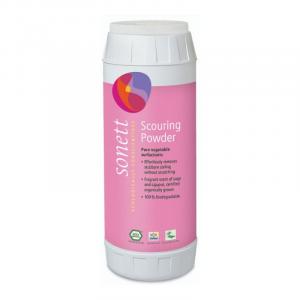
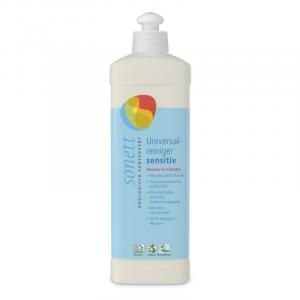
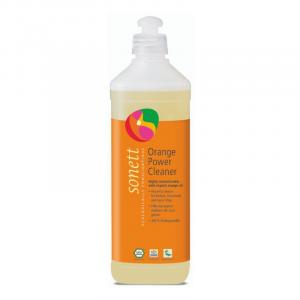
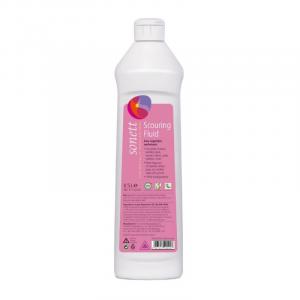
Air Everyone Breathes at Home: Small Steps with a Big Impact
When it comes to health at home, most people think of cleanliness. But cleanliness isn't just about what is visible. At home, what is often crucial is the invisible—indoor air quality. According to the World Health Organization (WHO), polluted air (including indoor air) can contribute to a range of issues, from respiratory irritation to longer-term health complications. This doesn't mean that the home should turn into a sterile laboratory. Rather, it's about reducing unnecessary sources of burden and incorporating a few simple habits that can be done naturally.
The cheapest "air purifier" is ventilation—but it's often done by leaving the window slightly open for a long time. In winter, this cools the walls, in summer, it lets in pollen and dust, and the effect on air exchange may not be significant. In practice, short, intense ventilation several times a day works better. Just a few minutes of draft is enough to change the air without unnecessarily cooling the apartment. Who would have thought that this could be one of the simplest ways to have a healthier home without major changes?
Another subtle source of "heavy" air is scents—paradoxically, those meant to feel clean. Air fresheners, strongly scented candles, or aggressive cleaners often merely mask the problem and add more substances to the space. Instead, it's worth looking for cleaner alternatives: unscented or mildly scented products, ideally with transparent ingredients that don't leave a long chemical "tail." In an eco-friendly home, products based on simple formulas are commonly used—and importantly, they work without having to completely overhaul the cleaning routine.
In real life, it might look like this: in one household, there was a recurring feeling of "dry scratchiness" in the throat during evenings in front of the TV. Nobody was sick, it was just unpleasant. It turned out that a heavily scented candle was often burned in the living room, and an air freshener was used at the same time. After eliminating these, ventilating more frequently for short periods, and replacing the all-purpose cleaner with a gentler option, the issues eased within a few days. No revolution, just a few small shifts.
Dust also plays a significant role. It's not just about aesthetics—dust is a mixture of textile fibers, outdoor particles, and other minutiae that accumulate in the home. A simple rule helps: fewer textiles that are hard to wash, and more that are easy to maintain. Heavy curtains, "decorative" cushions, and throws may look cozy but also trap dust. It's not necessary to get rid of them, rather it's good to simplify: keep what makes sense and reduce the rest. Then, when covers or blankets are washed from time to time, the home rewards you with a lighter atmosphere.
And what about humidity? Many apartments struggle with bathrooms that remain wet for a long time after a shower, with dark spots appearing in the corners. Here, a simple combination often helps: short ventilation, open doors after a shower (if the layout permits), a squeegee for glass and walls, and not leaving wet towels "lying around." It's a small thing, but these small things make the difference between a home that feels fresh and one where moisture quietly settles into materials.
Cleanliness Without Overwhelming Scents: Gentle Cleaning That Doesn't Complicate Life
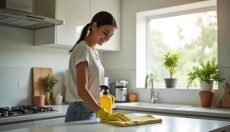
Cleaning is often a source of tension in households: either it's done "to the bone," or it's postponed because nobody wants to spend the weekend scrubbing the bathroom. Yet, the path to a healthier environment often leads through simplifying and clarifying the cleaning process. And mainly: using products that don't unnecessarily burden the skin or air.
Anyone who has ever felt tightness in their hands or had burning eyes after cleaning knows what this is about. Strong degreasers, chlorine products, or intense perfumes may be routine for some, but in the long run, it's not ideal. A healthy home doesn't arise from "burning everything out" with chemicals, but from maintaining cleanliness continuously and appropriately. And choosing products that make sense even for more sensitive households—perhaps where there are small children, allergy sufferers, or pets.
One of the most practical steps is to replace a few of the most used items: dish soap, all-purpose cleaner, and laundry detergent. These are held most often, so it makes sense to start here. Products with clearly stated ingredients and gentler surfactants are often recommended; for basic cleaning, often one universal option and something for the bathroom suffice. Minimalism in cleaning isn't a pose—it's a way to create a healthier home without major changes, as it reduces chemical cocktails and chaos in the cabinet.
When it comes to laundry, surprisingly much can also be done with small adjustments. Laundry is in direct contact with the skin, yet it often combines strongly scented powder, fabric softener, and scented dryer sheets. The result is an intense fragrance that some love, but others may find bothersome—and mainly, it's not necessary. For more sensitive skin, it can help to limit or skip fabric softener, use a gentler detergent, and avoid overdosing. After all, the European Chemicals Agency (ECHA) has long emphasized the importance of being informed about chemicals in everyday products—and laundry and cleaning products are a typical example where it's worth reading labels.
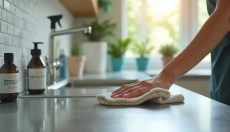
A healthier home also includes materials that touch the skin. Dishcloths, rags, and sponges are changed less often than ideal, and sometimes they become a "biotope" for unpleasant odors. Yet the solution is simple: have a few extra pieces and wash them regularly at higher temperatures, or let them dry well. It sounds trivial, but such triviality is a typical example where simple tips bring noticeable effects without the household having to introduce complex rules.
And one more detail that is often underestimated: storage. Cleaning and laundry supplies often accumulate because "it was on sale" or "this might come in handy." Yet the more products, the more combinations, and the higher the chance of using something unnecessarily aggressive. Sometimes a small inventory helps, keeping only what is actually used. The home then doesn't feel like a drugstore warehouse but a place where it's easy to maintain order.
"It's not about cleaning more, but cleaning smarter," is often said—and it's surprisingly accurate.
Everyday Small Things That Create a Healthy Home: Light, Water, Touch, and Peace
A healthier home isn't just about cleaning. It's also about how one sleeps at home, how one eats, what touches the skin, and how one relaxes in the space. Sometimes it's enough to change a small thing that repeats every day—and thus the effect multiplies.
One of the biggest "silent" topics is light. In the evening, bright white light is often used, screens shine, and the body feels like it's still day. Without moralizing: who doesn't have screens these days, right? But it can be done more gently. It helps to dim the lights, choose warmer-toned bulbs for lamps, and let the main ceiling light rest for the last hour before bed. It's not a strict rule, more a small adjustment to the atmosphere. The result can be more peaceful falling asleep—and sleep is one of the greatest "biohacks" that costs nothing.
Then there's water. Not everyone can install a filter or address plumbing. But even without big investments, something small can be done: don't let the water run unnecessarily long hot, regularly clean aerators, remember that kettles and shower heads get clogged with limescale and then work less efficiently. A cleaner shower and a faster-working kettle are not just comfort—they are small signals that the household is maintained, and thus healthier.
A large chapter comprises things in direct contact with the body: bed linen, towels, home clothing. Sustainability meets health here—quality materials that breathe well and modest use of fragrance in washing are often more pleasant for the skin. It's not necessary to throw out the wardrobe and buy new. Often, it's enough to start with what's closest: perhaps replace one old bedsheet that no longer "breathes" or give towels regular washing without fabric softener. A healthy home isn't recognized by what's trendy, but by how one feels in it during completely ordinary activities.
And what about the kitchen? There, a healthier environment can be created without dietary revolutions. The basic trick is simple: don't let organic waste sit for long, regularly take out the trash, and keep sponges and dishcloths clean. When cooking, use the hood or ventilate—even in winter for a short time. When frying, the air notices immediately. And it's not necessary for it to "hang" at home the next day.
Interestingly, small purchases also play a big role. Sometimes a new plastic shower curtain that smells strongly or cheap furniture that "smells" of glue for several weeks is brought home. Not everyone can choose only premium materials, but often a simple rule helps: if something smells strongly, it's sensible to let it air out, or look for a version with a lower degree of odor and clearer origin. Here, it's worthwhile to look at information from trustworthy institutions—such as the U.S. Environmental Protection Agency (EPA), which has long worked on the topic of indoor air quality and sources of pollution in homes. It's not "the only truth," but it's a solid guide when one wants to understand the connections.
To avoid the impression of a task list, it's good to stick to one simple idea: a healthier home is the sum of small decisions that repeat. When a gentler dish soap is chosen, excessive fragrances in the apartment are limited, ventilation is done shortly and intensely, and the bathroom is allowed to dry properly after a shower, the household changes without needing "re-education."
If there is one practical trick that can be recommended to almost everyone, it's to start with one small step that won't be a nuisance. Perhaps just replace a cleaner that "hits the nose" the most at home, or put a squeegee in the bathroom and use it for a minute after a shower. Such small things are the most realistic answer to the question of how to have a healthier home without major changes and new habits—because they don't oppose everyday life, they just make it a bit more pleasant. And when the home starts behaving like a place where it's easier to breathe, sleep, and relax, there's usually no need to force anything. Just continue with what works.