

Doing nothing is important for health because it restores lost calm to both the body and mind.
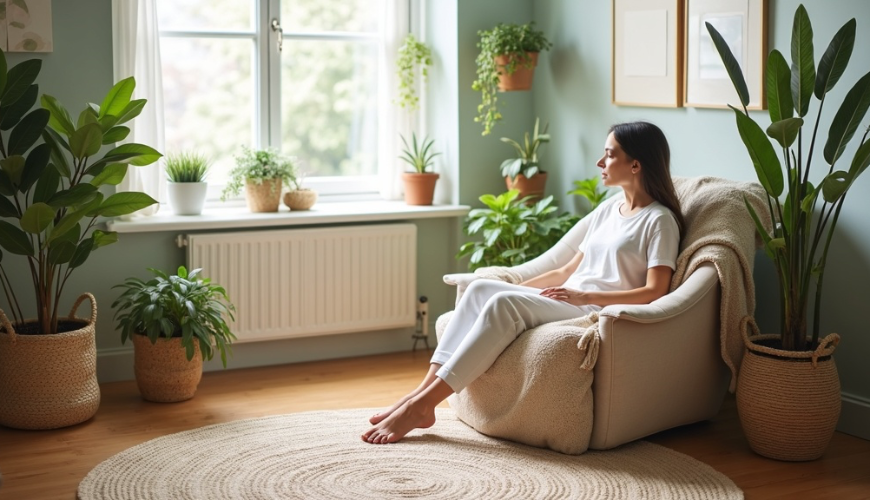
It seems like a paradox: at a time when there is talk about productivity, self-discipline, and "maximizing" every hour, the most precious skill is becoming the art of doing nothing. Not as laziness or an escape from responsibilities, but as a conscious pause that gives space to both the body and the mind. How many people today can just sit, look out the window, and solve nothing without automatically reaching for their phone? This is where it becomes clear why doing nothing is important for health and why it is becoming a small but surprisingly effective habit for everyday life.
Slowing down also has a hidden advantage: it's not a trend that requires expensive equipment or a complicated plan. It's a return to something that was long taken for granted. However, the modern world has meanwhile cultivated the impression that rest must be earned, and that the "proper" relaxation is at least somewhat active—ideally measurable. Yet, the body truly rests often only when we allow it to do nothing at all.
Try our natural products




Why Doing Nothing is Important for Health (and Why It’s Not Laziness)
Doing nothing in the best sense is not lifeless passivity. It is a short period when a person consciously stops trying: they don’t optimize, they don’t evaluate, they don’t switch to the next task. And that is what triggers processes crucial for health. The organism is not a machine that runs the same all the time; it needs alternating performance and rest. When rest is lacking, the body will start to demand it—through fatigue, irritability, insomnia, or more frequent illnesses.
In terms of stress, it’s often mentioned that long-term tension keeps the body on alert. This means higher "internal revolutions": faster thoughts, tense muscles, shallower breathing. In such a mode, one only half-rests. Doing nothing is the opposite signal: now there’s no need to fight, flee, or prove anything. An interesting context is offered, for example, by the overview of stress and its impacts on the body by the World Health Organization (WHO), which reminds us that stress is not just a "psychological thing," but a state that affects the entire organism.
What happens in the mind is also important. When external stimuli quiet down, the brain often starts to "tidy up": it connects information, processes emotions, and completes unfinished thoughts. It’s no coincidence that many good ideas come in the shower, on a walk, or while aimlessly gazing into the landscape. Scientists describe this through the so-called default mode network—a system that is active when a person is not focused on a specific task. For the layman, the main takeaway is that doing nothing is not emptiness, but a different type of mental activity that can be very healing for the psyche.
And then there’s another dimension that is often overlooked: doing nothing as prevention. Not waiting until exhaustion appears, but inserting small pauses into the day that act as a vent. Once this becomes a rule, one notices that it’s easier to breathe, easier to fall asleep, and overall there’s less "internal rush." It’s subtle but effective.
How Doing Nothing Helps the Psyche and Body: Calm as a Return to Reality
The psyche today is often tired not by what happens, but by what happens constantly. Constant switching of attention, small notifications, open tabs in the mind. Doing nothing is in this sense a simple but radical practice: for a moment, one stops being pulled by strings.
When discussing how doing nothing helps the psyche, it’s not just about a "better mood." It’s about the ability to regulate tension. A short pause can reduce internal pressure because it gives the brain clear information that there’s no need to react now. This gradually reflects in relationships too—one has more patience, explodes less, and notices their body's signals better. And the body speaks quite loudly: stiff neck, clenched jaw, heavy stomach. When slowing down, these signals can be caught before they become a problem.
The health dimension is similarly practical. True rest supports regeneration, whether it’s the muscles, nervous system, or immunity. Reliable information about the importance of sleep and rest for health is summarized by, for example, the National Health Service in the United Kingdom (NHS), which has long emphasized that fatigue is not resolved by merely "enduring" but primarily by regular rhythm and quality rest. Doing nothing may not be sleep, but it can be a bridge to it—especially for people who can’t turn off their heads in the evening.
In real life, it often looks like this: a person comes home and instead of truly resting, switches to a second shift. Cleaning, quick replies to messages, "just" checking emails, "just" a few minutes on social networks. Suddenly it's ten in the evening, and paradoxically, the body is even more revved up than during the day. One example from a typical day shows how a small change can make a big difference: imagine a mother (or father) of two children, who has a head full of duties after work. Instead of automatically scrolling, she sits for ten minutes in an armchair, leaves the phone in another room, and just observes her chest rise and fall with each breath. Meanwhile, the children are drawing. After ten minutes, she’s not a "new person," but the pressure in her head eases, and the evening runs more calmly. This is doing nothing in practice: a short window where the body truly calms down.
There is also an important difference between rest and entertainment. Entertainment can be great, but it is often stimulating. Series, social networks, or even some "relaxation" activities can keep the brain in a mode of receiving stimuli. Doing nothing is intentionally reducing stimuli to a minimum. As one often-quoted principle puts it: "Rest is not a reward for performance, but a condition for long-term functionality." This sentence may sound simple, but for many people, it is a completely different way of thinking.
How to Learn to Slow Down and Stop: Tips for the Body to Really Rest
The hardest part of doing nothing is often meeting oneself. Suddenly, there’s nothing to "solve," and the brain pulls out a list of tasks, worries, or feelings of guilt. This is normal. The goal is not to have an empty head immediately, but to create a space where thoughts can pass without having to act on them.
To make doing nothing work, it’s good to simplify it. Not making it another project but rather a small ritual. A slight change of environment helps: an open window, warm tea, a few minutes on the balcony, a short sit on a bench on the way home. In an ecological household, it’s often said that fewer things mean fewer stimuli—and it works similarly in the head. The fewer "disturbances," the easier it is to slow down.
Below is a single practical list that can serve as a gentle start. It’s not about rules, but rather tips on how to learn to slow down and do nothing for a while, so rest isn’t just another activity:
- Introduce a mini-break without the phone: 7–10 minutes a day, ideally at the same time. Phone out of reach, no music, no reading. Just sit or lie down and let the body "drop."
- Try window-watching like in the past: it sounds trivial, but the eyes and brain relax when watching a distant point, the movement of trees, or the sky. It’s a simple trick against screen overload.
- Allow yourself to leave things unfinished: doing nothing often fails because of the need to "quickly finish." The phrase this can wait helps. Not everything has to be done today.
- Slow down transitions: the greatest stress often occurs between activities. Try sitting in the car for two minutes after work, on a bench in front of the house, or just standing in the hallway and taking a few breaths before you start "functioning" at home.
- Put rest in the calendar: not as a performance, but as protection. Perhaps 15 minutes after lunch on weekends, where the only task is "not to be useful."
- Pay attention to the body, not the plan: when the urge to do something arises, try to notice where the tension is in the body—shoulders, stomach, jaw. Even naming it often reduces tension.
A significant role is played by the environment, which allows for doing nothing. Sometimes small things are enough: pleasant light, less noise, air without synthetic scents that can be disturbing for more sensitive people. It also helps when the home is set up not to feel like an endless list of tasks. A sustainable approach to the household—fewer unnecessary items, more quality and long-lasting things—can paradoxically also support mental peace by reducing "visual noise." And when resting, it’s easier to rest fully.
Interestingly, doing nothing is often learned better in the company of nature than within four walls. A short sit in the park without a goal, headphones, or taking photos can do more than an hour of "active relaxation." There’s no need to travel far; regularity and simplicity are important. And if it doesn’t work outside, a small home corner where nothing is "solved" works too—a chair, a blanket, a plant, silence.
At a certain point, the question arises: what if doing nothing doesn’t work because the mind keeps running? Then it helps to change expectations. Doing nothing is not performance meditation where it's evaluated whether it "worked." It’s more about a return to basic settings: sit, breathe, be. When thoughts start running, it’s possible to let them be like radio in the background. The body still receives the signal that there’s no need to rush anywhere.
And perhaps the most practical is to stop waiting for ideal conditions. Many people say they’ll start resting when everything is done. But "done" in modern life almost never happens. The art of doing nothing is therefore also the art of choosing calm amidst imperfection. Not as resignation, but as everyday hygiene for the nervous system.
In the end, it turns out that doing nothing is not lost time, but an investment to make time meaningful at all. When one learns to stop and slow down at least occasionally, they begin to notice small things again: the taste of food, the warmth of the sun on their face, the silence after rain, and the simple relief of not needing to be constantly on alert. And it is in these subtle moments that the body most often returns to a state it remembers from childhood—a calm where one can truly breathe.