
An eco-friendly household can save the planet and your wallet when you start with small steps every

Living in a more eco-friendly household is often seen as a luxury or a hobby for a few enthusiasts. However, more and more people are realizing that an eco-friendly home can save both the planet and your wallet—and sometimes surprisingly quickly. It’s not about perfection or throwing everything out to replace it with a "green" version. On the contrary, the biggest savings usually come from small changes repeated every day. These simple tips for an eco-friendly home often have the biggest impact because they are easy to maintain long-term.
You might be wondering: can you really save money with an eco-friendly home when eco-friendly products sometimes cost more? Yes, you can. You just need to look at things differently than just by the price on the shelf. Important factors include durability, consumption, refill options, and also how many things are bought "unnecessarily" just because of a missing trick or simple habit. When you add it all up, the difference can be noticeable.
Try our natural products
Where Money is Lost Most in the Household (and How to Turn it to Your Advantage)
The largest financial leaks in a household often do not come from one big expense but from a thousand little things: single-use products, food waste, disadvantageous packaging of cleaning products, overheated rooms, unnecessary running water. These are all areas where you can start saving relatively easily—and the side effect is a smaller impact on the environment.
Many households, for example, spend money on items that literally end up in the trash within minutes: paper towels, disposable wipes, plastic bags, aluminum foil. Yet there are eco-friendly home hacks that can replace these roles in the long term. When used repeatedly, the "cost per use" is much better. Classic examples are cloth towels and rags, which last for years, or wax wraps instead of plastic wrap. It's not a revolution—just a habit exchange.
The same goes for water. Water is still relatively accessible here, so wasting it sometimes doesn’t "hurt." But a minor adjustment can make a difference. Water-saving aerators on faucets or shower heads with lower flow can reduce water consumption without making you feel restricted. And because heating water costs energy, you often save doubly.
With energy, the simple rule is: the most you save is what you don't have to produce. Insulation and window replacement are big topics, but small steps can lead to savings: not overheating to tropical temperatures, ventilating briefly and intensely, not leaving appliances on standby. Even basic "closing" has a surprisingly strong effect: sealing doors or window cracks where drafts occur. It's subtle, but during a long heating season, it makes sense.
Then there's food—a chapter where you can save with an eco-friendly home perhaps the quickest. According to the United Nations Food and Agriculture Organization (FAO), about a third of produced food is wasted globally. It's not just about money, but also about unnecessarily consumed water, land, and energy. Authoritative context on food waste is offered by FAO and also by the United Nations Environment Programme (UNEP) on food waste.
In practice, it often looks simple: more is bought than eaten, an open yogurt is forgotten, vegetables wilt in the drawer, dinner leftovers are "put away" and then thrown out. In an eco-friendly home, this can be prevented with a few subtle steps: meal planning for a few days, shopping wisely, and especially better fridge organization. Even a simple thing helps—having boxes and jars for leftovers so it's clear what needs to be eaten first.
One sentence that captures it without moralizing: "The cheapest food is the one that doesn’t get thrown out."
Eco-friendly Home Hacks That Save Both the Planet and Money
An eco-friendly home isn’t about having everything "organic" and "zero waste" at all costs. It's more about smart replacements and what pays off long-term. Some hacks are so simple that you wonder why you didn’t start using them sooner.
Reusable bottles and thermos cups make a big difference. If someone buys coffee in a disposable cup on the way to work and bottled water, it costs hundreds of crowns monthly, thousands yearly. A thermos cup and bottle pay off quickly—and also save a ton of waste. Similarly, cloth shopping bags and bags for bread or vegetables work. It's a small thing, but plastic bags disappear quickly and their cost "gets lost" in shopping—until you start looking at it collectively.
In the kitchen, composting is worthwhile—whether in the garden or in an apartment using a vermicomposter. It's not just about ecology but also practicality: bio-waste stops smelling in the bin, and quality compost is produced for houseplants or balcony planters. If a household sorts waste, it often finds that after separating bio-waste and paper, very little mixed waste remains. This can be important where you pay for collection frequency or bin size.
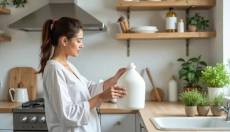
Another area is cleaning products. In a typical household, a whole battery of bottles often accumulates: for the kitchen, bathroom, windows, floors, toilet… But you can operate much more simply. In an eco-friendly home, concentrated products or refilling into one bottle often prove effective. Concentrate reduces packaging and transport and usually works out cheaper per dose. Moreover, when you use one more universal product and refill it, you shop less impulsively.
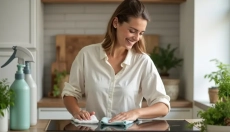
Practical hacks also include washable sponges and cloths instead of disposable ones. And when it comes to washing, focus on two things: temperature and dosing. Many people wash unnecessarily at high temperatures and use more detergent than needed. Lower temperatures (if the laundry allows) mean less energy, and correct dosing means less consumption and less strain on the sewage system. It's useful to follow the recommendations on the package and adjust the dose to water hardness. Information on water hardness in the Czech Republic can be found with water companies or in municipal materials; for a broader context on the impacts of household chemicals and water pollution, European Environment Agency (EEA) materials are useful: https://www.eea.europa.eu/
The same logic applies to package-free or bulk purchases. They are not always the cheapest at first glance but often win out in cost per kilogram and mainly because there is not as much waste at home. Moreover, you buy exactly what you need—and that’s one of the best ways to reduce waste.
And what about the bathroom? You can save more than you think there. Solid soaps and solid shampoos usually last a long time, don’t take up space, and don’t create plastic bottles. Similarly, a safety razor with replaceable blades can be cheaper than disposable razors or system razor heads, and it’s a functional and simple solution. A bamboo toothbrush or a toothbrush with a replaceable head is another small step that makes sense, especially in the long run.
One real-life example: a city family noticed that most money "disappears" in drugstores and quick food purchases when they’re short on time. They started by introducing two changes: they bought a set of boxes and established a "first in line" shelf in the fridge for items with the nearest expiration. They also switched to refilling two cleaning products instead of five different sprays. After two months, it turned out less food was being thrown away, there were no accumulating opened bottles, and shopping was calmer. It wasn't about any austere period—just about stopping paying for chaos.
Simple Tips for an Eco-Friendly Home That Work Without Major Changes
Eco-friendly habits are best maintained when they’re convenient. That’s why it’s worth starting with things that don’t require great discipline, just a small routine adjustment.
Setting up "automatic" energy saving at home is very effective: turning off lights in empty rooms, using LED bulbs, switching off power strips with appliances that would otherwise stay on standby. In cooking, putting a lid on the pot, using residual heat from the stove, and boiling only as much water as needed helps. It sounds trivial, but it amounts to kilowatt hours paid for each month.
Similarly, you can "painlessly" save on water: shorter showers by a few minutes, turning off water while brushing teeth, fixing dripping faucets. Dripping is a typical thing that gets postponed because "it's not that bad." But even slow dripping can amount to a surprisingly large amount of water over a year—and it’s an easily solvable problem.
With clothing and home textiles, an eco approach often shows most in buying less but better. Clothes that last and can be combined are usually cheaper than quick purchases of items that lose shape after a few washes. Care helps too: wash at lower temperatures, avoid overdrying in the dryer, repair small issues promptly. A sustainable wardrobe isn’t old-fashioned; it’s more a return to normal practicality.
If there’s one tip that can be recommended to almost everyone, it’s to track what gets thrown away at home. Not from a feeling of guilt, but as simple accounting. Recording what ends up in the bin (food, packaging, broken items) for a week quickly shows where the biggest reserves are. Sometimes it’s bread that you can stop buying "in reserve." Other times it’s cosmetics that don’t get used because too many products are alternated. And sometimes, it’s a battery of disposable items that could be replaced with one reusable item.
And what if you don’t want to invest time in it? It’s still possible. In an eco-friendly home, the rule "when it runs out, replace it with a better version" works well. You don’t have to throw out supplies. Just gradually: when the plastic bottle wears out, replace it with a more durable one; when the dishwashing liquid runs out, try refilling; when buying new towels, choose cloth ones. This avoids unnecessary expenses and the feeling that everything has to change all at once.
Finally, a simple question arises: when a household buys something over and over, wouldn’t it be better to get a version that lasts longer and can be refilled? That’s often where the most practical magic of how to save with an eco-friendly home is hidden. It’s not about a perfect lifestyle but about smart decisions that eventually become a routine—and that then subtly save both the environment and the family budget.