

How to Keep Exercising When You Don't Have Time, Energy, and Results Aren't Immediate
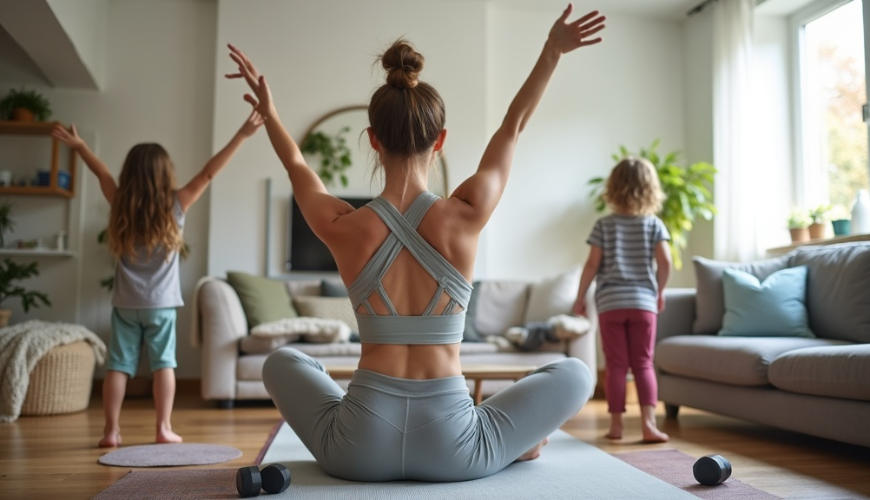
Many people start exercising enthusiastically, but after a few weeks, something breaks. A demanding period at work, illness, travel, fatigue, or just simple disappointment that the results aren't as quick as promised in the ads. And then a thought sneaks into the mind: if I can't do it "properly," then I'd rather not do it at all. But this is where the rubber meets the road. Regularity in exercising is often more important than perfection, because the body and mind react more to what we do repeatedly than to something we do once "at 100%."
It may sound suspiciously simple, but the greatest changes usually don't come from heroic performances. They come from returning to basics again and again—even if it's just a short walk, a few squats in the living room, or ten minutes of yoga. Anyone who has ever dealt with how to stick to exercising and how not to quit exercising knows it's not just about muscles. It's about life rhythm, energy, confidence, and setting expectations so that exercise doesn't become another source of stress.
Try our natural products
Why Regularity Is More Important Than Perfection in Exercise
Perfection sounds tempting: a perfect workout plan, ideal diet, precise load dosing, optimal sleep. But life doesn't conform to ideals. And that's why it's crucial for most people to understand why regularity is more important than perfection in exercise. The body adapts gradually—adaptation is practically the sum of small signals rather than a reaction to one big performance. When we move regularly, even in smaller doses, we give the body frequent impulses: strengthen, improve fitness, maintain mobility, regenerate more efficiently. Conversely, if we "overdo it" once in a while, the body gets a shock, but without continuity.
Regularity has another hidden advantage: it teaches the mind that movement is a normal part of the day. Not an extraordinary event that requires perfect mood, two hours of time, and ideal weather. This is, by the way, why people often ask how to be consistent with exercise—in fact, they are looking for a way to stop perceiving exercise as a project and start seeing it as a routine.
Interestingly, scientific institutions also communicate physical activity more as a "regular dose" than as a one-time performance. For example, the World Health Organization (WHO) has long emphasized the importance of regular physical activity throughout the week. It doesn't say: destroy yourself once a week. It says: move regularly and sustainably.
And what does "perfection" often cause in practice? Procrastination. When exercise is conditioned by being ideal, a small obstacle is enough, and the plan falls apart. Regularity, on the other hand, can survive even an imperfect day: five minutes is still more than zero, and a short workout is still a workout.
How to Establish an Exercise Habit and Not Quit
When it comes to establishing an exercise habit, discipline is often mentioned. But discipline is like a battery: sometimes it's full, sometimes it's drained. A habit is more like an automatic hallway light—it turns on even when you're not in the mood to think. The goal is not to always be motivated but to make movement something that happens "just like that" because it has its place in the calendar and in the mind.
It helps a lot to start with the question: when am I most likely to actually do it? For some, it's in the morning before work, when the day's chaos hasn't set in yet. For others, it's in the afternoon as a switch between work and evening. And for someone else, it's a short activity during a time they would otherwise "scroll" on their phone. It's important that the time and place are as specific as possible. "I'll exercise sometime this week" is vague. "On Monday, Wednesday, and Friday after coming home, I'll do 12 minutes" is a plan the brain can grasp.
In practice, a simple rule works: initially lowering expectations, not raising them. It sounds counterintuitive, but for a habit, it's better to win a small battle ten times in a row than one big one and then nothing for a week. When someone asks how to stick to exercising, the answer often starts with stopping exercising "for the ego" and starting to exercise "for life." In other words: in a way that works even in a week when energy is scarce.
A great trick is to have a prepared "minimal version of a workout"—something so short and simple that it can almost always be done. For instance: 20 squats, 10 wall push-ups, and 30 seconds of planking. Or ten minutes of brisk walking around the block. When the day is tough, do the minimum. When the day is good, add more. Small steps toward lifestyle change are not insignificant—they are foundational building blocks.
And what if a lapse occurs? It almost always does. The difference between people who stick with movement and those who quit is often not in who never skips. It's in who returns after a skip without drama. Instead of "I've messed up," it helps to say: today I'm continuing. This is a big part of the answer to how not to quit exercising.
The environment also plays a role in all of this. If the exercise mat is rolled up somewhere in the closet behind winter coats, it's a signal that "exercise is exceptional." If the mat is within reach, it's a signal that "exercise is routine." The same goes for clothing: prepared gear often means less decision-making and a smaller chance that the brain will start negotiating. And if the goal is how to stick to a healthy lifestyle, then these small details matter more than big resolutions.
"It's not about doing it perfectly. It's about returning to it so often that it becomes part of life."
Real-Life Example: When "Just 15 Minutes" Changes the Entire Month
Imagine a situation familiar to many: a person works late into the evening, with family, shopping, cooking. In their mind, the plan is: gym three times a week. But the reality? It works for two weeks, the third week a demanding project comes, and suddenly nothing. And with zero comes guilt. A practical shift that is surprisingly effective is to stop associating exercise with one "big" place or format.
A typical scenario: instead of the gym, set a rule "15 minutes at home on Tuesday and Thursday, a longer walk on Sunday." Not as a fallback solution, but as a new standard. The result is often not just that the person moves more. The result is that they stop fearing the week when it won't be possible to give 100%. And that's a huge difference in psychology and long-term sustainability.
At such a moment, the results of regular exercise begin to appear: a better mood, less stiff back, more stable energy during the day. And paradoxically, the desire to add often returns—not from pressure, but because the body has gotten used to movement and wants it.
Motivation for Exercise, Consistency, and the Results of Regular Physical Activity
Motivation for exercise is a peculiar topic because it's talked about as if it were a stable trait. But motivation is variable. It's different in winter than in spring, different after a bad sleep than after a vacation. That's why it's useful to build a system that works even when motivation isn't there. And this is where the question of why to exercise regularly returns: regularity is not just a path to performance, it's insurance against fluctuations.
Consistency often comes from simple logic: when movement is part of the regular day, there's no need to persuade oneself every time. It also helps to stop viewing exercise as a punishment for eating or a control tool. It's much more sustainable to see it as an investment in the body's function: to walk stairs better, to prevent back pain, to help the mind handle stress better. After all, regular physical activity is long-term associated with better health and mental well-being, as summarized by an overview on Mayo Clinic's website.
When someone looks for how to be consistent with exercise, it often helps to change the success metric. Not "how much I burned," but "how many times I moved this week." Not "how much it hurt," but "whether I kept the rhythm." Regular exercise and results are also related in that technique improves, resilience increases, and recovery capacity grows. The body learns. And learning requires repetition.
But to make it not just about exercise, it's fair to add that people often address the broader question: how to stick to a healthy lifestyle. Here, regularity works as a common denominator. When one habit is anchored (like a short movement), it's often easier to add another: more walking, better sleep, more regular meals. Not because a person "has strong willpower," but because identity gradually changes: from someone who "occasionally exercises" to someone who "regularly moves." This shift is subtle but powerful.
If there were to be a single practical compass for days when you don't feel like it, it would be simple: make it as small as possible, but do it. Not because every minute is a miracle, but because it maintains the chain. And the chain is what brings change in the long term.
One list will help after all because certain things are good to have on hand as a quick reminder:
- Lower the bar for "done": even 8–12 minutes, as long as it's regular.
- Schedule a specific time (and treat it as an appointment).
- Have a minimal version of the workout for days when energy is low.
- Focus on rhythm, not perfection: the goal is repetition, not flawless performance.
- After a lapse, continue the very next day, without punishing and catching up.
In the end, the most important thing becomes a simple, somewhat liberating thought: it's not necessary to be the perfect person who "always exercises." It's enough to be the person who returns to movement. And when this happens often enough, regularity starts doing what it does best: turning one-off efforts into something that holds together even in weeks that aren't ideal. And it's usually in those weeks that the decision is made about whether the effort becomes a real lifestyle.