
Eco habits with the greatest impact start at home when you address energy, transportation, and food.
Living "eco" today means more than just sorting waste and carrying a cloth bag. More and more people want to know which eco habits have the greatest impact and where it's easy to slip into small gestures that look good in photos but do little for the planet. At a time when there is talk of drought, weather extremes, and air pollution, it makes sense to simply ask: which ecological habits make the most sense in everyday life when one doesn't want to study piles of tables but also doesn't want to stick to symbolic gestures?
Importantly, the "greatest impact" can vary depending on where someone lives and what their possibilities are. People in a city with good transportation will decide differently than a family in the countryside, or someone who often travels for work. Nevertheless, there are areas where it is repeatedly confirmed that there lie the most emissions, waste, and unnecessary consumption. And it's precisely there that changes make the most sense and impact on nature and ecology.
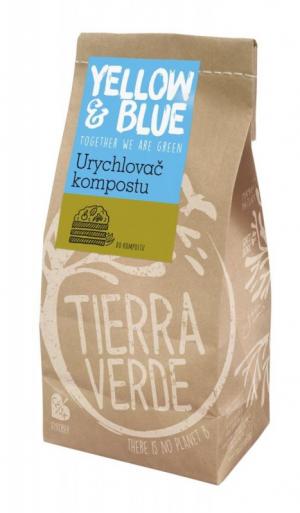
Try our natural products

Where the rubber meets the road: energy, transport, and food
When discussing the ecological footprint of households, it most often revolves around three major themes: how we heat and how much energy we consume, how we move around, and what we eat. Not because sorting or cosmetics are unnecessary, but because the largest part of the impact usually hides in these "big" items. These are areas where a lot of resources are consumed, and where every change influences many other things – from air quality to landscape pressure.
This perspective fits well into the broader framework used, for example, by the Intergovernmental Panel on Climate Change (IPCC) – an authoritative source referenced by governments and scientists worldwide. It doesn't suggest that individuals should save the planet on their own, but it shows that a combination of systemic changes and everyday decisions can reduce emissions and environmental pressure more quickly.
Energy at home: the greatest savings often happen quietly
In the Czech context, heating is a huge topic. Houses and apartments differ, but generally speaking, the greatest impact comes from reducing heat consumption: insulation, sealing windows, reasonable ventilation, thermostat settings, and a modern heat source. This sounds like a big investment, but this is where the difference between an "eco tip" and an eco habit with the greatest impact can be seen. Sometimes, a change in routine is enough: not overheating, ventilating briefly and intensely instead of leaving a window ajar all day, lowering the temperature at night or in rooms that aren't used.
Similarly, with electricity. It's not just about turning off lights but about which appliances run constantly. An older fridge or freezer can "consume" more over time than it seems. Then there are small things that add up: washing at a lower temperature, using the dryer less often, cooking with a lid, and turning off standby modes. In total, this tends to be less dramatic than heating or transport, but still makes sense economically.
This also includes choosing an electricity provider. Where possible, it makes sense to switch to a tariff with a higher share of renewable sources. It's not a magic switch, but it's a signal to the market and pressure for energy modernization. As climate scientist Michael E. Mann once succinctly put it: "It's not about a single silver bullet, but many wedges that together shift the system."
Transport: fewer kilometers, less engine, more smarts
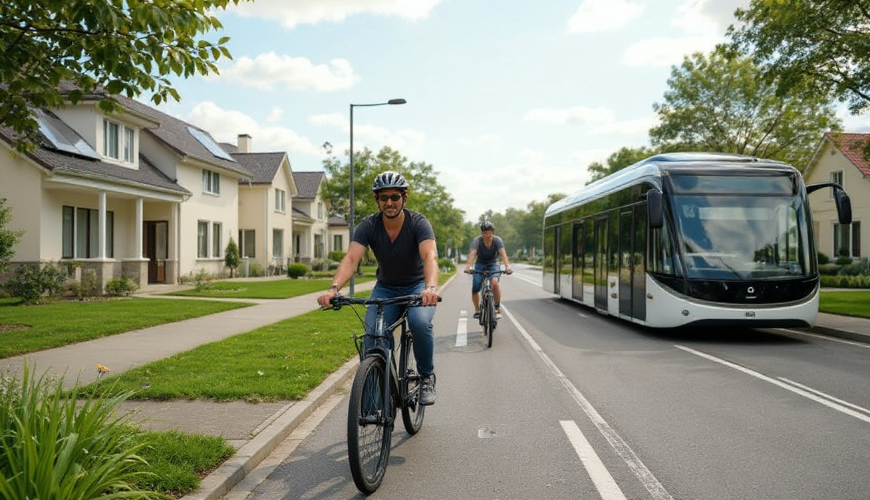
When discussing which changes make the most sense and impact on nature, transport is often the second largest item right after housing. And here, a simple truth often emerges: the most helpful is to not go – or at least go smarter. It's not moralizing, rather practical math. Every kilometer by car is energy, emissions, and wear and tear, while a combination of public transport, cycling, walking, or shared rides can significantly reduce the impact.
A real-life example: in one Prague household, it was considered "eco" – sorting waste, carrying personal bottles, buying package-free food. Yet, the car was parked in front of the house and used even for short distances: kindergarten, shopping, activities. When the family decided to try "no car on weekdays" for a month, they realized two things. First, that most trips can be solved by public transport and walking without dramatic time losses. Second, that the biggest difference wasn't just in emissions, but also in stress and money. The car remained, but is used less – and that is often the most realistic scenario. Not everyone can stop driving completely, but reducing short drives is a change that surprisingly has a large effect.
For longer routes, it pays to consider the train instead of a plane, or combining several trips into one. And if a car is necessary, sharing, smooth driving, and properly inflated tires help. These small things on their own won't save the world, but when "big" things are solved, they are good supportive habits.
Food: less waste and a more reasonable diet composition
Food is a sensitive topic because it touches on traditions, taste, and health. Yet, there are eco habits with a significant impact here that aren't about perfection but about a shift. The two most significant are: reducing food waste and shifting the diet towards more plant-based foods.
Waste is often invisible. A piece of stale bread, wilted vegetables, yogurt past its date, uneaten leftovers. Yet, a food item isn't just something in the fridge – it's water, land, energy for production, transport, and storage. When it ends up in the bin, the entire chain is wasted. Practically, planning shopping, cooking from leftovers, the freezer as insurance, and a simple rule help: eat what you have at home first. As a good context, the FAO's page on food loss and waste – the topic is global and the numbers are really high.
The second step – more plant-based meals – doesn't mean everyone has to become vegan. For many households, the most sense is in the model "less, but better": reducing red meat, adding legumes, grains, seasonal vegetables, and finding recipes that taste good without meat. In Czech cuisine, this often works surprisingly easily: lentils with vinegar, bean chili, roasted vegetables with herbs, soups, spreads. And when it comes to meat, it's about not wasting – for example, using broth, leftovers in spreads or risotto.
How to recognize what has the "greatest impact" in a particular household
One of the most common traps of eco efforts is exhaustion from small things. One tries, buys "eco" straws, deals with labels, but meanwhile, heat escapes through the window at home, and every day they drive two kilometers to shop. It's not that small things are useless, but without priorities, energy is easily invested in details that have little effect.
A good question is: Where does the household consume the most energy and resources? And immediately the second one: What can be changed without making life unbearable? Ecology that doesn't work in practice long-term is more of a short project than a habit.
In this respect, a simple rule helps: the greatest impact usually comes from changes that are repeated often (every day) or are "big" (heating, car, large purchases). Therefore, it makes sense to focus on routines – and only then fine-tune the details.
And because concrete tips are often sought for habits that have the greatest impact, it is useful to stick to a few steps that are realistic for most people and aren't just symbolic.
One practical list that can be implemented without revolution
- Lower heating temperature by 1 °C and ventilate briefly and intensely (often the greatest immediate saving without investment).
- Replace some car journeys with walking, cycling, or public transport, especially for short trips.
- Plan shopping and cooking to minimize food waste; use leftovers the next day.
- Include 2-3 plant-based dinners a week as a new standard, not as an exception.
- Buy less, but more durable items – choose clothing, household items, and cosmetics to last and be easily refillable or repairable.
These are five steps that support each other. When driving less, impulsive shopping often decreases, too. When planning meals, money is saved, which can be invested in better-quality things. And when unnecessary heating is avoided at home, it's more comfortable for sleeping as well.
Sustainability at home: less waste, less chemistry, more peace
Once the "big" areas are somewhat tackled, the household in the narrower sense enters: detergents, cosmetics, packaging, clothing, everyday consumption. Here it might seem it's only about details, but it's precisely in the household where a habit can be created that is visible every day – and often improves health and comfort as well.
Making a transition to gentler cleaning agents and reasonable dosing makes great sense. It's not about having a "laboratory" at home. Rather, many common cleaning products are unnecessarily aggressive, and they are often used in larger quantities than needed. Gentler detergents, which are biodegradable, make good sense especially where wastewater goes to treatment plants and further into the landscape. For a broader context on chemicals and their regulation in Europe, you can refer to the European Chemicals Agency (ECHA), which clearly explains why it matters what gets into the environment.
Similarly, with waste. Sorting is basic, but the first step is often forgotten: not creating waste at all. In practice, this means choosing items with less packaging, using reusable containers, bags, and bottles, and mainly not buying unnecessary things. Naturally, quality fits in here – durable items last longer, are thrown away less, and in the end, less is bought.
A big chapter is clothing. Sustainable fashion isn't just about materials, but about how many pieces rotate through the wardrobe. The most ecological T-shirt is often the one already at home – when worn, repaired, and mixed and matched. The second best choice is often a quality piece from more responsible production that lasts for years. This beautifully shows that "eco" isn't about asceticism, but about things making sense and serving.
Perhaps here a rhetorical question arises that helps with priorities: is it really necessary to look for the perfect "zero waste" trick when part of the shopping is thrown out every week at home, or when the heating is on for short sleeves in winter?
A good ecological habit is not the one that looks best. It's the one that can be done long-term, without feeling like a failure, and that eventually becomes the norm. And when aesthetics and joy from a simpler household are added, it's a bonus, not a duty.
In the end, it turns out that eco habits with the greatest impact aren't necessarily the most dramatic. They are often quiet changes: a little less heat, a little less driving, a little less throwing away, a little more cooking "from what is," and gradually a greater emphasis on quality over quantity. When these shifts come together, they start to make sense not only for nature but also for the wallet and everyday comfort – and that is a combination that has a chance to endure.