

Ventilating in winter and saving energy can go hand in hand when you ventilate briefly and fully.
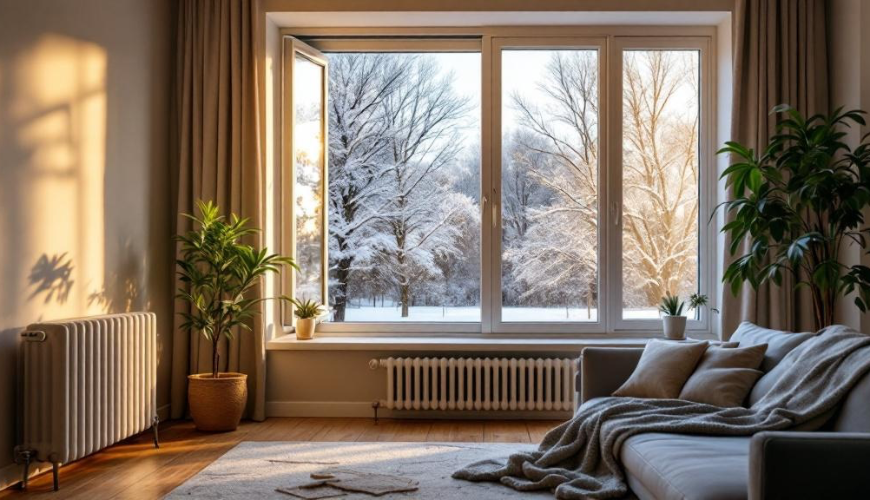
Ventilation is one of those household habits that most people do automatically, but few think about in depth. Yet, the air in your home determines whether you wake up refreshed or with a heavy head, whether mold starts to appear subtly on the walls, and also how much energy ultimately "escapes through the window." It may seem like a small matter, but the importance of why it's crucial to ventilate becomes evident when moisture, odors, dust, or stale air persist in the home for a long time. In winter, when heating and closed windows become the norm, ventilation becomes almost a strategic topic: ventilating in winter and saving energy don't necessarily have to be at odds.
Indoor air changes faster than it seems. By breathing, we add carbon dioxide and water vapor; cooking and showering add moisture; and normal household activities contribute fine particles and odors. Added to this are furnishings, textiles, cleaning products, or candles—each of these sources can release substances into the air that accumulate in an unventilated room. Ventilation is then the simplest way to "reset" it all without complex devices and without chemicals.
It's important to remember that the problem often isn't "not enough heat," but rather not enough fresh air. That's why it makes sense to talk about how to ventilate correctly and why some traditional methods don't work as people think.
Try our natural products


Why Ventilation is Important (and What Happens When You Don't Ventilate)
Fresh air is not just about feeling good. When carbon dioxide accumulates in a room, people tend to feel more tired, find it harder to concentrate, and may experience a "heavy head." At the same time, humidity rises, initially showing up in subtle ways—misted windows, a musty corner behind a wardrobe, slow-drying laundry—and can later lead to mold. Mold is unpleasant not only aesthetically but mainly health-wise, as it can irritate the respiratory system and worsen allergies.
Another important principle often overlooked is: warm air holds more water vapor than cold air. So, when you heat your home in winter without ventilating, relative humidity may appear "normal," but as soon as the air reaches a cold spot (e.g., the corner of an external wall, window reveal, or space behind furniture), the vapor condenses. Condensation is precisely the moment when mold starts to feel at home.
Add to this the common reality of modern apartments: new windows seal well. This is great for saving heat but also means the natural leaks through which air used to flow no longer work. Without deliberate ventilation, it's easy for an apartment to become a closed loop where moisture and pollution accumulate.
A useful framework on the topic of indoor air quality is offered by organizations like the World Health Organization (WHO) and their materials on indoor air quality, which have long highlighted that indoor air is as crucial for health as outdoor air. Although home ventilation cannot be reduced to a single universal number, the direction is clear: regularly exchange air, lower humidity, and do not promote mold growth.
The Most Common Ventilation Mistakes Even Diligent Households Make
Ventilating is simple, but that's precisely where the trap lies. People feel like they are "ventilating," but the results don't match. The most common ventilation mistakes occur in apartments and houses, regardless of how clean the household appears.
One of the most widespread mistakes is ventilating with a window slightly open for a long time. A window left ajar for an hour or two may let in some fresh air, but it also cools the window frames, sills, and often the adjacent masonry. In winter, this leads to the heating system working "full time," but heat is lost continuously. Moreover, it unnecessarily cools structures on which moisture condenses more easily. A slightly open window is sensible for short periods or in situations where opening it fully is not possible, but as a main strategy, it is more likely a recipe for a higher energy bill.
Another common mistake is ventilating without accounting for humidity peaks. In practice, this looks like briefly opening the bedroom window in the morning, but not ventilating at all after a shower in the bathroom because "it's cold" or "we already ventilated." However, showering, cooking, and drying laundry are times when humidity spikes and needs to be quickly released. If it remains in the apartment, it will find cold spots and start to condense.
The third mistake is related to furniture: closets pushed tightly against a cold wall. You may be ventilating "correctly," but behind the furniture, the air barely moves, the wall cools, and moisture stays trapped in a pocket without circulation. The result is often an unpleasant surprise during moving or when replacing furniture. A simple solution helps: leave a few centimeters of space and occasionally check behind the furniture to ensure everything is dry.
The fourth mistake is overheating and simultaneous partial ventilation. This often happens in living rooms: the radiator is on, windows are closed to "keep the heat in," and the air becomes stale after a few hours. The heating may raise the temperature but does not address air quality or humidity. Short, intense ventilation can change the air without significantly "cooling" the apartment—the heat stays in the furniture and walls if ventilation isn't prolonged.
The fifth mistake sounds paradoxical: ventilating "only when you smell mustiness." The human nose gets used to odors, so what seems "normal" to the household can be immediately noticeable to a visitor. Ventilation shouldn't be the last resort but a regular habit.
Finally, a practical detail with a big impact: ventilating with open doors to the hallway and without a clear goal. If you open a window in one room but the air has nowhere to flow, the exchange is slower. Conversely, if you create a short draft (for example, by opening a window in an opposite room), the air exchange is quick and effective. Of course, this should be done sensibly—a draft is not ideal for small children or someone who is currently sick, but a short controlled exchange of air is often the best option.
How to Ventilate Correctly, Especially in Winter: Fresh Air Without Unnecessary Losses
When figuring out how to ventilate correctly, it's not about turning your home into the Arctic. It's about exchanging air quickly and effectively. A simple rule often proves effective: better short and wide open than long and slightly open. The reason is simple: short, intense ventilation changes the air but doesn't have time to cool the walls and furnishings. These walls and furniture are "heat reservoirs" that then quickly reheat the room.
In winter, it's often recommended to ventilate several times a day, typically in the morning and evening, and additionally after activities that increase humidity. The duration of ventilation varies depending on the weather and the size of the apartment, but generally, a few minutes of intense ventilation does more than half an hour of slightly open windows. If it's freezing outside, the exchange can be surprisingly quick—cold air is "heavier," and the flow is usually more pronounced.
This naturally brings us to the topic of ventilating in winter and saving energy. People often fear that by ventilating, they are "throwing money out the window." But in reality, leaving a window slightly open for a long time is usually more expensive because the heating system has to continuously make up for losses. When you ventilate briefly and intensely, warm air does leave, but the building's structure remains warm and quickly heats the new air. Incidentally, this is also why it's often recommended to temporarily lower the thermostat or close the radiator valve during ventilation—not because it's a magical trick, but because there's no point in heating fully into an open window.
Humidity is also important. In winter, sometimes people ventilate too little to "keep the heat," and humidity lingers indoors. Other times, they ventilate a lot but then complain about dry air. Both can be true depending on what happens at home. A simple check helps: if the windows often mist, if laundry takes forever to dry, or if dark patches appear in corners, it's a signal that you need to ventilate more smartly and frequently, especially at critical times.
A real-life example shows how small changes can help without major investments. In a typical apartment building, after replacing old windows with new ones, the glass started misting in winter, and mold appeared in the corner of the bedroom. The family felt they ventilated enough—the window was almost always slightly open for "fresh air." However, the corner behind the wardrobe remained cold, and moisture stayed there. When the routine changed to short, wide-open ventilation in the morning, after cooking, and in the evening, the wardrobe was moved a few centimeters away from the wall, and after showering, the bathroom window was opened for a few minutes, misting significantly reduced, and the mold stopped returning. Importantly, the home wasn't cold because the "continuous ventilation" stopped.
The outdoor environment also plays a role. If there is smog or pollen season outside, it's worth ventilating when the air is cleaner—typically after rain or outside peak traffic times. In winter, the air is often better in the morning than in the evening when local heating and inversion conditions can add pollutants in some areas. It's not a dogma, but rather sensitivity to local conditions.
If ventilation is to be truly simple, sticking to one short routine that the household easily adopts can help:
- Ventilate fully and briefly (instead of long with a slightly open window), ideally in the morning and evening, and additionally after showers, cooking, or drying laundry.
- Lower the heating during ventilation so that heat doesn't escape unnecessarily.
- Monitor damp areas (bathroom, kitchen, window corners, space behind furniture) and don't let moisture "settle."
- Avoid placing furniture directly against cold walls to allow air circulation.
One might ask: isn't it easier to get a dehumidifier and be done with it? Sometimes yes, but usually, a dehumidifier is more of a supplement than a replacement. Ventilation doesn't just remove moisture; it also refreshes stale air and eliminates odors. Moreover, it's the most accessible tool that everyone has at home.
All of this ties into a frequently repeated yet still valid observation: "Buildings don't breathe, people do—and buildings need to be ventilated." In modern housing with airtight windows and better insulation, this is even more evident. Ventilation is no longer a random side effect of leaks but a deliberate habit that protects health, the home, and the wallet.
When ventilation is approached correctly, it starts making sense even in winter: instead of constantly leaving a window slightly open, a few short, effective air exchanges reduce humidity, limit mold risk, and create a more pleasant environment for sleeping and daily living. And that's the biggest trick—ventilate so that the home is fresh, not cold.