

Clean the grill after use easily and without scrubbing
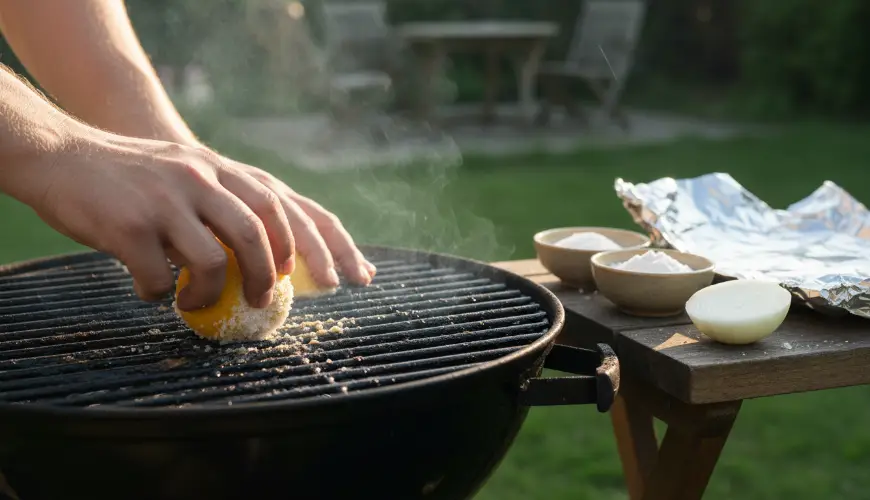
Every person who has ever spent a summer evening by the grill knows how wonderful the feeling is after a perfectly grilled steak or vegetables. What isn't so pleasant is the sight of the grill the next morning – burnt residue, congealed fat, and blackened grates that seem to resist every cleaning effort. Yet there are ways to deal with this unpleasant task quickly, effectively, and without having to scrub every centimetre of the grate for hours.
Cleaning the grill is underestimated or indefinitely postponed in many households. However, a neglected grill is not just an aesthetic problem – it is also a health risk. Remnants of burnt fat and food are reheated during the next grilling session and can release harmful substances. Moreover, bacteria attach more easily to neglected grates. Regular and proper grill care therefore directly affects not only the taste of the food, but also the safety of the entire family.
Try our natural products



Why scrubbing isn't always the best solution
Many people reach for a wire brush as the first and only tool. But that's precisely where the problem begins. Metal wires can break off and remain on the grate, from where they travel directly into the food – and from there into the body. The American Medical Association and various studies have recorded cases of digestive tract injuries caused by broken wires from grill brushes. So it's not just that scrubbing is strenuous – it can also be dangerous.
Fortunately, there are a whole range of gentler yet equally effective methods for removing dirt from a grill. The basis is understanding simple physics: heat softens, moisture dissolves, and time works for you. When these three principles are properly combined, the grill cleans itself almost on its own.
One of the most popular methods is the so-called steam cleaning while hot. The principle is simple: after grilling is finished, the grill is left at high temperature for a while longer, then several sheets of damp newspaper or kitchen towels are placed on the hot grate and the grill lid is closed. The steam that forms softens even the most stubborn burnt residue. After ten minutes, it's enough to wipe the grate and the residue releases itself. Those who want to amplify this effect even further can use beer instead of water – it contains enzymes that help break down organic dirt and leaves a pleasant aroma.
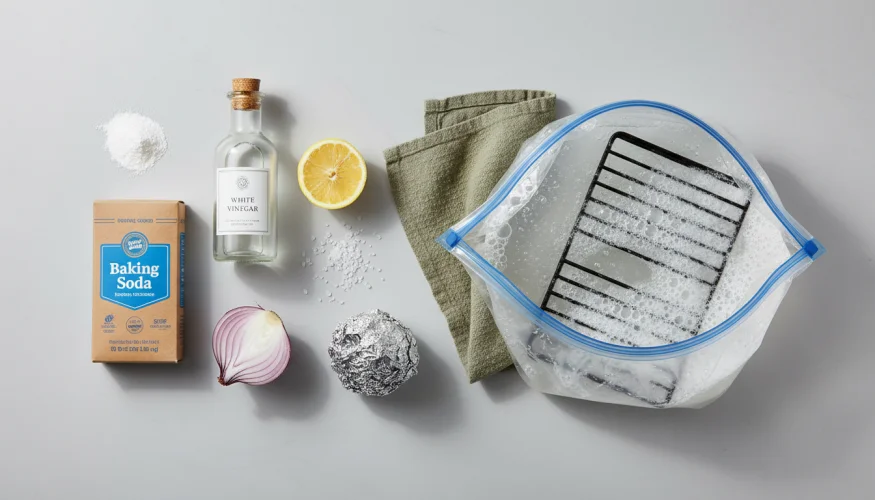
Another great tool is half an onion. This method has been passed down among experienced grillers for generations and works surprisingly well. The onion is skewered on a fork or grilling tongs and, by rubbing it across the hot grate, releases burnt residue. The sulphur and natural enzymes contained in the onion have cleaning properties and at the same time naturally condition the grate. It is a zero-cost, ecological, and completely safe method.
Homemade cleaning products that work wonders
There's no need to reach for aggressive chemical cleaners when the kitchen contains everything necessary. Baking soda and vinegar form a combination that has no competition in the world of home cleaning. The grate is sprinkled with baking soda, then sprayed with white vinegar and left to react for approximately twenty minutes. The resulting fizzing helps mechanically loosen the dirt, so afterwards it's enough to wipe lightly with a damp cloth or soft sponge. The result is comparable to a professional cleaner, without any chemicals and at a fraction of the cost.
For those who prefer an even simpler approach, there is the option of cleaning with lemon juice. Citric acid naturally dissolves fat and leaves a fresh scent. Half a lemon dipped in coarse salt then acts as a gentle abrasive that mechanically removes dirt without damaging the surface of the grate. This method is especially suitable for ceramic or enamelled grates, where a gentle approach is needed.
An interesting alternative is also aluminium foil crumpled into a ball. When used instead of a brush, it works as a gentle yet effective abrasive tool. No broken metal parts are produced, the foil shapes itself precisely to the grate, and after use it simply needs to be thrown into recycling. For those looking for sustainable solutions, this is an ideal choice.
Imagine a situation that is completely common in Czech households: a Saturday barbecue stretches into the late evening, the guests leave, and nobody has the mood or energy for cleaning. The grill is left overnight, nobody wants to look at it on Sunday morning, and by Monday it's even worse. It is precisely for these moments that having soaking soda on hand is ideal – simply place the grates in a large plastic bag, add hot water mixed with baking soda, tie the bag shut, and leave it to work overnight. In the morning, the grates practically clean themselves, without any scrubbing.
How to carry out regular maintenance that prevents the build-up of dirt
The best grill cleaning is the kind that is done continuously and doesn't allow dirt to harden. As the well-known chef's rule goes: "A clean grill is the foundation of good grilling." And it is literally true – a clean grate conducts heat better, food sticks to it less, and the resulting flavour is significantly better.
The key to minimal maintenance is preheating the grill before each use. At a temperature of around 250–300°C, residue from the previous grilling session burns to ash, which can then be swept away with a soft brush or paper towel. This step takes only a few minutes but saves hours of later scrubbing.
Another important habit is lightly coating the grate with oil before each grilling session. A thin layer of oil with a high smoke point – such as rapeseed or sunflower oil – creates a natural non-stick surface. Food sticks less, the grates are easier to clean, and they are also protected from oxidation. This simple step will transform the grilling experience as well as the subsequent cleaning.
For lovers of the ecological approach, it is worth mentioning that there are also natural grill cleaning products on the market based on plant ingredients, without phosphates and synthetic fragrances. These products are biodegradable and safe for the environment, while their effectiveness is not compromised. Information about environmentally friendly cleaning products and their certifications can be found, for example, on the EU Ecolabel website, which lists standards for truly ecological products.
Special attention deserves the cleaning of burners and the bottom section of a gas grill, where dripping fat accumulates. Over time, this fat turns into a thick, difficult-to-remove substance that can cause dangerous flare-ups. Ideally, once per season the burners should be removed, the nozzles checked, and the entire bottom tray cleaned with a mixture of warm water and dish soap. It's not glamorous work, but it is an investment in safety and the long life of the grill.
Many people ask how to tell when a grill is truly clean. The answer is simple: the grate should be grey or silver, without dark deposits and without the smell of old fat. If no smoke (or only minimal smoke) comes out during preheating, the grill is ready for use. If the smoke is thick and smells bad, it's time for a more thorough cleaning.
For those who grill less frequently or put the grill away in the garage for winter, it is essential to carry out thorough cleaning before storage. Remnants of fat and food are an invitation for mice and insects, who are happy to make a home in the grill. The grill should be clean, dry, and ideally covered with a protective cover. The grates can also be lightly coated with oil to prevent corrosion.
Cleaning the grill doesn't have to be a punishment for a good evening with friends. With the right techniques and a little regularity, an unpleasant obligation becomes a routine that takes only a few minutes. And the result? A grill that lasts for years, food that tastes better, and the knowledge that caring for equipment is part of a responsible and sustainable approach to the household. After all, a good griller is recognised not only by what they grill, but also by how they take care of their equipment.