
# How to Remove Stickers and Adhesive from Glass and Furniture Removing stickers and adhesive resid
Everyone knows it – you buy a new jar, a vase, or perhaps an older piece of furniture from a second-hand shop, and a stubborn sticker remains on the surface that simply refuses to come off in one piece. Part of the paper peels away, but the sticky residue clings on – literally. Or you buy your child some stickers and a week later discover they're decorating the living room cabinet. Removing stickers and adhesive from glass and furniture is one of those everyday problems that can be surprisingly frustrating if you don't know the right approach. Yet the solutions are readily available, often right there in the home, and more environmentally friendly than you might think.
The key to success is understanding what we're actually dealing with. The adhesives used in stickers and labels are mostly acrylic- or natural rubber-based. These substances are designed to resist moisture, friction, and time – which is why they don't come off easily. Different surfaces also react differently: glass can withstand more aggressive approaches, while lacquered furniture or wood requires care and gentler methods. Before you start scraping or pouring anything, it's always worth knowing what material you're working with.
Try our natural products
Tried and tested methods for glass
Glass is one of the most rewarding surfaces when it comes to removing stickers. It is hard, non-porous, and can withstand both mechanical and chemical methods without risk of damage. Even so, brute force is not the best approach here either.
One of the simplest and most gentle methods is soaking. If the glass object can be submerged in water – such as a jar or bottle – simply leave it to soak for several hours in warm water with a little washing-up liquid. The heat and moisture will gradually loosen the adhesive, and the sticker will usually come away on its own or with minimal effort. This method is completely chemical-free and gentle on both the surface and the environment.
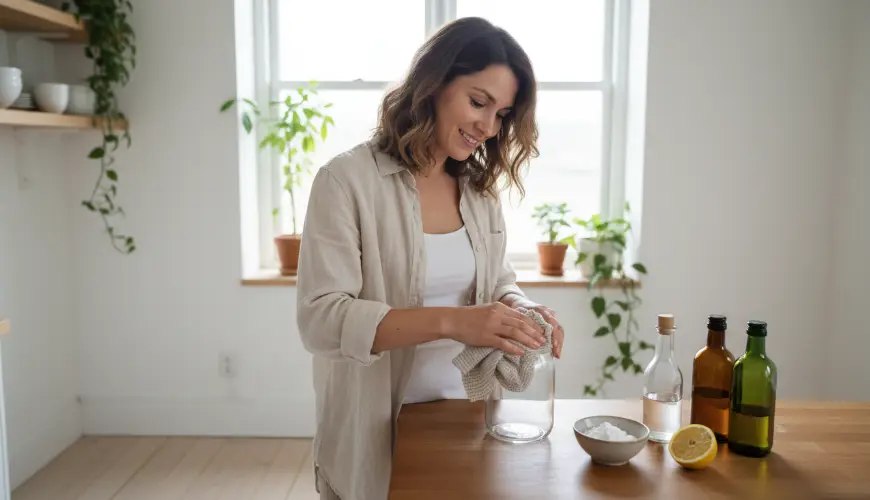
For larger glass surfaces, such as windows or glass parts of furniture, a little more creativity is called for. A popular home remedy is a mixture of bicarbonate of soda and cooking oil – such as coconut or olive oil. Both ingredients are of natural origin, readily available, and surprisingly effective. Bicarbonate of soda acts as a gentle abrasive, while the oil dissolves the adhesive layer. Simply mix roughly equal parts of both ingredients, apply the paste to the sticker, leave it to work for ten to twenty minutes, and then wipe off with a cloth. Any residue can easily be washed away with warm water and washing-up liquid.
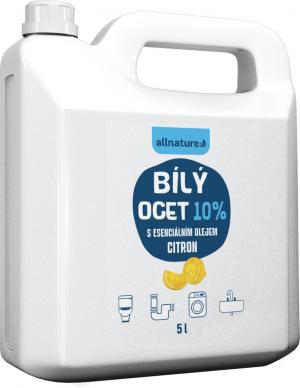
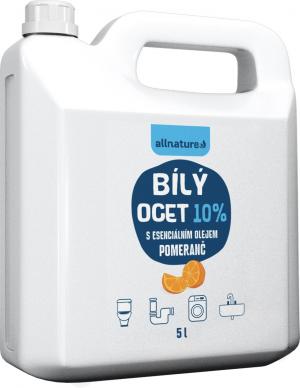
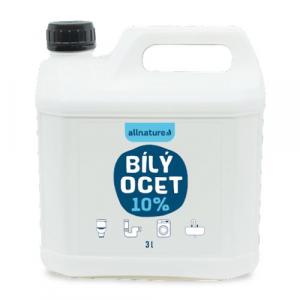
If the paste isn't enough, reach for vinegar. White vinegar is a natural solvent that can tackle many types of adhesive. Soak a paper towel or cloth in vinegar, apply it to the area with the adhesive, and leave it to work for at least half an hour. The acetic acid will gradually break down the structure of the adhesive, and you'll then be able to simply wipe away the residue. Vinegar is completely safe, biodegradable, and its use does not fill the home with harmful fumes.
For truly stubborn adhesive residue on glass, you can reach for a scraper or razor blade – but with great care and ideally used wet to prevent scratching. This method is suitable exclusively for glass, never for lacquered or plastic surfaces.
Furniture requires a more careful approach
The situation becomes more complicated once we move from glass to furniture. Wood, lacquer, veneer, or plastic surfaces are more sensitive, and aggressive chemicals or rough scraping can cause more harm than good. Yet stickers on furniture are nothing unusual – whether they're price tags from a shop, children's stickers, or remnants of old labels on a vintage piece.
The first step should always be carefully removing as much of the sticker as possible mechanically. The ideal approach is to start from a corner and pull slowly at as shallow an angle to the surface as possible. If the sticker stiffens and tears, a hair dryer can help – the heat softens the adhesive and allows for easier separation. Hold the hair dryer about ten centimetres away and move it continuously, never leaving it in one spot for too long, to avoid damaging the lacquer or veneer.
After mechanically removing most of the sticker, a sticky film usually remains. This is where home remedies come in. Olive or sunflower oil is an excellent choice for lacquered surfaces and natural wood alike. Simply apply a few drops directly to the sticky residue, gently rub in with a finger or soft cloth, and leave to work for a few minutes. The oil will gradually penetrate the adhesive, break down its tackiness, and you'll be able to wipe away the residue. Then wipe the surface with a damp cloth and, if necessary, treat it with a wood product or wax.
Alcohol – such as isopropyl alcohol or even ordinary vodka – works in a similar way. This is particularly suitable for hard, unlacquered, or plastic surfaces. However, it's best to be careful on sensitive lacquers, as alcohol can damage the surface finish. We always recommend testing the product first in an inconspicuous spot, such as the underside or back panel of the piece of furniture.
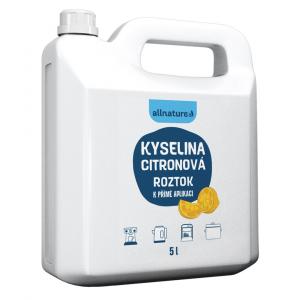
An interesting alternative that is gaining increasing favour among advocates of an eco-friendly home is the use of essential oils – particularly orange or lemon. Limonene, a compound found in citrus peel, is a natural solvent that effortlessly tackles adhesive without damaging surrounding surfaces. It also leaves a pleasant scent. Orange oil can be applied directly to the sticky residue, left to work for five to ten minutes, and then wiped off with a soft cloth.
As the writer and environmentalist Bill Bryson says: "The best technologies are those that work unobtrusively and leave a minimum of traces." This applies to cleaning the home too – the most effective solutions are often the simplest and most natural ones.

When to reach for commercial products and how to proceed responsibly
Sometimes home methods simply aren't enough – for example with very old stickers whose adhesive has dried into a hard layer, or with specific materials such as composite boards or foil-covered surfaces. In such cases, commercial adhesive removers are available, such as Goo Gone or similar products available at hardware shops. These products are formulated to dissolve adhesives without damaging most surfaces, but the principle of caution and testing in an inconspicuous spot applies here too.
When choosing a commercial product, it's worth paying attention to the ingredients. Many conventional removers contain aggressive chemicals such as toluene or acetone, which are not only strongly malodorous but also harmful to health and the environment. Products based on natural ingredients are a better choice – for example those containing citrus extracts or plant-based solvents. Their effectiveness is comparable, but their environmental footprint is significantly lower.
Regardless of which method you choose, always have a few basic tools to hand: soft microfibre cloths that won't scratch the surface; a plastic scraper or old bank card as a mechanical aid; warm water with washing-up liquid for the final rinse; and, if necessary, a wood or glass treatment product once cleaning is complete.
It's worth noting that prevention is always better than solving problems after the fact. If you buy jars or containers with stickers that you plan to reuse, remove them as soon as possible after purchase – fresh adhesive is significantly easier to remove than dried adhesive. The same applies to children's stickers: the sooner you act, the less work you'll have.
An interesting real-life example: Jana, a mother of two from the Central Bohemian Region, bought a set of old wooden drawers at a flea market. Each one had remnants of old price tags, and a child-applied dinosaur sticker was stretched across one drawer. Instead of commercial products, she first tried a hair dryer and olive oil – the result surprised her. The dinosaur and the tags came away without a single trace, and the wood remained completely unaffected. She then treated the drawers with beeswax, and they now form the centrepiece of the children's bedroom.
This story shows that gentle and natural methods work in practice too – it's not just theory. They also have the advantage of being available almost immediately, without the need for a special shopping trip, and their use is safe even in homes with children or pets.
For those who want to go even further in their eco-friendly approach to the home, Greenpeace in its eco-cleaning guide offers a range of tips on how to replace chemical products with natural alternatives – from cleaning the bathroom and degreasing the kitchen to caring for various types of surfaces.
Removing stickers and adhesive from glass and furniture need not be expensive or harmful. With a little patience, the right method, and perhaps just a few ingredients from the kitchen counter, excellent results can be achieved – while preserving both the surface and a clear conscience towards the environment. Because caring for the home and respecting nature go hand in hand far better than most people think.