
# Silverfish in the Bathroom and How to Get Rid of Them Naturally
Discovering a small silvery creature in the bathroom that vanishes in a flash under the bathtub or behind the toilet can give many people quite a fright. Yet silverfish are one of the most common household insects people encounter – and while they are completely harmless to health, their presence in a home signals certain conditions worth paying attention to. Before we get into how to get rid of them, however, it's important to understand why they settled in the bathroom in the first place.
The common silverfish (Lepisma saccharina) is an ancient insect whose ancestors inhabited the Earth long before the dinosaurs. According to the entomologists' database on the Encyclopedia of Life, silverfish are among the oldest insect species on the planet – their evolutionary lineage stretches back approximately 400 million years. This alone says a great deal about their adaptability and resilience. They are nocturnal creatures that move quickly, avoid light, and can survive in conditions that would kill other insects.
Try our natural products

Why do silverfish appear specifically in the bathroom?
The answer is simple: the bathroom offers them everything they need to survive. First and foremost, there is moisture. Silverfish are hygrophilous organisms, meaning they need an environment with relatively high air humidity to survive – ideally between 75 and 95 percent. Showering, bathing, and inadequate ventilation cause the bathroom to maintain a persistently damp microclimate that is, quite literally, paradise for silverfish.
But moisture alone is not enough. Silverfish also need food, and they find a surprisingly abundant supply of it in the bathroom as well. They feed on organic materials rich in starch, sugars, and proteins – and the bathroom is certainly not short of these. Wallpaper with adhesive, paper packaging from shampoos, dead skin cells (a natural component of dust), hair caught in tile grout, and even mould on silicone sealants all represent a hearty feast for silverfish. Add dark, rarely disturbed corners behind the toilet or under the bathtub, and you have an ideal environment.
Many people wonder how silverfish get into the home in the first place. Most commonly, they enter from outside through cracks in walls, gaps around water pipes, or ventilation openings. They can also "move in" with cardboard boxes, old books, or newspapers – materials they love to feed on. It is not uncommon for them to spread from one flat to another in panel-block buildings through shared utility shafts. So if you have silverfish, it does not necessarily mean your home is dirty – it may simply be a matter of the building's layout or your neighbours.
Interestingly, silverfish are solitary creatures that actively avoid contact with people. During the day they hide in narrow crevices and only emerge after dark. This is why we often see them when we turn on the bathroom light at night – and they scatter in a flash. This nocturnal lifestyle is one of the reasons it is difficult to estimate how many actually live in a home. A single spotted individual may mean there are dozens of them.
So how serious is the problem? The truth is that silverfish do not transmit diseases, do not bite, and will not destroy furniture or the structure of a house. Nevertheless, their presence is undesirable for several reasons. They can damage paper materials, wallpaper, or book bindings. And above all – their presence is a reliable indicator that there is excessive moisture somewhere in the home, which over time can cause bigger problems such as mould or damage to plasterwork.

How to get rid of silverfish naturally
Chemical sprays are effective, but in a bathroom where children or pets move around, they are not always the best choice. Moreover, if you do not address the root cause of the problem – namely moisture and access to food – silverfish will return regardless of how much insecticide you use. A lasting solution therefore always begins with eliminating the conditions that attract silverfish.
The first and most important step is reducing moisture in the bathroom. After every shower or bath, ventilate thoroughly – ideally with an open window or a running fan for at least 20 minutes. If the bathroom has no natural ventilation, consider installing a more powerful fan with a humidistat that switches on automatically when humidity exceeds a certain level. According to the recommendations of the British National Health Service, relative humidity in living spaces should not exceed 60 percent – and this applies to bathrooms as well.
The next step is thoroughly sealing cracks and gaps. Check around water pipes, the places where pipes pass through walls, and the joints between tiles. Every gap is a potential entry point and hiding place for a silverfish. Eco-friendly sealants based on natural materials are available in many specialist shops and work just as well as conventional chemical alternatives.
Keeping less visible areas clean can also help. Regular cleaning behind the toilet, under the bathtub, and in the corners of the bathroom removes not only dust and hair but also potential food sources for silverfish. The same applies to storing paper materials – old magazines, spare rolls of toilet paper, or paper packaging for cosmetics should not be left lying directly on the bathroom floor.
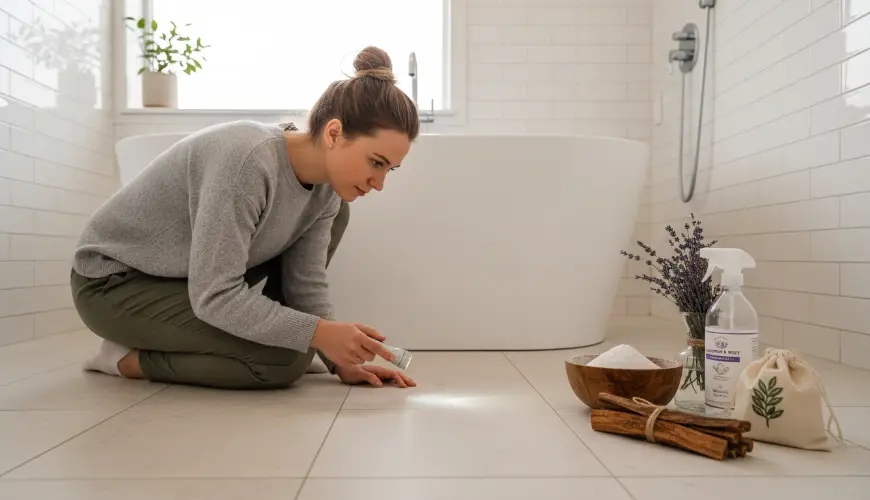
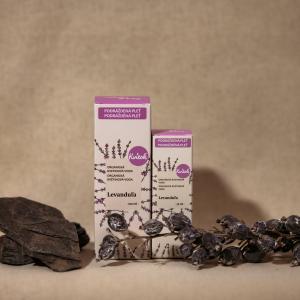
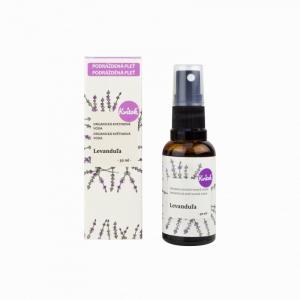
There are also several natural repellents that reliably deter silverfish. Lavender, eucalyptus, or cedar essential oil are off-putting to these creatures – a few drops diluted in water in a spray bottle and regular treatment of at-risk areas is all it takes. Cedar sticks or lavender sachets can be used to treat the cupboards under the sink or corner shelves. This is a solution that is gentle on the environment, safe for the whole family, and at the same time pleasantly fragrant.
If you want to actively catch silverfish, adhesive traps are a good option – small cardboard or plastic lures that attract silverfish inside and hold them there. They are available without chemicals and also serve as a monitoring tool: if the trap is full, you know the problem is bigger than it appeared. Pesticide sprays, by contrast, do kill silverfish but leave chemical residues in the space where you wash every day – which is far from ideal, especially in households with children or allergy sufferers.
One concrete example: a family in a panel-block flat in Brno noticed silverfish after a water pipe joint burst in the flat below them and moisture penetrated the walls. Even after the damage was repaired, the moisture in the walls did not drop quickly, and silverfish moved into the bathroom and the adjacent hallway. Only a combination of a dehumidifier, regular ventilation, and sealing the utility pipe openings definitively resolved the problem – without a single chemical spray.
As a supplementary measure, it is also worth mentioning diatomaceous earth (kieselguhr), a natural powder made from the fossilised shells of algae that mechanically damages the chitin exoskeleton of silverfish and causes them to dehydrate. A thin layer in the corners of the bathroom or along the walls is sufficient – it is completely non-toxic to people and pets, but lethal to insects with an external skeletal system. Diatomaceous earth can be purchased at garden centres or online shops focused on eco-friendly household products.
As entomologist David Goulson says in his book A Buzz for Bees: "The most effective protection against insects in the home is not chemical warfare, but understanding their needs and denying them access." This philosophy applies doubly to silverfish – they are creatures seeking warmth, moisture, and food, and if you deny them these conditions, they will leave of their own accord.
It is also worth knowing that silverfish reproduce relatively slowly compared to other insects. The female lays only a few eggs per week and development from egg to adult takes several months. This means that if you address the situation promptly and consistently, a massive infestation need not occur. Conversely, if you ignore the problem and conditions in the bathroom remain unchanged, the colony can grow considerably over the course of months.
In conclusion, it is worth remembering that the presence of silverfish in the bathroom is primarily a signal, not a punishment. It tells you that somewhere it is too damp, too dark, and that there is too much organic material to which they have access. Treating them as an enemy to be chemically eradicated is at the very least unnecessary and often counterproductive. Far more effective – and more ecological – is simply to adjust the conditions in the bathroom so that they no longer find it comfortable. And as the experience of many households shows, a combination of good ventilation, regular cleaning, and natural repellents is usually enough to persuade these silvery visitors to move elsewhere.