

Learn how to remove scratches from wooden furniture

Wooden furniture is one of those things that can transform an ordinary room into a cosy home. A solid oak table, an antique chest of drawers inherited from grandmother, or a modern pine shelf – each piece has its own story and its own character. But wood is a living, sensitive material, and scratches are almost impossible to avoid. All it takes is moving a vase, letting a pet near the furniture, or carelessly placing keys on a table, and the surface you've so carefully maintained bears the marks of everyday life.
The good news is that removing scratches from wooden furniture doesn't have to mean an expensive visit from a specialist or replacing the entire piece. There are a wide range of effective methods, from those that use ingredients from the kitchen cupboard to professional products available at any DIY store. The key is to correctly assess the depth of the damage and choose an appropriate solution.
Try our natural products


First, you need to understand what you're dealing with
Not every scratch is the same, and that's precisely why there is no single universal remedy. Surface marks that only affect the varnish or wax behave completely differently from deep grooves that have cut all the way into the wood itself. Before starting any repair, it's worth examining the damaged area carefully – ideally in raking light, which will reveal even the finest imperfections.
Surface scratches are usually only a visual problem. The varnish or protective coating has been damaged, but the wood beneath remains untouched. These marks can be very easily concealed or completely removed using simple home remedies. Deep scratches that can be felt with a fingernail are a more complex case – they require either filling with material or localised sanding and re-varnishing. And then there are the worst kind: chips and gouged grooves that alter the structure of the surface. These generally call for patience and a little more work.
It's also important to know what material the furniture is made from. Solid wood tolerates repairs much better than veneered boards or MDF, where the layer of natural material is thin and every intervention must be very gentle. If you're unsure what your furniture is made of, try looking for a manufacturer's label or consulting the retailer.
Home methods that will surprise you with their effectiveness
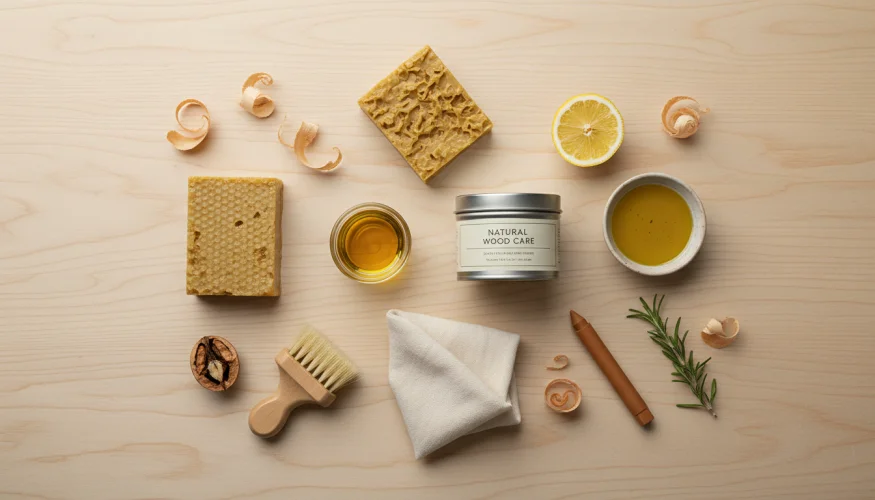
You may be surprised by how many effective solutions are hiding right at home. One of the best-known tricks is using a walnut. Simply take half a walnut and rub it into the scratch with circular movements. The oils contained in the walnut naturally hydrate the wood and visually fill the scratch. Results are visible almost immediately, and the method works particularly well on darker wood species such as walnut or mahogany.
Similarly, olive oil mixed with lemon juice in a ratio of two parts oil to one part juice can be used. This mixture not only helps to mask minor marks but also treats the wood and gives it a healthy sheen. It is applied with a soft cloth and buffed dry after a moment. It's not a miraculous solution for deep scratches, but for everyday minor damage it is a quick and eco-friendly alternative to commercial products.
Another popular method is using coffee grounds. Mixed with a little olive oil, they create a paste that is rubbed into scratches on dark furniture. Coffee grounds act as a natural pigment and help to even out the colour of the surface. The advantage is that this is a waste material that would otherwise end up in the bin – an approach that is in keeping with the principles of sustainable household management.
A slightly different approach is offered by iodine, which works well on reddish-brown wood species, or mustard oil, which is traditionally used in some Asian countries as a treatment for wooden furniture. Each of these methods has its own specifics and works best on a particular type of wood and a particular shade.
Imagine a situation that is perfectly common in many households: you move into a new flat, bring along a beloved solid beech writing desk, and accidentally scratch it against the door frame during the move. The result is a scratch several centimetres long right in the middle of the top. Instead of panicking, all you need to do is take a walnut sitting in a bowl on the kitchen counter, and within ten minutes the scratch is almost invisible. Moments like these show that repairing wooden furniture doesn't have to be a drama.
When to reach for professional products
There are situations where home methods simply aren't enough. A deep scratch that penetrates the structure of the wood, or damage to a heavily used surface such as a dining table or work surface, calls for something more. In such cases, special wax crayons and repair pastes come into play, available in various colour shades and allowing precise colour matching with the original finish.
Wax crayons work on a simple principle: the wax is rubbed into the groove, the excess is removed, and the surface is polished. The result depends on the accuracy of the colour shade selection and the application technique. Most manufacturers offer a wide range of colours, so finding the right shade for oak, beech, pine or cherry is usually a matter of patient comparison.
For deeper damage, there are wood-filling fillers that are applied into the groove, left to dry, sanded down and re-varnished. This method requires a little more skill and patience, but the result is durable and virtually invisible. It's important to choose a filler that is compatible with the type of surface finish on the furniture – a different product is suitable for an oil finish, and a different one for a water-based varnish.
When selecting products, it's also worth paying attention to their composition. Many conventional products contain volatile organic compounds and synthetic chemicals that can be harmful to health and burdensome to the environment. A growing number of manufacturers are therefore introducing eco-friendly alternatives based on natural ingredients – whether beeswax, linseed oil or natural resins. These products are gentler on people and the planet while achieving comparable results.
As Historic England, the British organisation for the protection of cultural heritage, notes, proper care of wooden furniture and its regular treatment with natural oils and waxes significantly extends the lifespan of pieces and reduces the need for costly repairs. This approach is in keeping with a philosophy that prioritises long-term use and repair over quick replacement.
Prevention is always better than cure
It would be incomplete to talk about removing scratches without mentioning the most important thing: how to prevent them. Regular treatment of wooden furniture with wax or oil creates a protective layer that absorbs impacts and catches minor marks before they reach the wood itself. Every now and then – ideally every three to six months – it's worth devoting some care to your furniture, which will extend its life by decades.
Small everyday habits are equally important. Felt pads under the legs of chairs and tables prevent scratches when moving them. Coasters and placemats protect the surface from heat and moisture. And if you have a dog or cat at home, it may be worth considering which surfaces are accessible to them and which are not – animal claws are among the most common causes of damage to wooden furniture.
It's also worth mentioning that direct sunlight can dry out wood and cause cracking and peeling of the varnish, making the surface more susceptible to mechanical damage. Curtains or blinds that filter direct light are therefore an investment not only in the aesthetics of the interior but also in the longevity of the furniture.
Finally, it's worth recalling what William Morris, one of the pioneers of the Arts and Crafts movement, said: "Have nothing in your house that you do not know to be useful, or believe to be beautiful." Wooden furniture fulfils both criteria – it is functional and beautiful. And that is precisely why it deserves care that will allow it to serve faithfully for generations.
Scratches are part of the life of every piece of furniture that truly lives in a home and fulfils its purpose. They are not a source of shame, but evidence that the furniture is being used. With a little knowledge and the right products, however, it's no problem to restore a surface so that it looks almost as good as new – without unnecessary expense, without harmful chemicals, and without the need to find a replacement. Because the most sustainable thing we can do is to take care of what we already have.