

Buteyko breathing method as a help against mouth breathing
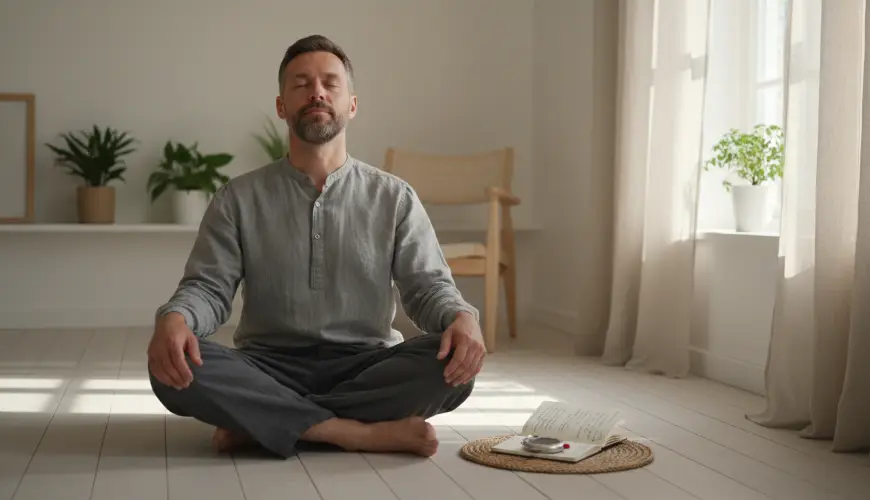
Breathing is so natural that most people never think about it. Inhale, exhale – what could possibly go wrong? Yet this very sense of the obvious can conceal one of the most widespread unhealthy habits of modern times: mouth breathing. And standing against it is a fascinating approach that has been gaining increasing attention in recent years – the so-called Buteyko breathing method.
Its story begins in the 1950s in Ukraine, where Soviet physician Konstantin Buteyko was observing his patients suffering from asthma and other chronic conditions. He noticed something that others had overlooked: sick people breathe more, not less. Their breaths were rapid, shallow and – the key word – taken through the mouth. Buteyko concluded that chronic overloading of the respiratory system leads to a drop in blood carbon dioxide levels, which paradoxically causes insufficient oxygenation of the tissues. From this insight, he built an entire system of breathing exercises, aimed at teaching the body to breathe less, more slowly, and exclusively through the nose.
Try our natural products





What happens in the body when we breathe through our mouths
To understand why the Buteyko method places such emphasis on nasal breathing, it is necessary to understand what happens in the body during mouth breathing. The nose is not merely a passage for air – it is a sophisticated organ that warms, humidifies and filters the air. The nasal mucosa captures bacteria, viruses and dust particles before they reach the lungs. The nose also produces nitric oxide, a substance with proven antimicrobial and vasodilatory effects that helps dilate blood vessels and improve the supply of oxygen to the organs.
When a person breathes through their mouth, all of these protective mechanisms are bypassed. Air enters the body dry, unfiltered and without nitric oxide. Long-term mouth breathing is associated with chronic inflammation of the upper respiratory tract, sleep disorders including snoring and sleep apnoea, increased tooth decay caused by drying of the oral mucosa, as well as problems with concentration and fatigue. Research published in journals such as the Journal of Oral Rehabilitation repeatedly shows that the way we breathe has a direct impact on facial structure, particularly in children during their growth years.
Carbon dioxide, which Buteyko placed at the centre of his theory, plays a role in the body that is far more complex than is commonly assumed. Most people perceive it simply as a waste gas that needs to be exhaled. In reality, carbon dioxide is essential for releasing oxygen from haemoglobin into the tissues – this is the so-called Bohr effect, described by Danish physiologist Christian Bohr as far back as 1904. If the body exhales too much carbon dioxide as a result of overbreathing, oxygen does flow into the lungs, but less of it reaches the cells. The result can be a paradoxical state in which a person breathes a great deal, yet still feels exhausted.
Buteyko took this logic to a practical level. He proposed a simple test – the so-called control pause – in which a person, after a calm exhale, holds their breath and measures the length of time they can do so comfortably without a sense of urgency. A healthy person should be able to last around forty seconds. Asthmatics or chronic mouth breathers often stop after just ten to fifteen seconds. The shorter the pause, the greater the sensitivity to carbon dioxide and the greater the tendency to overbreathe.

The Buteyko method in practice
The Buteyko method itself is not difficult to understand, but it requires patience and consistency. Its fundamental pillar is conscious reduction of breathing volume – the aim is to learn to breathe less than the body automatically wants to. The exercises are performed while sitting in a quiet environment and consist of slow, shallow breathing cycles with an emphasis on exhaling through the nose. The method also includes so-called reduced pauses – brief breath holds after the exhale that help increase tolerance to carbon dioxide.
Consider Martin, a man in his forties from Brno, who had suffered from seasonal allergies his whole life and snored at night. His wife repeatedly pointed out that he slept with his mouth open. After trying various medications without lasting effect, he came across the Buteyko method through Patrick McKeown's book The Oxygen Advantage. He began taping his mouth shut with special sleep tape – one of the controversial yet increasingly popular applications of Buteyko's principles – and practised breathing exercises daily. After three months, his wife told him he had stopped snoring. His morning nasal congestion improved significantly. Of course, one story is not scientific evidence, but thousands of similar experiences appear within the community of method supporters.
Patrick McKeown, an Irish therapist and one of the world's leading advocates of the Buteyko method, summarises its philosophy with the words: "Breathing is the only autonomous function of the body that we can consciously influence – and that is precisely what makes it a gateway to health." McKeown has collaborated with numerous athletes, physicians and researchers, and his approach is now taught in dozens of countries around the world.
Scientific research into the Buteyko method remains uneven. The strongest evidence exists in the area of asthma – a review study from the Cochrane Database from 2020 suggests that breathing exercises inspired by the Buteyko method can reduce the need for rescue medication in asthma patients and improve quality of life, though the authors emphasise the need for further research. Less robust but promising results also exist in the areas of sleep apnoea, athletic performance and anxiety. Critics of the method point out that many of its claims are exaggerated and that the scientific foundation is not strong enough to recommend the Buteyko method as a primary treatment. This is a legitimate objection – the method should never replace medical care, but it can meaningfully complement it.
Also interesting is the perspective on how modern lifestyles contribute to the prevalence of mouth breathing. Processed foods have altered the shape of jaws and dental arches – as documented, for example, by Harvard University research focused on the evolution of the human skull – and have narrowed nasal passages. Sedentary lifestyles, stress and polluted air further contribute to people automatically opening their mouths and breathing shallowly. Mouth breathing has thus become a kind of civilisational bad habit, so common that most people do not even perceive it as a problem.
Particularly alarming is the data concerning children. It is estimated that a significant proportion of school-age children breathe through their mouths for at least part of the day, and this tendency tends to be associated with attention difficulties, hyperactivity and poorer academic performance. Paediatric dentists and orthodontists abroad are increasingly drawing attention to the need to address breathing patterns as part of comprehensive care for children's dental health and facial development.
For those who would like to begin with the Buteyko method practically, there are several introductory steps that require no special equipment or prior experience:
- Control pause – every morning upon waking, measure how long you can comfortably hold your breath after a calm exhale. This figure serves as a personal barometer of breathing quality.
- Conscious slowing of the breath – several times a day, notice how you are breathing and try to slow and restrain it so that it becomes almost inaudible.
- Nose wearing – a mindful return to nasal breathing during walking, exercise and sleep is the foundation of the entire approach.
- Breathing exercises before sleep – a short five-minute sequence of shallow breaths with gentle pauses helps calm the nervous system and prepare the body for restorative sleep.
It is important to mention that the Buteyko method is not suitable for everyone without exception. People with serious cardiovascular conditions, pregnant women, or patients with certain neurological conditions should consult a doctor before beginning any breathing exercises. Breath holding can in some situations cause dizziness or discomfort and must be approached with caution.
What is perhaps most thought-provoking about the entire story of the Buteyko method is not so much the technique itself, but rather the idea that the way we breathe has a deeper impact on our health than most of us acknowledge. At a time when people invest thousands in dietary supplements, smartwatches and detox programmes, the answer to many health problems may be surprisingly simple and completely free – just close your mouth and breathe through your nose. Konstantin Buteyko knew this seventy years ago. Modern science is gradually proving him right, albeit cautiously and with the nuances that any rigorous research demands.