

# Ingrown Toenail and What Helps with Prevention and Home Care
Pain that begins inconspicuously – a little pressure at the edge of the big toe, mild redness, a feeling that the shoe is suddenly pressing in the wrong place. Then comes the morning when you can't even put your shoes on comfortably, and you realize that the problem you'd been ignoring for weeks has meanwhile grown considerably. An ingrown toenail is one of those unpleasant conditions that affects people across all age groups, and although it may seem like a trivial matter, it can seriously complicate everyday life.
Medically, this condition is called onychocryptosis, and it occurs when the edge of the nail – most often on the big toe – begins to grow into the surrounding skin. The result is inflammation, pain, and in worse cases, an infection that requires medical intervention. According to available estimates, approximately 20% of patients who visit a general practitioner with foot problems suffer from ingrown toenails, making it a very widespread yet still underestimated problem.
Try our natural products

Why nails become ingrown and who is most at risk
There can be several causes, and they often combine with one another. The most common culprit is improper nail trimming – specifically the tendency to round the edges into a curved shape, as we do with fingernails. On the feet, however, this is a mistake. Toenails should be cut straight, without rounding the corners, because rounded or cut too short corners tend to grow into the skin as the nail continues to grow.
The second major group of causes is inappropriate footwear. A too-narrow toe box, a high heel, or shoes that are simply one size too small – all of this creates pressure on the nails that literally pushes them in the wrong direction. It is no coincidence that ingrown toenails are significantly more common in people who wear fashionable but anatomically unsuitable footwear. Sports with repeated impacts are equally risky – running, football, or tennis, where the foot repeatedly strikes the front of the shoe.
Genetic predisposition also plays a role. Some people naturally have more curved or wider nails that are prone to becoming ingrown regardless of how carefully they care for them. Excessive foot sweating, diabetes, or circulatory problems further complicate the situation, as they slow healing and increase the risk of infection.
A special group is teenagers and young adults, in whom ingrown toenails occur most frequently – a combination of rapid nail growth, sporting activity, and not always ideal foot care practices makes this group the most at risk. At the other end of the age spectrum are older people, for whom reduced mobility and difficulty reaching their own feet complicates nail care.
When is the situation serious and when can one manage on their own? That is the question most people ask themselves when they first notice the initial symptoms. The answer depends on the stage at which the problem is found.
Home care: what actually helps and what makes things worse
In the initial stage, when only mild redness and tenderness are present without swelling or discharge, there are several tried-and-tested home care approaches that can significantly improve or completely resolve the situation. The key, however, is consistency and patience – none of these methods work overnight.
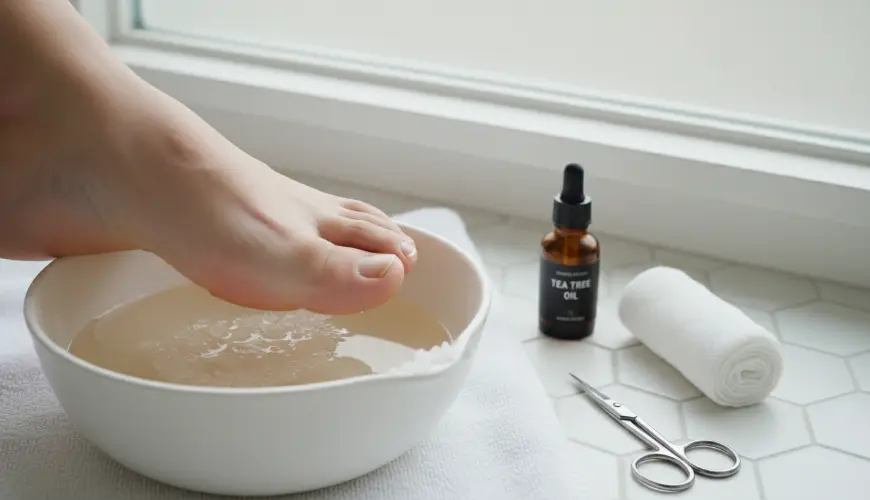
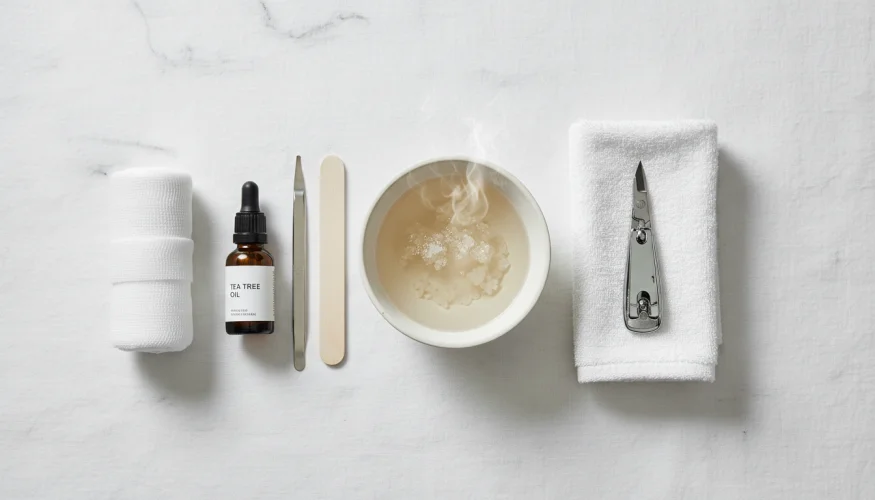
The foundation is regularly soaking the foot in warm water. Warm water softens both the skin and the nail, reducing pain and making any treatment easier. It is recommended to soak the affected area two to three times a day for fifteen to twenty minutes, ideally with the addition of sea salt or an antiseptic solution. Sea salt has natural antibacterial properties and helps prevent infection.
After soaking, the next step is a careful attempt to release the ingrown nail edge. Using a gentle, blunt tool – such as a special nail probe – you can try to lightly push the skin away from the nail and insert a small piece of gauze or cotton wool under its edge. This procedure helps the nail grow in the right direction and away from the skin. However, it is important not to use excessive force and to stop immediately if pain occurs.
Many people at this point reach for scissors with the intention of "cutting out" the ingrown piece. This is one of the most common mistakes that makes the situation worse. Deeply cutting out the corner of the nail provides immediate relief, but as the nail grows back, it becomes even more ingrown – and the vicious cycle continues. Equally harmful is cutting the nails too short, because a short nail lacks sufficient support and its edges more easily dig into the skin.
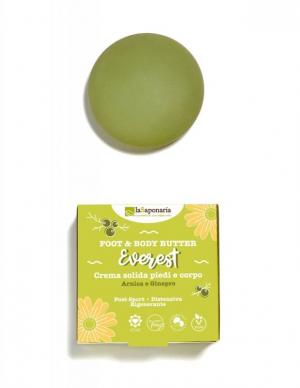
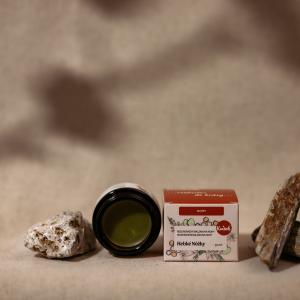
Care for the surrounding skin is just as important as care for the nail itself. Moisturising the skin of the feet helps keep the skin supple and less prone to injury when in contact with the nail. Natural oils – such as tea tree oil, which has proven antibacterial and anti-inflammatory properties, or sea buckthorn oil rich in vitamins – are excellent choices for caring for the sensitive skin around an ingrown toenail. These products can be found, for example, in specialist online shops focused on natural body care.
The choice of footwear during the healing period is absolutely crucial. Open sandals or shoes with a sufficiently wide toe box significantly reduce pressure on the affected area and allow the nail to grow naturally. If conditions permit – that is, weather and the nature of one's work – walking barefoot at home is the best option. The foot can breathe freely and the nail is not subjected to any unnecessary pressure.
As noted by dermatologist and foot care expert Dr. Andrew Weil, one of the pioneers of integrative medicine: "Prevention is always more effective than treatment – and in the case of nails, this is literally true, because proper trimming habits and footwear choices can eliminate the problem before it even arises."
When home care is not enough and it's time to see a doctor
There are situations where home care simply is not enough and delaying a visit to the doctor can lead to serious complications. The key warning signs are the presence of pus, significant swelling extending beyond the immediate area around the nail, severe pain that prevents normal walking, or fever. These symptoms indicate a bacterial infection that requires antibiotics and professional treatment.
People with diabetes or peripheral circulatory disorders should visit a doctor even at the first signs of an ingrown toenail, as the risk of complications is significantly higher for them and healing proceeds considerably more slowly. According to the recommendations of the Czech Diabetes Society, regular foot care is one of the basic preventive measures for diabetics, with ingrown toenails being one of the most common entry points for serious infections.
Podiatrists – specialists in foot care – have several methods available for treating ingrown toenails. The simplest is conservative treatment, where the doctor carefully releases the ingrown edge under local anaesthesia and reshapes the nail correctly. In recurring cases, they proceed to partial or complete nail bed ablation – a procedure in which part or all of the nail is removed along with the germinal tissue, to prevent recurrence. This procedure sounds alarming, but it is actually a relatively simple outpatient procedure with a high success rate.
There are also special nail braces and corrective strips that are applied to the nail and gradually change the direction of its growth. This method is gentler and requires no surgical intervention, but it requires regular check-ups and may take several months before results are seen.
How to prevent ingrown toenails in the long term
Preventing ingrown toenails is not a complicated science – it is more about a set of simple habits that need to be followed regularly. Proper trimming technique comes first: cut nails straight, not in an arc, and leave them to grow slightly past the edge of the toe – that is, do not cut them too short. The ideal trimming frequency is approximately once every four to six weeks, depending on the rate of growth.
Footwear choice should always prioritise comfort and anatomical shape over fashionable aesthetics. Shoes should have sufficient room in the front section – the big toe should not be pressed against the other toes and there should be at least a centimetre of space between its tip and the end of the shoe. Quality, breathable footwear made from natural materials not only reduces the risk of ingrown toenails but also contributes to overall foot health.
Regular moisturising of the skin of the feet should become part of a daily routine, just like showering or brushing teeth. Dry, cracked skin is more susceptible to injury and inflammation. Natural body butters or creams containing shea butter, coconut oil, or aloe vera are gentle and effective choices that do not burden the body or the environment with synthetic substances.
To take the example of a thirty-year-old runner who suffered from recurring ingrown nails on the right big toe – the problem was only resolved when he combined three things at once: he switched to running shoes half a size larger, began cutting his nails straight, and introduced a daily foot massage with natural oil. None of these changes was sufficient on its own, but together they produced results within three months.
An ingrown toenail is therefore a problem that can in most cases be managed very well – and even better, prevented. All it takes is giving your feet a little of the attention they deserve, and remembering that they are the ones carrying us through life every single day.