

Nostalgia heals when it doesn't help us escape from life
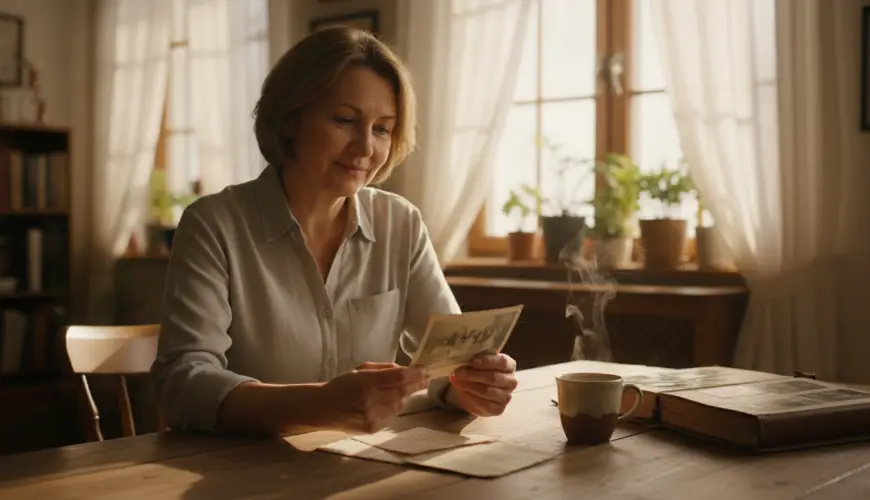
The scent of grandmother's cake, an old song on the radio, photographs from childhood holidays – and suddenly you're somewhere else entirely. Nostalgia arrives unexpectedly and with surprising force. Yet for a long time it was spoken of almost exclusively as a weakness, a sentimental escape from reality. Today we know the truth is far more complex and interesting.
The word nostalgia comes from the Greek nostos (return home) and algos (pain). Originally it was a medical diagnosis – Swiss physician Johannes Hofer described it in the 17th century as a serious condition affecting soldiers longing for home. Today such a view might amuse us, but behind it lies an important question: is nostalgia a disease or a cure? Research over the past two decades suggests it depends primarily on how we handle it.
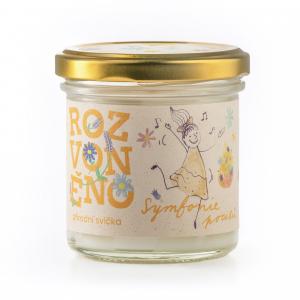
Try our natural products


What happens in the brain when we remember
Nostalgia is not merely sentimental whimsy. It is a complex emotional state that activates several areas of the brain simultaneously – the reward centres, memory and empathy. Professor Constantine Sedikides of the University of Southampton, one of the world's leading experts on the subject, spent years studying what nostalgia actually does to the human psyche. His conclusions are surprising: nostalgia increases the sense of meaning in life, strengthens social bonds and even reduces anxiety. It is therefore not an escape from the present – it can be a bridge to it.
Interestingly, nostalgic memories are almost always social in nature. People do not remember things or places in themselves, but moments shared with others. A memory of summer camp is not about tents and campfires – it is about friends, about laughter, about a sense of belonging. This social dimension is the key to understanding why nostalgia can be such a powerful tool for mental wellbeing.
Research published in the journal Personality and Social Psychology Bulletin showed that people who regularly and consciously recall nostalgic memories display higher levels of optimism and greater resilience to stress. This is not magic – it is biology. The brain releases dopamine and oxytocin during nostalgic experiences, hormones associated with feelings of wellbeing and trust.
Yet there is another side to the coin. Nostalgia can become a trap if the occasional visitor to the past becomes a permanent resident. And it is precisely at this point that the whole secret lies: the line between nostalgia as a cure and nostalgia as an escape is thin, but decisive.
When memories heal
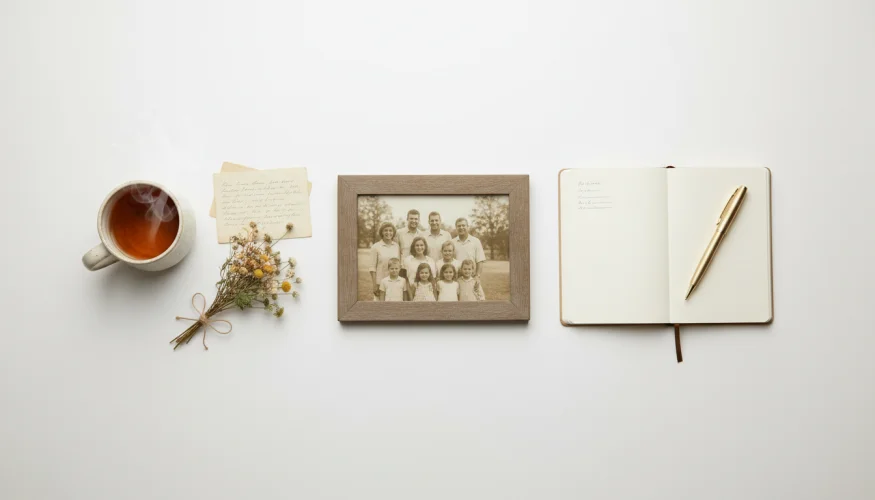
Imagine Marie, a woman in her forties from Brno, who went through a difficult period after a painful divorce. She admits that she was saved by old photographs from the times she travelled to Moravia with her family, and by records from a band she had loved as a teenager. "It didn't feel like escapism," she says. "More like a reminder that I have always been stronger than I think, and that I have experienced beautiful things – and so I can experience them again."
Marie's story is not exceptional. Psychologists describe this phenomenon as nostalgic self-affirmation – a mechanism in which memories of happy moments remind a person of their own worth and capabilities. In moments of crisis or uncertainty, the past thus serves not as a refuge but as a source of strength for the present.
Healing nostalgia has several characteristic features. It arrives, brings pleasure and departs – it does not leave a person imprisoned. It motivates action rather than causing paralysis. It strengthens relationships, because nostalgic memories are naturally shared – and sharing creates intimacy. As the writer Milan Kundera wrote: "Nostalgia is the suffering caused by an unappeased yearning to return." This sentence points to the paradox of nostalgia – we long for something we remember in a distorted, idealised way. And this very idealisation can, paradoxically, be beneficial.
Research shows that a mildly idealised view of the past is psychologically healthy. It is not self-deception – it is a natural function of memory that helps maintain a sense of continuity and identity. A person who knows where they come from and what they have experienced is better equipped to navigate where they want to go.
The conscious use of nostalgia as a mental hygiene tool is increasingly finding its way into therapeutic practice. Some currents of cognitive-behavioural therapy work with techniques of deliberately recalling positive memories as a means of emotional regulation. The aim is not to live in the past, but to draw energy from it for the present – much as an athlete mentally returns to their finest moments before a performance.
Nostalgia also has a strong social dimension that extends beyond the individual psyche. Shared memories bind communities, families and groups of friends together. When old friends meet and begin reminiscing, they are not merely recalling the past – they are actively reinforcing the bonds that connect them in the present. Anthropologists point out that nostalgic rituals – anniversary gatherings, family traditions, celebrations – serve a fundamental function in human communities by maintaining cohesion.
When nostalgia becomes a trap
There is, however, a point beyond which nostalgia ceases to heal and begins to harm. Psychologists speak of so-called ruminative nostalgia – a state in which a person uncontrollably and repeatedly replays the past, compares it with the present and emerges from this comparison as the loser. "Everything was better back then" is a phrase that may sound innocent, but conceals a dangerous mechanism.
The problem arises when nostalgia ceases to be a source and becomes an end in itself. When a person is not seeking inspiration in the past, but refuge. When the present feels so unbearable or empty that the only place they feel comfortable is in memories. In such cases, nostalgia masks unresolved problems – loneliness, dissatisfaction with life, fear of change or a loss of meaning.
Ruminative nostalgia manifests in characteristic patterns. A person compares present relationships with past ones, and the current ones always come off worse. They refuse new experiences because "they won't be as good as before anyway." They remain emotionally bound to people or situations long gone, and are unable to fully experience the present. Professional help can be valuable here – psychologists from platforms such as Česká asociace pro psychoterapii offer approaches that help distinguish healthy nostalgia from the destructive kind.
There is also an interesting cultural dimension to this phenomenon. Political scientists and sociologists have long warned that collective nostalgia – a longing for the "golden age" of an entire society – can be exploited as a political tool. When an entire community fixes on an idealised past and refuses to engage with the complexity of the present, space opens up for simplistic narratives and demagoguery. Healthy collective nostalgia, by contrast, is able to draw lessons and values from the past without denying the reality of the contemporary world.
How, then, can we tell which side of the line we are on? The key question is not "am I remembering?", but "what does remembering bring me?" If after a nostalgic experience a person feels gratitude, warmth and enthusiasm for present life – that is healing nostalgia. If they feel bitterness, emptiness and aversion to the present – it is time to pause and reflect.
Working consciously with nostalgia requires a degree of self-awareness. It helps, for example, to deliberately anchor nostalgic memories in the present – to share them with loved ones, to carry their values into everyday life, or to draw inspiration from the past when creating new traditions. Nostalgia heals when we emerge from it enriched and with our gaze directed forward – not when we remain trapped within it.
The modern world paradoxically creates conditions in which nostalgia flourishes more than ever before. The pace of change, digital overload, the weakening of community bonds – all of this means that people increasingly long for the sense of stability and belonging that the past (whether real or idealised) offers. Sociologists at the Pew Research Center have repeatedly documented how nostalgic sentiment grows across generations in societies undergoing rapid change.
The answer, however, is neither to suppress nostalgia nor to surrender to it uncritically. It is to engage consciously with this powerful emotional tool. Remembering is human – and it is beautiful. The question is whether memories serve life or stand in its way. Nostalgia in its healthiest form is not about the past itself – it is about the values, relationships and experiences the past contains and which can be carried into the present. It is a reminder of what matters, and an invitation to seek it out today.