

# Practical Guide to Jacobson's Progressive Muscle Relaxation
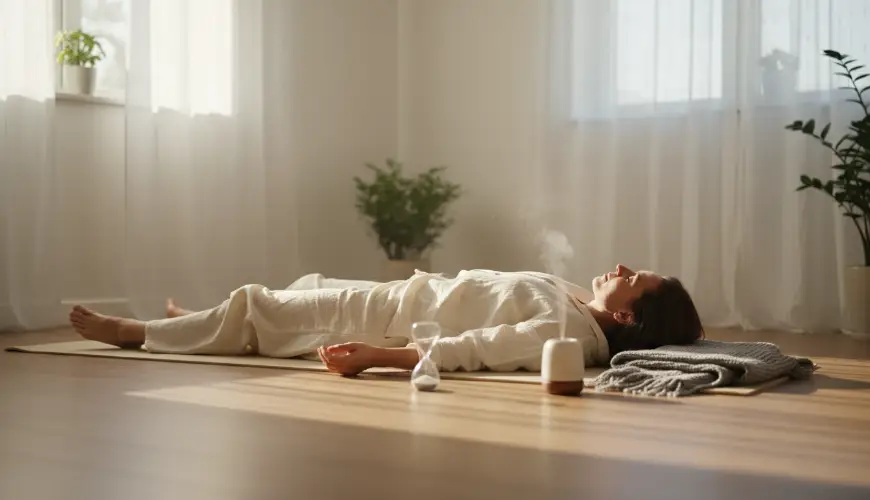
Modern life brings an incredible amount of stress. Work deadlines, family responsibilities, the constant flood of information from phones and computers – all of this is stored not only in the mind, but directly in the muscles as well. Shoulders rise up to the ears, the jaw tightens, the back stiffens. Many people are not even aware of this tension because it has become their everyday norm. This is precisely why a method was developed that teaches the body to recognise the difference between tension and relaxation – Jacobson's progressive muscle relaxation.
This technique has nearly a hundred years of history behind it, and yet it remains one of the most effective stress management methods that science has discovered to date. It requires no special equipment, prior experience, or hours of training. All it takes is a little quiet time, a comfortable place, and a willingness to listen to your own body.
Try our natural products




What Jacobson's progressive muscle relaxation is and where it comes from
The method was created by American physician and physiologist Edmund Jacobson, who developed it as far back as the 1920s. Jacobson built on a simple yet revolutionary idea: physical tension in the muscles is directly linked to mental tension and anxiety. If one can consciously relax the muscles, the mind will calm down as well. He summarised his research in the book Progressive Relaxation, published in 1929, which became the foundation for entire generations of therapists and physicians.
Jacobson's approach was revolutionary at the time because it offered a concrete, physical pathway to managing psychological tension during an era when psychiatry was still in its infancy. Today, his method is recommended by psychologists, physiotherapists, and physicians around the world as part of the treatment of anxiety disorders, insomnia, chronic pain, and high blood pressure. The American Psychological Association lists progressive muscle relaxation as one of the scientifically supported techniques for reducing stress and its physical manifestations.
The principle of the method lies in the systematic alternation of deliberate tensing followed by releasing different muscle groups. By intentionally creating tension and then letting it go, a person learns to recognise what a relaxed muscle actually feels like – and this is a skill that many people do not take for granted at all. As Jacobson himself said: "A relaxed person cannot be anxious."
The practical result of regular practice is the ability to catch muscle tension before it turns into a headache, a stiff back, or insomnia – and to consciously let it go.
How progressive muscle relaxation works step by step
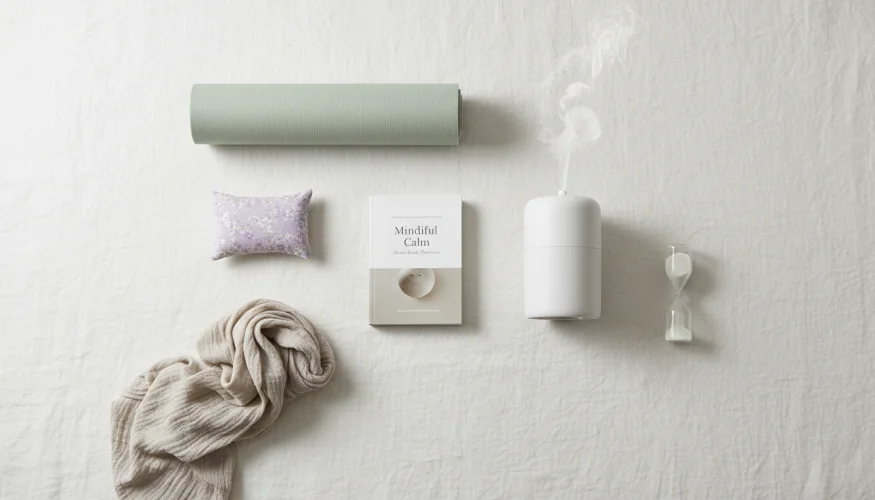
Before the exercise itself begins, it is important to prepare both the environment and the body. Ideally, find a quiet place free from distractions – switch off the phone, dim the lights, and lie down comfortably on your back, or settle into a comfortable chair. Clothing should be loose and shoes removed. A full session lasts approximately twenty to thirty minutes, so it is worth setting aside this time in advance.
The exercise always begins with deep breathing. Several slow inhalations through the nose and exhalations through the mouth help calm the nervous system and prepare the body for relaxation. Only then does the work with the muscle groups begin.
The entire process moves from the lower limbs upward toward the head – or in the opposite direction, depending on the specific version of the exercise. The most widespread variant begins at the feet and progresses through the calves, thighs, buttocks, abdomen, back, hands, arms, shoulders, neck, and finally the facial muscles. With each muscle group, the same rhythm is maintained: tensing for approximately five to ten seconds, then a quick release, followed by conscious awareness of the feeling of relaxation for twenty to thirty seconds.
Let us take a specific example: Jana, a thirty-four-year-old teacher, suffered from chronic neck pain and difficulty falling asleep. Her physiotherapist recommended Jacobson's relaxation as a complement to her treatment. Jana initially doubted whether simply tensing and releasing muscles could really help her. After two weeks of regular practice – every evening before bed – she began to notice that she fell asleep more quickly and woke up in the morning with less neck stiffness. The key moment for her was realising that the muscles in her shoulders and neck held tension practically all day long without her being aware of it.
It is precisely this awareness – the ability to recognise and name tension in a specific part of the body – that is one of the most valuable outcomes of regular practice.
When tensing the feet, the toes curl downward toward the ground while the pull in the calves is noticed. After releasing, a pleasant sensation of warm, heavy relaxation spreads through the entire leg. The same approach is applied to each subsequent group. The thighs are pressed firmly against the surface, the buttocks are squeezed, the abdominal muscles are tightened as if bracing for a blow – and then everything is released. The moment after releasing is crucial: this is when the brain registers the contrast and learns what a truly relaxed muscle looks and feels like.
Working with the upper body is often particularly revealing for many people. The shoulders are raised as high as possible toward the ears – and then dropped. This simple movement reveals how much tension had been stored there all along. The facial muscles, which involuntarily contract under stress, are relaxed by gently parting the jaw, separating the lips, and smoothing the forehead. The entire exercise concludes with several deep breaths and a period of calm, conscious rest.
Who benefits most from this method and when
Progressive muscle relaxation is not only for people with diagnosed anxiety or chronic stress. Research shows that it can be beneficial in a wide range of situations and for very diverse groups of people. A study published in the International Journal of Nursing Studies demonstrated that regular progressive muscle relaxation practice significantly reduces anxiety levels in patients before surgical procedures and improves the quality of their sleep.
Athletes use it for recovery and mental preparation before performance. People suffering from insomnia incorporate it into their evening routine. Pregnant women practise it as preparation for childbirth. Patients with high blood pressure, under medical supervision, find that regular relaxation helps stabilise their readings. And students or people in demanding professional roles use it as a quick way to release tension accumulated throughout the day.
There are, however, situations where caution is warranted or where consulting a physician first is advisable. People with certain muscular or joint conditions should pay attention to the intensity with which they tense their muscles to avoid worsening their symptoms. Similarly, people with epilepsy or certain psychiatric diagnoses should consult a specialist before beginning the practice.
As for the frequency of practice, experts agree that daily practice is ideal, at least during the first few weeks. Repetition is precisely what builds body memory and the ability to release tension quickly. Over time, many practitioners find that they no longer need a full thirty-minute session – they learn to recognise tension in a specific part of the body and release it within seconds, wherever they may be.
It is worth noting that Jacobson's method evolved over the decades and gave rise to a whole range of derivative techniques. One of the most well-known is the abbreviated version developed by psychologist Joseph Wolpe, which is faster and focuses on fewer muscle groups. This variant is widely used today in cognitive-behavioural therapy as part of desensitisation protocols.
Modern science also connects Jacobson's relaxation with an understanding of the autonomic nervous system. When muscles are deliberately relaxed, the parasympathetic branch of the nervous system is activated – the one responsible for rest and recovery. This lowers cortisol levels, slows the heart rate, and reduces blood pressure. The body literally switches from the "fight or flight" mode into a state of calm. This physiological change is measurable and has been repeatedly confirmed by research.
At a time when the market is flooded with all manner of apps, dietary supplements, and gadgets promising instant stress relief, it is refreshing to know that one of the most effective techniques requires nothing more than one's own body and a little time. Progressive muscle relaxation is accessible to anyone, at any time, and anywhere – in the bedroom before sleep, in a waiting room at the doctor's office, or in the office during a break.
For those who want to get started, a wide range of supportive resources is available today. Guided audio recordings with instructions are freely available online, many psychologists and physiotherapists offer introductory sessions, and in some healthcare facilities, relaxation training is part of comprehensive care for patients with chronic stress or pain. Apps such as Calm or Insight Timer include guided progressive muscle relaxation sessions, which can be a suitable starting point for beginners.
Whether a person is looking for a way to sleep better, manage everyday stress, or simply pay more attention to their body, Jacobson's progressive muscle relaxation offers something rare: a simple, scientifically validated path to relaxation that works – and without side effects. All it takes is to lie down, close your eyes, and begin listening to what the body has been saying for a long time.