

Circular movements for quick trapezius muscle relief
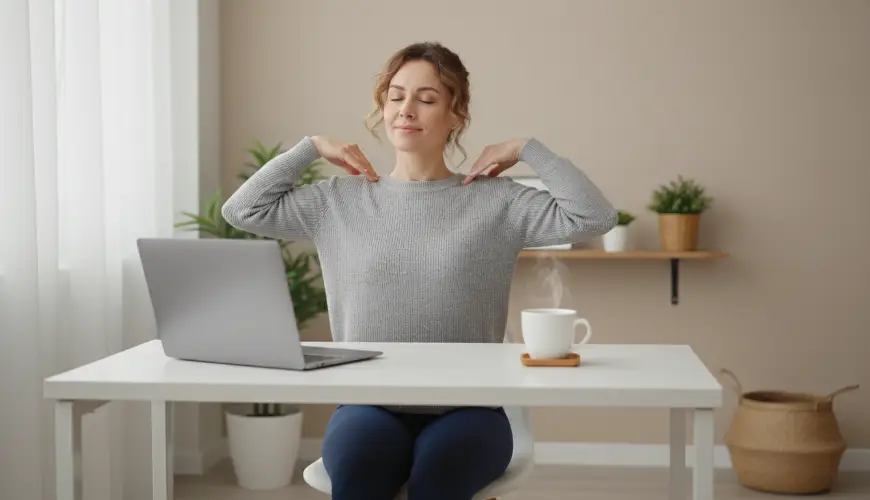
Modern lifestyle brings many advantages, but also one very unpleasant legacy – chronic tension in the neck and shoulder area. Hours spent at a computer, long car journeys, or simply the stress of everyday responsibilities take their toll on muscles that most people are not even aware of. The trapezius muscle, Latin musculus trapezius, is one of the largest muscles of the back and covers an enormous area from the base of the skull, across the neck and shoulders, down to the middle of the back. And it is precisely this muscle that tends to be the most common site where tension, pain and unpleasant stiffness accumulate.
It is no wonder that physiotherapists and osteopaths around the world are reporting an increase in patients presenting with problems in this area. According to data from the World Health Organization, musculoskeletal disorders are among the most widespread health problems of our time, with neck and shoulder pain forming a significant part of them. Yet there are very simple ways to help yourself – without expensive equipment, without the need to visit a specialist clinic, and without hours devoted to complex exercise programmes.
One of the most accessible and at the same time most effective tools are circular movements – targeted rotations of the shoulders, neck and upper trunk, which can release the trapezius muscle, improve blood circulation and relieve accumulated tension. But how should these movements be performed correctly? And why do they work at all?
Try our natural products





Why the trapezius muscles stiffen and hurt so easily
To understand why circular movements help, it is useful to first understand what is actually happening in the trapezius muscle when we feel stiff and tired. The muscle consists of three parts – upper, middle and lower – each performing a slightly different function. The upper part raises the shoulders and tilts the head, the middle part draws the shoulder blades towards the spine, and the lower part pulls the shoulder blades downward. During long periods of sitting at a computer, the upper part of the trapezius is constantly under mild tension, as it holds the shoulders in a slightly raised position. The brain perceives this as a normal state, but the muscle gradually stops receiving adequate blood flow and lactic acid and other metabolic by-products begin to accumulate, causing pain and a feeling of stiffness.
So-called trigger points – small knots in the muscle fibre where the muscle has literally become "stuck" in a contracted state – can radiate pain far from their original location. Pain from the upper trapezius can thus manifest as headaches, a feeling of pressure behind the eyes, or even toothache. Many people treat migraines or tension headaches without realising that their true origin lies in an overloaded trapezius muscle.
This is precisely where movement comes into play. The human body is designed for movement and muscles need regular alternation of tension and relaxation to function healthily. Circular movements of the shoulders and neck are a natural way to restore this cycle – they stimulate blood flow, mobilise joint capsules and help the brain "overwrite" the pattern of chronic tension.
Circular movements step by step – how to do them correctly
Before beginning any movement routine, it is important to be aware of one thing: quality of movement is more important than its speed or range. Many people, in their efforts to release the trapezius, make large, fast and jerky movements that irritate the muscle even further. Correct circular movements are slow, mindful and fluid.
Consider Martina, a thirty-four-year-old graphic designer from Brno, who spends eight to ten hours a day in front of a monitor. Every afternoon she would start to experience back and neck pain, feeling tension running from her ears across her shoulders to her shoulder blades. Her physiotherapist recommended a simple five-minute routine, which she incorporated into her working day. After three weeks of regular practice, Martina reported significant improvement – not only physical but also mental, as the short break with mindful movement also functioned as a mini-meditation.
Basic circular shoulder movements are performed sitting or standing with a straight back and relaxed arms hanging at the sides. The shoulders are slowly raised towards the ears, then drawn back, lowered down and finally returned forward – creating a smooth circle. Each circle should take at least four to five seconds, and the entire movement should be repeated six to eight times in each direction. The key is to focus on the sensation in the shoulder joint and muscle tissue, rather than on how the movement looks from the outside.
Another very effective movement is slow circular movements of the head. The head is first tilted to the side so that the ear moves towards the shoulder, then slowly traces a semicircle forward across the chest to the other side. Movement backwards is generally not recommended, as it can place excessive strain on the cervical spine. This movement specifically stretches the upper part of the trapezius and the sternocleidomastoid muscle, which works closely with it. Just three to four repetitions on each side are sufficient, and a feeling of release comes relatively quickly.
A less well-known but very effective variation is circular movements of the shoulder blades. In this exercise, the shoulder blades are consciously drawn together, then moved upward, spread apart and lowered down. This movement activates the middle and lower parts of the trapezius, which tend to be weak and overstretched, while the upper part is overloaded. Regular engagement of the middle and lower trapezius helps restore balance throughout the entire muscle and reduces chronic overloading of its upper part.
Physiotherapist and author of books on movement medicine Pavel Kolář repeatedly emphasises that core stabilisation and correct breathing are the foundation of every rehabilitative movement. Circular movements should therefore always be accompanied by calm, deep breathing – exhaling during the release phase, inhaling in preparation for the next movement. This connection between movement and breath significantly increases the effectiveness of the exercise and also activates the parasympathetic nervous system, which switches the body into a state of rest and recovery.
As osteopath and pioneer of manual medicine Andrew Taylor Still once said: "Motion is life. Without motion, life is just another word for death." This thought may sound dramatic, but in the context of preventive care for the musculoskeletal system, it makes profound sense.
When and how often to incorporate circular movements into the day
One of the greatest advantages of circular movements for trapezius relief is their accessibility. They require no equipment, special clothing or dedicated space – they can be performed at a desk, in the kitchen while waiting for coffee to brew, in a queue at a shop, or even on a bus. This very flexibility makes them an ideal tool for people with busy schedules.
Experts in physiotherapy and ergonomics agree that the ideal frequency is every 45 to 60 minutes. This interval corresponds to the body's natural need to interrupt static loading and restore blood flow to muscle tissue. Research published in the journal Applied Ergonomics repeatedly shows that short movement breaks are more beneficial for musculoskeletal health than a single long exercise session at the end of the working day.
In the morning after waking, circular movements are an excellent way to "start up" the body and prepare the trapezius muscle for the demands of the day. In the evening before sleep, they can serve as a release ritual that helps the body transition from an active state to a resting one. Combining morning and evening exercise with regular breaks throughout the day forms a complete preventive strategy that can significantly reduce the occurrence of pain and tension in the trapezius area.
The temperature of the environment and preparation of the muscle before movement also deserve special attention. Cold muscles are less elastic and more prone to injury, so it is ideal to perform circular movements after gentle warming up – for example after a warm shower, after walking, or after spending a few minutes in a warm room. If a heating pad or warming gel is available, a brief application of heat to the trapezius area before exercise can significantly increase the effectiveness of the movements while also providing immediate pain relief.
It is also worth mentioning that circular movements are not a cure-all, and there are situations where it is advisable to first consult a specialist. If trapezius pain is accompanied by tingling in the arms or fingers, severe headaches, dizziness or significant restriction of neck mobility, this may indicate a more serious problem – such as a herniated disc or nerve root compression – and in such cases, self-treatment should not replace professional examination.
For the vast majority of people suffering from common trapezius tension and stiffness, however, regular circular movements are one of the simplest and most natural ways to take care of the body. This is not some revolutionary method or fashionable fitness trend – it is a return to the basic movement logic that our bodies know well, but which modern lifestyle has gradually removed them from. All it takes is five minutes, a little focus and the willingness to interrupt the working rhythm. The reward may be not only less pain, but also a better mood, clearer thinking and the feeling that we are genuinely looking after ourselves – every day, rather than waiting until the pain grows into a problem that can no longer be ignored.