
Try the side plank as a prevention of lower back pain
Low back pain is one of the most widespread health problems of modern times. According to data from the World Health Organization, up to 619 million people worldwide suffer from lower back pain, and this number continues to grow. There are many causes – a sedentary lifestyle, poor ergonomics at work, and also insufficiently strengthened deep trunk muscles, which form the spine's natural corset. This is where a simple yet extraordinarily effective exercise comes into play: the side plank.
You may know it from yoga classes or from social media videos featuring fitness influencers with perfect physiques. But the side plank isn't just about aesthetics or elite sport. It is a functional exercise with a direct impact on spinal health, pelvic stability, and long-term prevention of lower back pain – and practically anyone willing to dedicate a few minutes a day to it can do it.
Try our natural products





Why lower back pain occurs and what trunk stability has to do with it
To understand why the side plank works as a preventive measure, we need to pause for a moment on anatomy. The lower back, meaning the lumbar spine region, is subjected to enormous stress during everyday movement. It bears the weight of the upper body, absorbs impact during walking and running, and maintains balance with every movement. The key to protecting it lies not only in the muscles we see in the mirror – such as the rectus abdominis or the spinal erectors – but above all in the deep stabilising muscles, which work quietly and unobtrusively.
Among these, the quadratus lumborum and the gluteus medius play a crucial role. Both of these muscles are very easily overlooked in conventional training. Yet their weakness is one of the most common causes of lower back pain, unilateral spinal overload, and pelvic instability. The side plank is one of the few exercises that specifically and effectively engages these muscles – without the need for a gym or complex equipment.
Physiotherapists and sports physicians agree on this point. As stated by the American Physical Therapy Association, strengthening the lateral trunk stabilisers is an essential component of both rehabilitation and prevention of lower back pain. The side plank belongs to the category of so-called isometric exercises – meaning the muscles are activated without any significant change in muscle fibre length. This type of load is gentler on the spine than dynamic movements, while also being highly effective at building stabilising strength.
Take Markéta, an accountant from Brno, as an example. She spends eight hours a day at a computer. Back pain had troubled her for years, and various massages provided only temporary relief. It wasn't until she began regularly practising the side plank – initially just twenty seconds on each side, gradually increasing – that she started to notice significant improvement. Not only did she stop experiencing back pain after long periods of sitting, but her overall posture improved as well. Her story is not unique; thousands of people who have incorporated this exercise into their daily routine describe a similar experience.
How to perform the side plank correctly and what to avoid
The effectiveness of the side plank stands or falls on proper technique. Poor form not only reduces the exercise's effectiveness but can paradoxically lead to unnecessary strain on joints or muscles. So how do you do it?
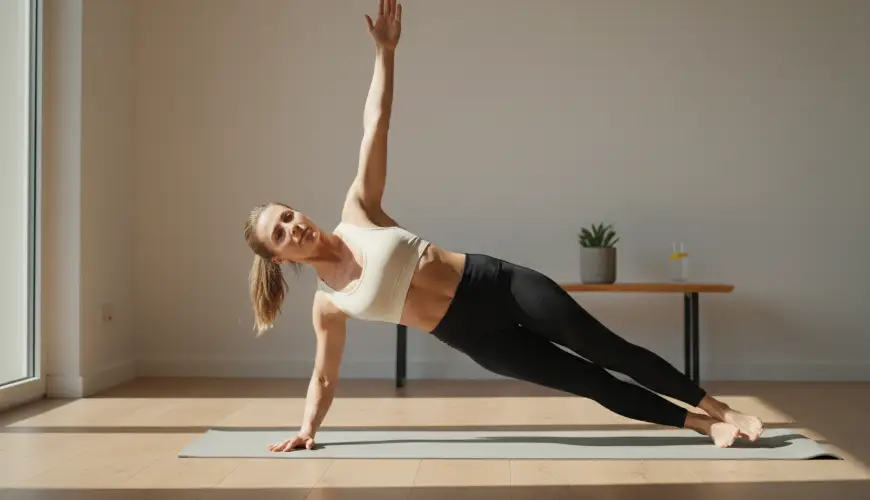
The basic position looks like this: lie on your side, prop yourself up on your forearm so that your elbow is directly beneath your shoulder, and lift your hips off the floor. Your body should form a straight line from head to ankles. Don't push your hips backwards or forwards, engage your core, and breathe calmly and regularly. Holding this position strengthens precisely those muscles that protect the lower back from overload.
For beginners, there is a modified version where you rest on bent knees instead of your ankles. This shortens the lever and makes the exercise easier. Once you can hold the position for twenty to thirty seconds without difficulty, progress to the full version. Difficulty can be gradually increased – for example by raising the top leg, adding arm movement, or transitioning from a forearm to a hand support.
What goes wrong most often? Hip sagging is a typical mistake, where the lower back drops towards the floor and the spine curves. This makes the exercise not only less effective but also potentially loads the lumbar spine in an incorrect way. Another mistake is holding your breath – the trunk muscles then work under tension but without sufficient oxygen, which reduces their performance. And finally: many people only train on one side, the stronger one. The side plank is an exercise that must be performed symmetrically on both sides, as muscular imbalances are one of the key causes of lower back pain.
Experts from Harvard Health Publishing recommend incorporating the side plank as part of a comprehensive core strengthening programme. They emphasise that isometric exercises like the plank are more effective for spinal health than, for example, traditional sit-ups, which can actually place excessive strain on the lumbar spine.
When and how often to exercise for a genuine preventive effect
One of the most frequently asked questions is: how long and how often do I need to do the side plank for it to have a genuine preventive effect? The answer is not straightforward, as it depends on your baseline fitness, age, and specific issues. Generally speaking, however, consistency is more important than the duration of each individual session.
For a healthy adult without acute problems, the ideal starting point is two to three sets on each side, holding for twenty to thirty seconds. The exercise only needs to be incorporated three to four times per week. Research published in the Journal of Orthopaedic & Sports Physical Therapy showed that after just four weeks of regular stabilisation exercise, measurable improvements in muscle strength and reductions in lower back pain occur.
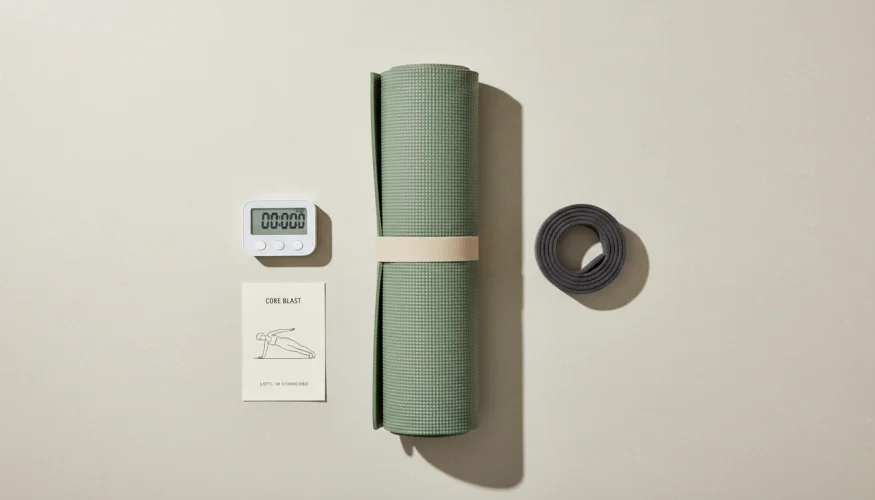
The ideal time to exercise is in the morning, when the muscles are not yet fatigued by the day's activities, or during the day as a break from sitting. The side plank can be performed anywhere – in the living room, on a carpet in the office, or in the garden. It requires no equipment and no large space. Nevertheless, it is advisable to have a mat or exercise pad underneath you to prevent uncomfortable pressure on the elbow and ankles.
If someone is experiencing acute lower back pain or has a diagnosed spinal condition, such as a herniated disc or spinal stenosis, it is of course essential to consult a doctor or physiotherapist before exercising. In such cases, the side plank may form part of supervised rehabilitation, but its form and intensity must be adapted to the individual patient's condition.
The side plank naturally works best as part of a broader approach to back care. Combining it with other exercises targeting the deep abdominal muscles, with regular walking, and with conscious attention to posture produces a synergistic effect that no single isolated exercise can offer on its own. As physiotherapist and author Stuart McGill, one of the world's leading experts on spinal health, put it: "The spine doesn't need flexibility, it needs stability." And that is precisely what the side plank fully provides.
An important part of preventing lower back pain is also being aware of how we spend time outside of exercise. Long hours of sitting without movement are harmful to the lumbar spine regardless of how intensively we exercise. It therefore makes sense to complement the side plank with regularly getting up from your desk, stretching, and consciously monitoring your body position while working. An ergonomic chair or height-adjustable desk can be a worthwhile investment in this regard – as can a quality exercise mat, which protects the joints during daily training.
The world of back care has changed significantly in recent years. Where rest in bed and avoiding movement once dominated, experts today unequivocally recommend an active approach. Movement, and specifically targeted strengthening of the stabilising muscles, is now considered the foundation of both prevention and treatment of lower back pain. In this context, the side plank is not a passing trend but an exercise with a solid scientific basis and demonstrable effect. And perhaps best of all – just a few minutes a day is enough, and results will come sooner than most people would expect.