

Fragrant barley risotto with porcini mushrooms, or barley groat risotto
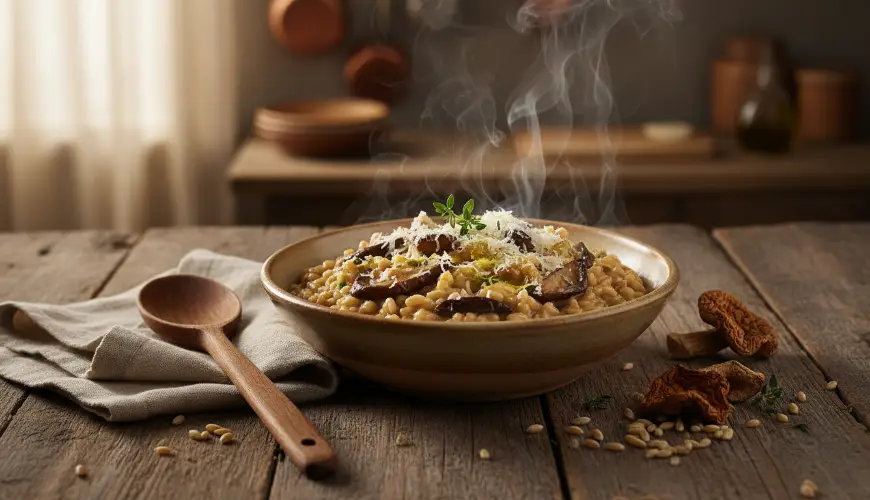
There are dishes that look modest but can surprise you in a way that makes you reconsider your entire perspective on cooking. Kroupoto – barley risotto – is exactly such a dish. At first glance, it might resemble an old-fashioned porridge from grandmother's kitchen, but it is actually a modern, nutritionally rich and deeply flavourful dish that has been gaining increasing popularity in recent years, not only among health-conscious individuals but also among discerning food lovers.
Pearl barley is one of the oldest grains cultivated in Central Europe. Its history stretches back thousands of years, and for centuries it formed the foundation of rural diets. Then came rice, pasta and the modern food industry – and barley gradually faded into the background. Today, however, it is making a comeback, and with unexpected force. The reason is simple: few foods offer such a favourable balance between price, nutritional value and culinary potential.
Try our natural products



Why is pearl barley so exceptional?
Pearl barley is a wholefood with an exceptionally high content of beta-glucans – a soluble dietary fibre that has been proven to help lower blood cholesterol levels and support healthy digestion. According to the European Food Safety Authority (EFSA), beta-glucan from barley is one of the few food components for which a direct effect on reducing LDL cholesterol has been scientifically confirmed. This is not a marketing claim – it is a scientifically verified fact.
In addition to fibre, barley contains a decent amount of protein, magnesium, phosphorus, zinc and B vitamins. Its glycaemic index is significantly lower than that of white rice or pasta, meaning it keeps you fuller for longer and does not cause rapid blood sugar spikes. For people monitoring their diet, as well as those who simply want to eat smarter without unnecessary dieting, barley is an ideal choice.
And perhaps most importantly from a culinary perspective: barley has a unique texture. When cooked slowly, it releases starch that gives the dish a creaminess similar to classic Italian risotto. This very property makes it the perfect base for kroupoto – the Czech answer to the North Italian favourite.
Imagine an evening in October, returning from the forest with a basket full of fresh porcini mushrooms. The air smells of earth and pine needles, your hands are a little dirty and you are genuinely hungry. That is precisely when kroupoto with porcini mushrooms comes into its own – it is a dish that nourishes both body and soul, requires no exotic ingredients, yet tastes as though it were prepared by an experienced head chef.
Porcini: kings of the Czech forest in the pot
The combination of pearl barley with porcini mushrooms is no coincidence. Dried or fresh porcini (Boletus edulis) are among the most fragrant and flavourful mushrooms of all. Their earthy, full-bodied flavour with a hint of nuttiness complements the gentle creaminess of barley perfectly. The result is a dish with a depth of flavour rarely encountered with such simple ingredients.
Dried porcini have one practical advantage over fresh ones: they are available year-round, and their flavour is even more concentrated thanks to the drying process. The water in which dried mushrooms are soaked should certainly not be discarded – it is literally liquid gold, forming the base of the entire dish and lending it an incomparable depth.
Fresh porcini, when available, bring a different dimension to the dish: a more delicate aroma, a firmer texture and that unmistakable sense of seasonality. The best option is a combination of both – dried porcini as the flavour base and fresh ones as the main ingredient.
As they say in the culinary world: "A dish is only as good as its ingredients." And in the case of kroupoto, this holds doubly true. Quality porcini, a good stock and patience at the stove – these are the three pillars upon which this dish rests.
When preparing kroupoto with porcini, the same principle applies as with classic risotto: the barley is not pre-cooked, but rather cooked gradually, with stock added little by little and stirred continuously. This process takes approximately 35 to 45 minutes, but the result is worth every minute spent at the stove. The creamy consistency, intense mushroom aroma and full flavour are the reward for patience.
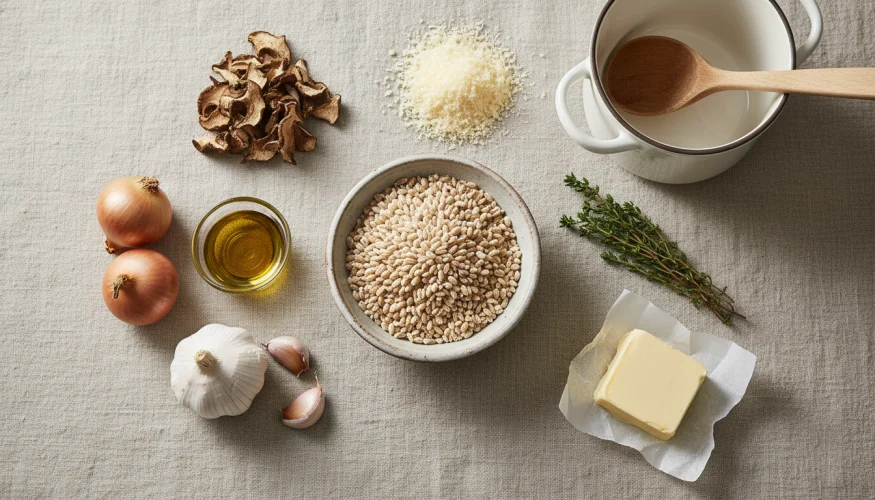
The recipe begins by sautéing finely chopped shallots or onion in olive oil or butter until golden, then adding crushed garlic and the dry barley. Briefly toasting the barley before adding liquid – much like with risotto – helps to develop its nutty flavour. Hot stock (ideally vegetable or mushroom) is then added gradually, one ladleful at a time, stirring continuously until the barley absorbs the liquid. Towards the end, the prepared porcini are added, along with a splash of dry white wine for acidity if desired, followed by a knob of butter and a handful of grated Parmesan or another hard cheese for the final creamy finish.
Vegans and those with lactose intolerance need not be disappointed – butter can be replaced with a quality cold-pressed plant-based oil and Parmesan with nutritional yeast, which lends the dish a similar cheesy depth without any animal products. Kroupoto is a naturally very flexible recipe that lends itself to many variations.
Kroupoto as part of sustainable eating
One of the reasons kroupoto is attracting attention right now is its alignment with the principles of sustainable and local eating. Barley has been cultivated in the Czech Republic since time immemorial – it is a crop well adapted to the local climate and does not require intensive care or excessive use of pesticides. Unlike exotic rice, which must travel thousands of kilometres, barley can come from a farmer just a few dozen kilometres away.
Similarly, porcini mushrooms – whether foraged in Czech forests or dried by local producers – represent a food with a minimal carbon footprint and a deep connection to local nature and tradition. The FAO has long emphasised that a shift towards local and traditional foods is one of the key steps in reducing the environmental impact of the food system.
Kroupoto is therefore not merely a tasty dish – it is a conscious choice that unites health, flavour and responsibility towards the planet. It is no surprise that this dish is appearing with increasing frequency in restaurants focused on local cuisine, as well as on the tables of families seeking alternatives to industrially processed foods.
It is interesting to observe how this trend manifests in practice. Jana, a teacher from the Vysočina region, began making kroupoto after coming across a recipe while looking for ways to reduce her family's food waste and incorporate more wholegrains into their diet. "I expected the children to protest, but they ate every last grain," she says. "Now we make it almost every week, always a little differently – sometimes with porcini, other times with pumpkin or spinach."
This very versatility is one of kroupoto's greatest strengths. The mushroom version with porcini is a classic, but barley pairs beautifully with roasted vegetables, herbs, various types of cheese or, for example, sautéed button mushrooms with thyme. The basic technique remains the same, but the result can be different every time – and that is precisely what makes kroupoto a dish worthy of regular inclusion in any meal plan.
Preparing kroupoto with porcini also offers a pleasant ritual. Unlike many modern recipes that promise results in twenty minutes using a single pot, kroupoto requires presence at the stove, regular stirring and attentiveness. And perhaps that is its hidden value – it forces you to slow down, focus on the present moment and savour the cooking process itself. In an age accustomed to instant results, this is a refreshing change of pace.
When it comes to choosing barley, it is worth reaching for medium-grade hulled pearl barley – it is sufficiently processed to cook in a reasonable time, yet retains enough starch for a creamy texture. Pearl barley (more finely processed) is also suitable, but cooks somewhat faster and the resulting consistency tends to be less pronounced. Wholegrain barley is nutritionally the richest, but requires longer cooking and prior soaking.
Kroupoto made from pearl barley with porcini mushrooms is proof that the finest dishes need not be complicated or expensive. All it takes is good ingredients, a little patience and a willingness to try something that may appear ordinary at first glance, but upon closer tasting reveals an unexpected depth and richness. Perhaps it is time to return pearl barley to where it once belonged – to the centre of the Czech table.