

# How to Clean an Iron and Remove Limescale Naturally ## Why Clean Your Iron Regularly? Over time,

An iron is among the household appliances that most households use regularly, yet few people give them regular care. Yet a neglected iron can be the cause of stained laundry, unpleasant odors during ironing, or even damage to a favorite piece of clothing. Limescale and deposits on an iron are not just an aesthetic problem – they directly affect the appliance's performance and the longevity of your laundry.
If you have ever noticed small brown or white flakes flying out of the steam vents of your iron and settling on a freshly ironed shirt, you know exactly what we're talking about. This phenomenon is caused by accumulated limescale inside the water tank and steam system of the iron. The harder the water in your region, the faster this problem manifests. According to data from the Czech Hydrometeorological Institute, a large part of the Czech Republic falls into areas with moderately hard to hard water, so this is a problem that affects a great many households.
The good news is that cleaning an iron and removing limescale is no rocket science. You just need to know how to go about it and have the right supplies on hand – most of which you'll likely find right in your pantry at home.
Try our natural products


Why limescale in an iron is a problem and how it forms
To understand why cleaning an iron is so important, it helps to understand what is actually happening inside the appliance. Regular tap water contains dissolved minerals, primarily calcium and magnesium. When water is heated and converted into steam, these minerals are left behind as solid deposits – that is limescale. In an iron, this process occurs with every use, so deposits gradually accumulate in the tank, in the steam channels, and on the soleplate itself.
Accumulated limescale has several negative consequences. First, it reduces the flow through the steam vents, so the iron produces less steam and ironing takes longer. Second, it can cause the aforementioned "spitting" – releasing pieces of deposits directly onto the laundry. Third, it overloads the heating element, which has to overcome the insulating layer of scale, increasing energy consumption and shortening the appliance's lifespan. And finally, if deposits reach the soleplate, they can leave stains on clothing that are then very difficult to remove.
Interestingly, many people think their iron is fine until the problem becomes significantly apparent. Yet regular prevention and occasional cleaning would have prevented the whole situation. Just as a coffee machine or dishwasher is cleaned regularly, an iron also deserves attention – ideally once every one to three months depending on the intensity of use and water hardness.
Chemist and science popularizer Bill Bryson noted in his book At Home: "Household appliances are little miracles that work so reliably that we forget about them – until they stop working." And that is exactly how it goes with irons too.
Proven methods for cleaning an iron step by step
There are several ways to get rid of limescale and dirt. Each is suited to a slightly different situation and type of soiling.
Distilled water as the basis of prevention is the first and simplest piece of advice worth mentioning even before the cleaning itself. If you fill your iron exclusively with distilled or softened water, limescale forms significantly more slowly. Distilled water contains no minerals and therefore leaves no deposits. This small change in habit can significantly extend the intervals between cleanings and the overall lifespan of the appliance.
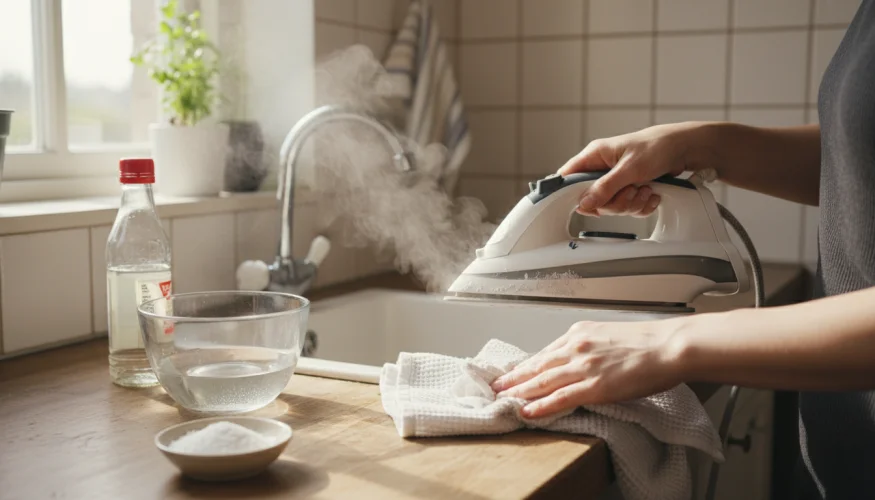
However, if limescale has already built up in the iron, active cleaning is called for. The most natural and gentle method is using white vinegar, which you can find in any store. Vinegar contains acetic acid, which dissolves calcium deposits without damaging the metal or plastic parts of the iron. The procedure is simple: mix vinegar with water in a 1:1 ratio, pour this solution into the iron's water tank, and let it heat up to a medium temperature. Then hold the iron over a sink or an old towel and let it "steam" for approximately five minutes. The steam with vinegar passes through the steam channels and dissolves the deposits. Finally, empty the tank, rinse it with clean water, and repeat the entire process with clean water so that no vinegar smell remains in the iron.
An equally effective alternative is citric acid, which is available at any supermarket or drugstore. You prepare the solution by dissolving one to two teaspoons of citric acid in half a liter of water. The cleaning procedure is the same as with vinegar – pour the solution into the tank, heat the iron, and let it steam. Citric acid is somewhat gentler than vinegar and does not leave as intense an odor, so many people prefer it. It is also a completely natural and eco-friendly choice that does not burden the environment.
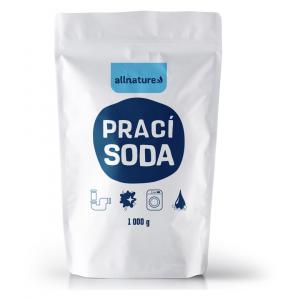
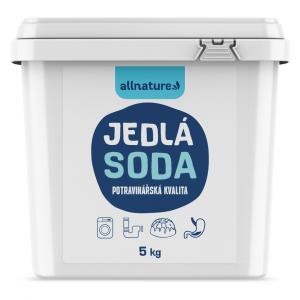
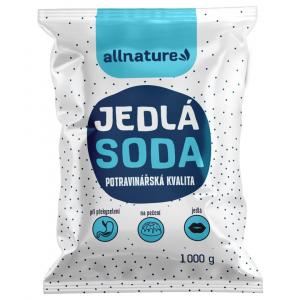
For cleaning the soleplate – that is, the bottom metal part that comes into contact with the laundry – there are additional tricks. If starch or other burnt residue has settled on it, a paste made from baking soda and water will help. Simply mix baking soda with a little water into a thick paste, apply it to the cold soleplate, and gently spread it with a soft cloth or an old toothbrush. After a while, wipe off the paste with a damp cloth and finish cleaning the surface dry. Baking soda is mildly abrasive, but gently enough not to damage the Teflon or stainless steel surface of the iron.
There are also special cleaning sticks or tablets for irons, designed specifically for this purpose and available at household goods stores. These products are formulated to effectively remove deposits without the risk of damage and are particularly suitable for more expensive or sensitive iron models. If you are unsure which procedure is most suitable for your specific model, it is always worth checking the instruction manual or the manufacturer's website.
Many modern irons are also equipped with a self-cleaning or descaling function, which is indicated directly on the body of the appliance. This function uses a strong burst of steam to flush deposits from the internal channels. The procedure is generally described in the manual and involves filling the tank with water, heating the iron to maximum, and pressing a special button. The iron then "shoots out" steam and water along with the deposits. If your iron has this function, it is recommended to use it regularly – approximately once a month.
Practical tips for long-term iron care
Alongside the cleaning itself, there are several habits that help keep an iron in good condition over the long term. One of the most important is to always empty any remaining water from the tank after finishing ironing. Water left standing in the tank slowly evaporates and leaves behind mineral deposits. If you empty the iron after each use and let it cool down with the tank cap open, you will significantly slow the formation of scale.
Another important step is proper storage. The iron should be stored in an upright position, not lying on its soleplate. This both protects the soleplate surface from scratching and prevents any remaining water from leaking onto the soleplate, where it would leave scale stains.
Imagine the situation where you want to iron a shirt before an important meeting and brown flakes start falling from the iron directly onto white fabric. Such a situation is not only frustrating but can also be very unpleasant if you have no time to fix it. That is precisely why regular iron care pays off – it prevents such unpleasant surprises at inconvenient moments.
If you are not using the iron for an extended period, for example during the summer months, it is recommended to carry out a thorough cleaning before storing it and to completely empty and dry the tank. The iron will then be ready for immediate use in the autumn without any unpleasant surprises.
Regarding cleaning frequency, the general recommendation is descaling once every one to three months with regular use. If you live in an area with very hard water or use your iron every day, it may be appropriate to clean it once a month. Conversely, in areas with softer water and less frequent use, cleaning three to four times a year is sufficient. A reliable signal that it is time for cleaning is precisely those white or brown flakes in the steam, reduced steaming intensity, or an unpleasant smell during ironing.
Caring for household appliances does not have to be complicated or expensive. With a little regular attention and common pantry supplies – vinegar, citric acid, or baking soda – an iron can be kept in perfect condition for many years. The result is not only cleaner and fresher-smelling laundry, but also savings on energy and potential repair or replacement of the appliance. And that is well worth a few minutes of care every once in a while.