

Care for teeth and the oral cavity involves much more than a toothbrush
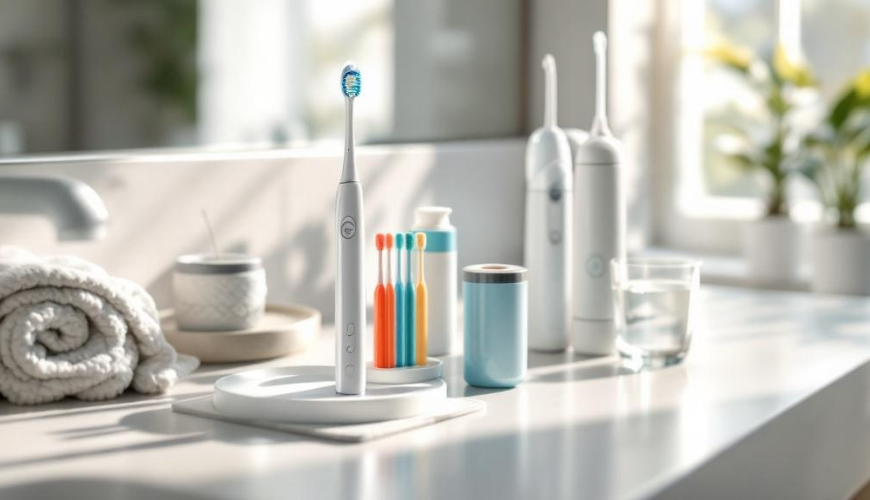
Most people grab a toothbrush morning and evening, apply some paste, and after two minutes feel they've done the maximum for their teeth. But the reality is more complex. Tooth decay, periodontal disease, and a whole range of other oral cavity problems don't arise simply because someone forgot to brush at night. They arise because dental and oral care is a complex matter in which the toothbrush itself represents just one piece of the puzzle. And that's exactly what this article is about – everything that true care for healthy teeth involves, why it's important to take a broader view, and how to go about it properly without turning it into rocket science.
When people hear "dental care," most of us picture a toothbrush and toothpaste. That's not surprising – from childhood, we're taught to brush our teeth twice a day, and that's often where it ends. But few people go on to ask what's happening in the gaps between teeth, on the tongue, on the inner side of the cheeks, or deep below the gum line, where no ordinary toothbrush can reach. Yet that's precisely where bacterial plaque builds up, gradually mineralizing into tartar, irritating the gums, and opening the door to infections. According to the World Health Organization (WHO), nearly 3.5 billion people worldwide suffer from oral diseases, making it one of the most widespread health afflictions of all. That number is alarming and clearly shows that brushing with a toothbrush alone is not enough for the majority of the population.
Why is that the case? There are several reasons, and they intertwine. A toothbrush – whether manual or electric – can clean approximately 60 to 70 percent of the tooth surface. The remaining 30 to 40 percent consists of interdental spaces where toothbrush bristles simply can't fit. And these areas are the most common sites for cavities and gum inflammation to develop. It's a bit like washing a car on only one side and hoping the other stays clean on its own. That's why dentists have been repeating for years that interdental cleaning is not an optional extra but an essential part of daily hygiene. Interdental brushes, dental floss, or a so-called irrigator (water flosser) can remove food debris and plaque from these hard-to-reach areas that would otherwise thrive undisturbed.
On top of that, there's tongue care, which many people forget about entirely. The surface of the tongue is covered with tiny papillae, among which bacteria, dead cells, and food debris get trapped. The result is not only unpleasant bad breath but also an increased bacterial load throughout the entire oral cavity. A simple tongue scraper or even a soft toothbrush swept across the tongue can significantly improve the situation. And it takes barely thirty seconds.
Try our natural products




How to Properly Care for Your Teeth Beyond the Toothbrush
When we look at dental care as a system, it starts to make sense why brushing alone isn't enough. Imagine the Novák family – a perfectly ordinary Czech household. Mom Petra diligently brushes her teeth twice a day with a quality electric toothbrush, but she never used interdental brushes because she thought it was unnecessary. At her preventive check-up, her dentist found early-stage cavities in three interdental spaces. Her partner Martin brushes his teeth thoroughly, including the interdental spaces, but for years ignored bleeding gums, which he considered normal. The diagnosis? Early-stage periodontitis. Their teenage daughter Eliška brushes her teeth quickly and carelessly, but drinks sodas and juices throughout the day, maintaining an acidic environment in her mouth virtually non-stop. Each family member is doing something different wrong, but the result is similar – problems that could have been prevented.
This example illustrates that true care for healthy teeth involves several interconnected habits, not just one. It's about proper brushing technique, but also about choosing the right tools, consistency, dietary habits, adequate fluid intake, gum care, and last but not least, regular visits to the dentist and dental hygienist.
Let's start with brushing technique itself, because mistakes are common here too. Dentists and dental hygienists recommend the so-called Bass method – the toothbrush is placed at approximately a 45-degree angle to the gum line, and plaque is loosened with gentle vibrating or circular motions directed away from the gums. Hard horizontal "scrubbing" back and forth, which many people practice, can over time damage tooth enamel and gums and lead to gum recession. Brushing should last at least two minutes and should cover all surfaces – outer, inner, and chewing. Electric toothbrushes with oscillating-rotating or sonic technology can be advantageous in this regard, as they provide the correct motion on their own and often include a timer.
After brushing comes the aforementioned interdental hygiene. Interdental brushes are now considered more effective than traditional dental floss, especially for people with larger interdental spaces. Ideally, you should consult a dental hygienist about the right size – a brush that's too small doesn't clean adequately, while one that's too large can injure the gums. Dental floss has its place primarily with very tight teeth where an interdental brush won't fit. And a water flosser (irrigator) is an excellent supplement, especially for people with braces, bridges, or implants, where conventional tools reach their limits.
Another step that many people skip is using mouthwash. Here, however, it's important to distinguish – not every mouthwash is the same. Some serve only to freshen breath and have no proven effect on bacteria or plaque. Others contain active ingredients such as chlorhexidine, cetylpyridinium chloride, or fluorides and can genuinely contribute to preventing gum inflammation and cavities. However, chlorhexidine rinses should not be used long-term without a doctor's recommendation, as they can cause tooth discoloration and disrupt the natural microflora in the mouth. Fluoride rinses, on the other hand, can be suitable for daily use and help remineralize enamel.
And then there's a topic that seemingly has nothing to do with brushing teeth but is in fact absolutely crucial – diet. Sugars and simple carbohydrates are the primary fuel for bacteria in the oral cavity, which convert them into acids. These acids then dissolve tooth enamel, and cavities form. But it's not just about the amount of sugar – it's also about the frequency of its consumption. When someone has one dessert after lunch, the teeth can cope – saliva gradually neutralizes the acidic environment and the enamel remineralizes. But if someone sips sweet coffee, energy drinks, or juices all day long, the oral environment remains acidic virtually non-stop and the teeth have no chance to "recover." As the well-known British dentist Dr. Toby Edwards-Lunn aptly puts it: "It's not about how much sugar you eat, but how often you eat it."
Likewise, acidic foods and drinks – citrus fruits, vinegar, wine, cola drinks – can erode enamel if teeth are exposed to them too frequently. A simple trick recommended by experts is not to rush into brushing your teeth after consuming acidic foods. It sounds paradoxical, but immediately after acidic food, the enamel is temporarily softened and a toothbrush could damage it. It's better to wait at least 30 minutes or rinse your mouth with plain water in the meantime.
Why Dental Care Isn't Just About the Toothbrush – The Connection to Overall Health
One of the most important reasons people should reconsider their approach to oral hygiene is the growing body of scientific evidence about the connection between oral health and overall body health. Chronic gum inflammation – periodontitis – is not just a local problem. Bacteria from gum pockets enter the bloodstream and can contribute to cardiovascular disease, diabetes complications, respiratory infections, and according to some studies, even pregnancy complications. The American Heart Association points to the link between periodontal disease and increased risk of heart disease, although the exact mechanisms are still the subject of research.
This means that by neglecting gum and dental care, a person risks not only toothache or tooth loss but potentially endangers their heart, blood vessels, and other organs as well. This connection gives oral care an entirely new dimension – it ceases to be a cosmetic matter and becomes part of the prevention of serious civilization diseases.
That's precisely why regular visits to the dentist and dental hygienist are so important. Preventive check-ups, which in the Czech Republic are covered by health insurance twice a year, make it possible to catch problems at an early stage when their treatment is simple, painless, and inexpensive. Professional dental hygiene removes tartar and stains that a person cannot remove at home on their own, and the hygienist also advises on an individual home care plan. Yet according to surveys, a significant portion of the Czech population only visits the dentist when something hurts – that is, at a stage when the problem is already developed and its treatment more costly.
So what does true care for healthy teeth involve, in summary? It's a combination of proper brushing technique, thorough interdental hygiene, tongue care, sensible use of mouthwash, a mindful approach to diet, adequate fluid intake (preferably plain water), regular preventive check-ups, and professional dental hygiene. This also includes choosing quality and preferably natural products – from toothpastes without unnecessary synthetic additives to eco-friendly toothbrushes to mouthwashes with gentle ingredients. Products just like these, which respect both human health and the environment, can be found in the range offered by the Ferwer e-shop, which focuses on a sustainable and healthy lifestyle.
Dental care, in short, is not a sprint but a marathon. It's not a one-off task to be checked off morning and evening, but a set of habits that complement and reinforce each other. And the best part is that none of these habits is particularly demanding or time-consuming. All it takes is broadening your perspective beyond the toothbrush and realizing that a healthy mouth is the foundation of a healthy body. Those who understand this and start acting accordingly will save themselves not only unpleasant moments in the dentist's chair but perhaps much more.