

A low-maintenance garden is easier than you think
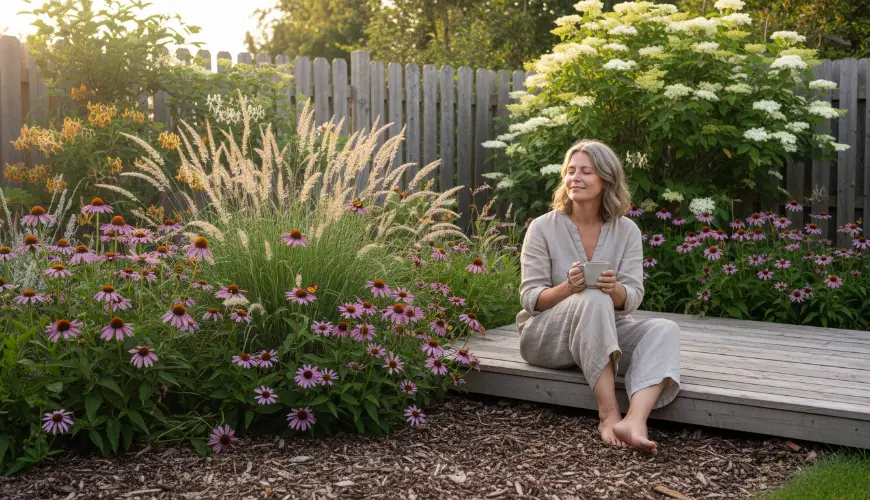
Having a beautiful garden is many people's dream. The reality of daily bed maintenance, regular watering, weeding and pruning can quickly dampen that enthusiasm. What if there were a way to have a garden full of life, colour and fragrance without spending every free weekend with a spade in hand? The answer lies in choosing the right plants and taking a smart approach to planning a garden that largely takes care of itself.
A low-maintenance garden is not synonymous with a dull patch of lawn with a few shrubs. On the contrary – it can be a diverse, natural environment full of insects, birds and plants that spread year after year with minimal human intervention. The key is to understand what nature itself offers and to work with it, not against it.
Try our natural products


Why less work doesn't mean less beauty
The traditional concept of a garden with a perfectly trimmed lawn, symmetrical beds and exotic plants requires an enormous amount of energy, water and chemical products. Modern gardening, however, is increasingly leaning towards a different approach – the natural garden, which respects local conditions and works with species adapted to the given environment. This trend is confirmed by experts from the Royal Horticultural Society, who have long recommended planting perennials and natural mulching as the foundation for a low-maintenance garden.
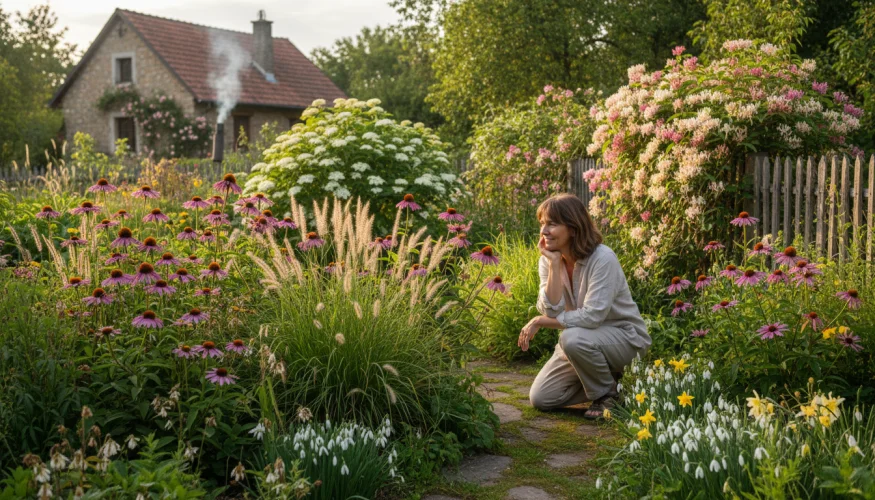
Consider, for example, a family from the Vysočina region who bought an older house with a neglected garden. Rather than investing in a regular gardening service, they opted for a combination of perennials, grasses and hardy shrubs. After two years, the garden not only looks cosy and natural, but the owners spend an average of just one hour per week on it. Such a result is no accident – it is the outcome of a carefully considered choice of plants.
The core philosophy is best captured in a quote by garden designer Piet Oudolf: "A garden is not a picture you paint once – it is a living system that finds its own balance." And it is precisely this balance that is the goal of anyone who wants a garden without unnecessary toil.
What to plant in a garden that takes care of itself
Choosing the right plants is the absolute foundation. A simple principle applies: the closer a plant is to the natural environment of a given location, the less care it requires. This doesn't mean the garden has to look like a meadow of weeds – quite the opposite. There is a wide range of ornamental and edible plants that are simultaneously hardy, undemanding and visually attractive.
Perennials are undoubtedly the fundamental building block of any low-maintenance garden. Unlike annuals, which need to be sown or planted anew each year, perennials overwinter and return stronger every year. Popular choices include purple coneflower (Echinacea purpurea), which blooms from summer to autumn, attracts pollinators and requires virtually no care. Equally undemanding are St John's wort, stonecrop (Sedum) and cranesbill (Geranium) – plants that can manage even in less fertile soil and variable weather conditions.
Ornamental grasses are another excellent solution for people who want a garden without daily work. Species such as sedge (Carex), fountain grass (Pennisetum) and blue fescue (Festuca glauca) are visually interesting throughout the year, withstand drought and frost, and only need cutting back once a year. Their swaying stems add dynamism and airiness to the garden without demanding any attention.
Shrubs form the backbone of every low-maintenance garden. Elder (Sambucus nigra) is virtually indestructible in the Czech environment – it grows quickly, blooms fragrantly, its berries are popular for making syrups and teas, and birds love it. Spiraea (Spiraea), cotoneaster (Cotoneaster) and snowberry (Symphoricarpos) are further examples of shrubs that require no annual shaping yet still look neat. For shaded parts of the garden, Oregon grape (Mahonia aquifolium) is an excellent choice, coping even with deep shade and poor soil.
Climbing plants deserve a special mention, as they can cover unsightly fences, walls or pergolas with minimal effort. Honeysuckle (Lonicera periclymenum) smells wonderful and grows practically by itself. Ivy (Hedera helix) is legendary among undemanding climbers – it survives almost anything and keeps walls green throughout the year. For sunny spots, Virginia creeper (Parthenocissus) is ideal, exploding into stunning shades of red in autumn.
When it comes to bulbs, these are true treasures for the lazy gardener. Plant them once in autumn and they return every year on their own – tulips, daffodils, snowdrops, scillas and wild garlic. Wild garlic (Allium ursinum) is particularly interesting because it covers large areas under trees where other plants refuse to grow, and it is also edible.
Smart soil care as the foundation of success
Even the hardiest plant cannot establish itself in concrete. Healthy soil is a prerequisite for a garden that functions without daily supervision. Fortunately, soil care can also be very simple if the right approach is chosen.
Mulching is probably the most effective technique for reducing work in the garden. A layer of mulch – whether from wood chips, leaves, straw or compost – suppresses weeds, retains moisture in the soil and gradually enriches it with nutrients. A garden centre or community composting facility is usually a good source of cheap or free wood chips. A layer just 5–10 centimetres thick around plants is enough to reduce weeding to a minimum.
Composting is a natural complement to mulching. Kitchen waste, mown grass, leaves and plant trimmings are transformed in a compost bin into a nutritious material that the garden will appreciate. There is no need to buy expensive fertilisers – nature manages on its own if given a little help.
Another step towards a less demanding garden is switching to a more resilient lawn or partially replacing it. A classic English lawn requires regular mowing, fertilising, aerating and watering. Alternatives include a lawn with a clover mix, which fertilises itself, or areas covered with low-growing cinquefoil (Potentilla), thyme or creeping speedwell (Veronica repens), which form a green carpet without the need for weekly mowing.
A drip irrigation or subsurface irrigation system can completely eliminate the need for manual watering. Modern timers and soil moisture sensors ensure that plants receive water precisely when they need it – without unnecessary waste and without the gardener needing to be present every day. According to a study by the International Commission on Irrigation and Drainage, drip irrigation reduces water consumption by up to 50% compared to conventional sprinkler systems, while plants thrive better.
A few practical tips for getting started
For those planning to transform their garden into a place of calm without unnecessary toil, here is a simple starting list of tried-and-tested plants:
- Purple coneflower – a flowering perennial for sunny spots, drought-resistant
- Stonecrop – ideal for rockeries, dry walls and bed edges
- Ornamental grasses – visual impact throughout the year, just cut back once annually
- Elder – fast-growing shrub with uses in the kitchen and for wildlife
- Wild garlic – covers shaded spots under trees and is edible
- Honeysuckle – fragrant climbing plant for fences and pergolas
- Bulbs – daffodils, scillas, snowdrops; plant once, return every year
Plant selection should always be based on the specific conditions of the garden – sunny or shaded positions, soil type, climate zone and water availability. The Czech Republic offers fairly varied conditions and most of the species mentioned above can adapt to both the drier areas of southern Moravia and the cooler elevations of northern Bohemia.
An ecological approach to gardening, however, means more than just choosing low-maintenance plants. It is also about an overall philosophy of caring for the natural environment. Gardens that support biodiversity, attract pollinators and provide shelter for insects and birds function as small ecosystems. The more species a garden contains, the more resistant it is to pests and diseases – because in a diverse environment, nature is capable of managing on its own.
Finally, it is worth remembering that a low-maintenance garden is not a one-weekend project. It is a gradual transformation that requires patience and a willingness to experiment. But that is precisely where its charm lies – each year brings new surprises, new colours and new creatures that make the garden their home. And the owner can sit on the terrace with a cup of coffee and, instead of thinking about what still needs to be done, simply watch the garden living its own life.